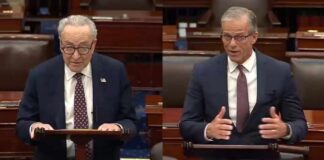
Federal lawmakers are pushing a sweeping hemp ban that threatens to devastate farmers, override states’ rights, and centralize control—leaving many conservative Americans questioning just how far Washington’s overreach will go.
Story Snapshot
- A Senate appropriations bill would ban all hemp products with any amount of THC, threatening to destroy the U.S. hemp industry.
- Senator Rand Paul’s effort to strip the ban was rejected; the bill advances with the prohibition intact.
- The measure overrides state laws, eroding local control and traditional federalism.
- Stakeholders warn of huge economic losses, job cuts, and increased government overreach.
Senate Bill Threatens Hemp Industry, Farmers, and States’ Rights
In November 2025, Congress advanced a controversial provision in a must-pass appropriations bill to ban hemp products containing any amount of THC. This move, supported by both Senate leadership and President Trump, aims to close perceived loopholes exploited by some producers but would effectively end the legal market for most hemp-derived products. Senator Rand Paul, leading opposition from Kentucky—a state with deep roots in hemp farming—warned that the ban would “destroy the livelihoods of hemp farmers,” highlighting the threat to both economic opportunity and state autonomy as federal authority expands over local regulation.
The bill’s passage marks an aggressive federal intervention, overriding existing state laws and regulatory frameworks that once allowed for diversity in hemp policy. Kentucky’s senators are notably divided on the issue, with Senator Mitch McConnell supporting the ban based on concerns for child safety and public health, while Senator Paul and some allies argue it will wipe out an industry built over the past decade. Despite efforts to preserve local control, the federal government’s move centralizes power in Washington, a long-standing concern for conservatives wary of bureaucratic overreach and the erosion of the Tenth Amendment.
Background: From Legalization Boom to Washington Crackdown
The roots of this battle stretch back to the 2018 Farm Bill, which legalized hemp cultivation and spurred rapid growth in products like CBD and delta-8 THC. States such as Kentucky flourished, investing heavily in hemp as a new agricultural lifeline. However, some companies exploited ambiguities in federal law to market intoxicating hemp-derived products, prompting renewed calls for stricter oversight. Lawmakers who once championed hemp—McConnell included—shifted toward supporting a crackdown, citing public health risks and the need for regulatory “clarity.” The current ban would be the first nationwide prohibition since federal legalization, sweeping aside local experiments and economic progress.
Economic Impact: Farmers, Businesses, and Consumers Stand to Lose
Industry experts warn that the immediate effect of the ban will be an abrupt halt to sales of most hemp-derived THC products, triggering economic shockwaves for farmers, processors, and retailers—especially in states like Kentucky. Long-term consequences could include the collapse of the U.S. hemp industry, loss of jobs, and reduced investment in agricultural innovation. Alcohol distributors, who have relied on hemp products to offset declining sales, also oppose the measure. The bill’s passage would likely drive demand to illicit markets, reducing consumer access to regulated wellness products and harming legitimate businesses that followed the rules set by Congress and their states.
Federal vs. State Power: A Conservative Flashpoint
This legislative fight underscores the broader tension between federal and state authority—a core issue for constitutional conservatives. By overriding state laws, the appropriations bill sets a precedent for federal intervention in other industries traditionally regulated at the state level. Critics argue that such centralization undermines local experimentation and the principles of federalism, fueling frustration among voters who see their values and economic interests sidelined by Washington’s one-size-fits-all solutions. With the appropriations bill moving forward, many are left to wonder what other freedoms and livelihoods could be targeted next in Congress’s quest for more control.
Senator Rand Paul Warns Provision in the Appropriations Bill Would Destroy America's Hemp Industry
https://t.co/zCoaKwchAT— Townhall Updates (@TownhallUpdates) November 12, 2025
While proponents of the ban tout child safety and regulatory simplicity, opponents—farmers, industry groups, and defenders of states’ rights—emphasize economic harm and the loss of local decision-making. The outcome of this fight will shape not only the future of hemp and cannabis policy but also the balance of power between Washington and the states—a debate at the heart of America’s constitutional order.
Sources:
Senate Rejects Attempt To Save Hemp Industry From THC Ban In Key Spending Bill
Government shutdown bill includes controversial provision banning THC hemp products
Congress Reopens Government, Reignites Prohibition
Intoxicating Hemp Ban Advances In U.S. Congress