A drone-borne surf-and-turf care package dropped into a South Carolina prison yard says more about broken priorities in our justice system than most politicians admit.
Story Snapshot
- Prison guards intercepted a drone delivering steak, crab legs, marijuana, cigarettes, and seasoning into a state prison yard just before Christmas.
- The incident highlights how criminals exploit cheap, unregulated drone technology while officials struggle to maintain basic security.
- Smuggling operations like this thrive amid soft-on-crime attitudes and overcrowded, understaffed prisons.
- Conservatives see a justice system distracted by ideology instead of cracking down on organized contraband networks.
Luxury Contraband Drop Exposes Prison Security Gaps
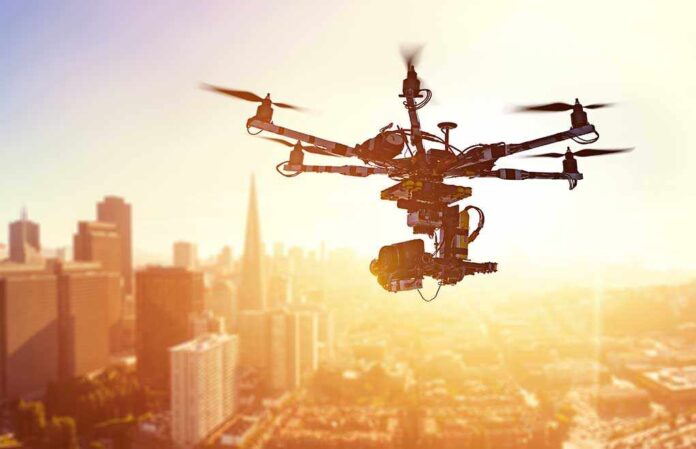
Just weeks before Christmas, a guard at Lee Correctional Institution in South Carolina spotted a suspicious package in the prison yard that read more like a high-end holiday menu than evidence of a crime. Inside, authorities found steak, crab legs, marijuana, cigarettes, and a tin of Old Bay seasoning, all delivered by drone to inmates waiting on the inside. The bizarre surf-and-turf smuggling run underscores how prison security is being tested by cheap drone technology.
Lee Correctional Institution, already known for past violence and security problems, has now become a poster child for how criminals adapt faster than bureaucracy. While taxpayers fund metal detectors, fences, and cameras, smugglers bypass them from the sky with consumer drones that can be bought online in minutes. Guards are forced into a cat-and-mouse game, scanning open yards and rooftops, while administrators struggle to modernize rules written long before aerial smuggling became common.
From Drugs to Dinner: What the Package Really Represents
The intercepted bundle was not just about marijuana and cigarettes; the presence of steak, crab legs, and name-brand seasoning points to a culture of entitlement inside facilities meant for punishment and rehabilitation. Organized contraband rings clearly believe they can operate with enough consistency to justify sending perishable luxury food. That kind of confidence suggests drone drops are not a one-off stunt but part of a growing underground marketplace run from behind bars and coordinated with contacts on the outside.
The mix of drugs and gourmet food also illustrates how prison contraband has shifted from basic survival goods to status symbols and black-market currency. Inmates with access to such items can gain influence, buy protection, or settle debts, feeding the same gang dynamics many conservatives believe liberal reformers have downplayed. When authorities recover a package like this one, it offers a rare glimpse into an economy most officials prefer to describe in sterile terms, even as it corrodes order and safety for guards and law-abiding inmates.
Drones, Weak Policy, and a System Playing Catch-Up
The rise of drone smuggling into prisons reflects a broader pattern Americans have seen for years: technology advancing quickly while lawmakers and bureaucrats move slowly. Consumer drones have become cheaper, quieter, and easier to control, giving criminals a perfect tool to hop fences and walls without stepping near a guard tower. Many state facilities still lack dedicated counter-drone systems, clear airspace restrictions, or the manpower to monitor skies already busy with civilian and commercial devices.
Conservatives watching this trend see a familiar story of misplaced priorities. Legislators spend time on ideological projects and symbolic resolutions while front-line officers beg for resources to stop real threats. Instead of pouring funding into diversity workshops or bloated administrative layers, states could invest in drone detection, better perimeter lighting, and staffing levels that allow guards to do more than run from crisis to crisis. Every intercepted drone package raises the question of how many more slipped through undetected.
Soft-on-Crime Culture Fuels the Contraband Economy
Incidents like the Lee prison drone drop do not happen in a vacuum; they grow out of a justice climate shaped by lenient prosecutors, crowded dockets, and political leaders more worried about offender comfort than deterrence. When long sentences are routinely shortened, charges are pled down, and prison discipline policies are weakened, contraband networks face less meaningful risk. Inmates learn quickly that the system’s bark is louder than its bite, which emboldens coordinated operations that can move drugs, phones, and cash along with luxury meals.
For many on the right, the drone-smuggled steak and crab legs symbolize a justice system losing its moral clarity. Prisons are supposed to protect the public, uphold accountability, and offer a path to honest work—not serve as staging grounds for black markets enabled by outside accomplices and inside corruption. Restoring order will require leaders willing to prioritize security over political fashion, back corrections officers, modernize technology, and send a clear message that incarceration means consequences, not creative new perks.