A World Cup spot can survive a qualifying campaign, but it may not survive a war.
Story Snapshot
- President Donald Trump said he “really don’t care” whether Iran participates in the 2026 FIFA World Cup, even though the U.S. is a main host nation.
- Iran already qualified and landed in Group G with Belgium, Egypt, and New Zealand, with group matches slated for U.S. venues.
- U.S. travel restrictions and case-by-case visa decisions created friction even before open conflict erupted.
- Iran’s football federation president cast doubt on participation after U.S. and Israeli airstrikes and the regional retaliation that followed.
Trump’s blunt message lands inside FIFA’s carefully guarded “neutral” bubble
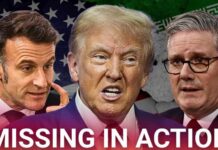
Donald Trump’s comment to POLITICO—indifference toward Iran playing in the 2026 World Cup—hits a nerve because the tournament is not happening “somewhere else.” The United States is a host, and Iran is already in the bracket. That collision of geopolitics and sport turns a normally procedural question—who gets visas, who shows up, who plays—into a test of sovereignty, security, and credibility for FIFA’s promise that soccer floats above politics.
Trump’s posture also signals a particular hierarchy of priorities. From a conservative, common-sense lens, national security and border control come first; entertainment comes second. That framing makes the remark politically legible at home, but it also removes the soothing language international sports bureaucracies depend on. FIFA needs predictability. A host leader saying he doesn’t care whether a qualified team appears tells every federation, sponsor, and police department that the safety-and-entry question may change with events.
Iran qualified early, but its Group G path runs straight through U.S. soil
Iran’s team did the hard part on the field: it qualified as the first nation to clinch a 2026 spot, then drew into Group G with Belgium, Egypt, and New Zealand. Unlike a tournament where teams bounce between countries, Iran’s group-stage setup points heavily at U.S. locations, including a scheduled opener against New Zealand in Los Angeles on June 15. That detail matters because “can they get in?” becomes more than a fan question—it becomes the tournament’s operational question.
Iranian football chief Mehdi Taj publicly questioned whether participation still makes sense after the airstrikes and the widening conflict. His quote wasn’t a legal filing, but it was a signal: the federation may decide it cannot sell the idea of celebration abroad while the country absorbs blows at home. That isn’t just emotion; it’s logistics. War disrupts flights, consular services, staffing, and the basic ability to plan travel months in advance.
Visas were the fuse before the conflict became the fire
The most overlooked part of this story is that the tournament had a visa problem before it had a battlefield problem. Trump’s travel ban, enacted last June, reportedly covered Iran while carving out an exemption for World Cup teams—yet leaving other visas to case-by-case judgment. In December, the State Department denied some Iranian visa applications tied to the World Cup draw in Washington. Iran threatened a boycott; FIFA stepped in to mediate. That pre-war episode exposed how quickly “sports exception” language can buckle under ordinary bureaucracy.
That’s why the current standoff is so combustible: it stacks uncertainty on top of uncertainty. Teams can be exempt on paper and still struggle in practice if staff, delegation members, media, or extended support personnel face denials. Fans face even steeper hurdles. From a U.S. perspective, tighter screening may be entirely justified during active conflict. From FIFA’s perspective, every denied visa becomes a headline that undermines the tournament’s promise of global access.
FIFA’s nightmare scenario: the host is in the fight with a participant
FIFA tries to act like Switzerland with a ball—neutral, procedural, and allergic to moral adjudication. That posture gets harder when the host nation is directly involved in strikes against a qualified participant. The organization reportedly continued logistical meetings in Atlanta with federations, a sign it intends to plan through the turbulence. That’s the only play FIFA really has: keep the trains running, keep the match calendar intact, and hope political leaders don’t force a sporting decision.
Still, FIFA’s contingency thinking matters. Reports suggest that if Iran withdraws, FIFA would replace it with another Asian team, with scenarios discussed involving Iraq or the UAE depending on playoff outcomes and timelines. That kind of substitution sounds simple until you imagine the ripple effects: new scouting, new travel, new security planning, and a rewritten competitive balance in Group G. Fans buy tickets for matchups, not placeholders, and sponsors pay for the certainty of big, predictable moments.
The conservative reality check: borders don’t pause for soccer, and they shouldn’t
Trump’s critics will call his “I don’t care” line callous; supporters will call it clarity. The strongest factual case for his posture is straightforward: a nation at war must control entry and protect residents, visitors, and infrastructure. No serious country hands out visas on autopilot during an escalating conflict. That view aligns with conservative values of secure borders and prioritizing American safety. The weaker part, strategically, is messaging. Indifference can read like instability to allies and organizers.
Trump told FIFA Iran is welcome to play in World Cup in U.S., officials say https://t.co/H5TxNPAyox
— QuietlyAhead (@Sofia85852) March 11, 2026
The unresolved question isn’t whether a soccer team deserves compassion; it’s whether the World Cup can remain a “festival” when it shares oxygen with war. Iran may still come, or it may not. FIFA may still insist politics stays out, or it may have to swap a qualified team in a way that feels political no matter what it calls it. This story won’t end with a quote. It ends when someone stamps a passport—or refuses to.
Sources:
Donald Trump makes “really don’t care” statement about Iran’s participation in 2026 FIFA World Cup
Donald Trump Does Not Care if Iran Plays in 2026 FIFA World Cup Amid Unrest
Iran World Cup participation in doubt as Trump weighs in; wider sports disruption discussed
Trump to POLITICO: ‘I really don’t care’ if Iran plays in World Cup
Trump dismisses Iran World Cup concerns amid ongoing military strikes: ‘I really don’t care’