In the midst of Venezuela’s catastrophic twin earthquakes, the rescue of an 18‑day‑old baby from the rubble in La Guaira has become a defining image of how, even in a collapsing system, human skill and solidarity can still pull life back from the edge.
Key Points
- An 18‑day‑old newborn was pulled alive from a collapsed building in La Guaira after being trapped for roughly 32 hours, reportedly without major injuries.[1][3]
- The baby’s mother was rescued later—about 60 to 90 minutes after the child—underscoring both the precision and the limits of urban search‑and‑rescue operations.[1][4][7]
- This “miracle rescue” is well‑documented by multiple independent videos and news outlets, but the exact entrapment duration and medical details remain second‑hand rather than officially logged.[1][2][3]
- The episode sits within a broader field of high‑risk, time‑critical earthquake rescue, where survival probabilities fall sharply after 72 hours yet individual outliers still occur.[10][19][23]
A Baby in the Rubble: What We Actually Know
The core facts of the La Guaira baby rescue are unusually well supported for a story that originated on social media. Video posted by Venezuelan user Andreina Quintero shows rescuers working under floodlights atop a heap of collapsed masonry in La Guaira, before carefully lifting out a very small infant to an audible wave of applause.[1][3] Independent reports by The Straits Times and Asharq Al‑Awsat both describe the child as an 18‑day‑old newborn pulled from a fallen building approximately 32 hours after the earthquakes struck, in the hardest‑hit coastal city north of Caracas.[1][3]
Secondary outlets in India and Bangladesh repeat the same basic narrative: a baby, 18 days old, trapped under the rubble for more than a day, rescued alive and apparently uninjured.[1][4][9] A widely shared clip from ABC7 shows the baby being handed to an emotional father; the station notes that the mother was then brought out of the rubble roughly an hour and a half later.[7] These pieces of footage line up on the essentials—location, approximate timing, apparent physical condition, and the sequence of child first, mother second.
The most detailed description of the baby’s medical status comes from Quintero’s follow‑up video, which shows the mother in a hospital bed being told by a medic that the baby “did not appear to have injuries” and may have been shielded by the mother’s body or another object.[1][3] That is a clinical judgment in real time rather than a formal discharge summary, but it fits the visible reality in the clips: an infant carried out without obvious bleeding or distress, moving and crying, then being cradled by relatives.
Miracle Narratives Versus Verification
Some skepticism has surfaced around the rescue, but it is largely generic rather than forensic. Critics point to the lack of easily accessible official logs naming the child, the parents, and the exact rescue time, and fold the baby into a broader concern about “miracle stories” proliferating before authorities can document events during the Venezuelan quakes.[10][11][26] That concern is reasonable at the category level; misinformation often rides on emotionally charged content in the immediate aftermath of disasters, and Venezuela’s chaotic casualty reporting—ranging from hundreds to tens of thousands missing depending on the source—illustrates how unstable the information environment can be.[10][11]
In this particular case, however, there is no identified counter‑evidence that directly challenges the rescue footage itself. No independent analysis has shown the video to be misdated, mislocated, or recycled from a different disaster. No individual claiming to be the father, mother, or rescuer has publicly denied the story. Instead, multiple outlets with their own verification standards—among them The Straits Times, Asharq Al‑Awsat, and regional broadcasters—have treated the rescue as factual, anchoring it to the documented devastation in La Guaira and matching it with other independently sourced accounts from the same city.[1][3][13][18]
The more subtle uncertainty lies in the details: was the baby under rubble for 32 hours, 48, or a slightly different interval? Social posts and secondary write‑ups offer both 32‑hour and 48‑hour figures.[1][2][9] That discrepancy matters for scientific precision, but not for the underlying claim; for any interval in that range, a newborn surviving entrapment in a collapsed building is medically plausible and operationally remarkable. Earthquake survival data show that the vast majority of living extrications occur within the first 24–48 hours, and that survival odds begin to drop sharply beyond 72 hours, not at the 24–48 hour mark itself.[19]
How Urban Search‑and‑Rescue Makes Such Survival Possible
To understand why this baby was reachable and salvageable, you have to look at the mechanics of urban search‑and‑rescue (USAR) in earthquake conditions. International guidance breaks post‑collapse operations into staged processes: initial rapid assessment of structural stability and obvious survivors, followed by systematic searching of voids and “honeycomb” spaces in the debris where people are most likely to be alive, then selective removal of material once a living person is detected.[23]
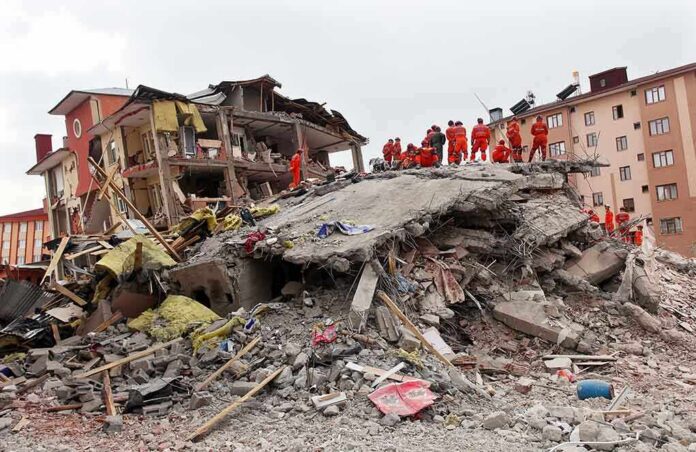
In La Guaira, those techniques were being applied under extraordinary pressure. Twin quakes of magnitudes 7.2 and 7.5 had flattened or severely damaged hundreds of buildings in the coastal region, including residential towers built to inconsistent standards.[10][11][17] Foreign USAR teams from the United States and Europe arrived within the first couple of days, working alongside local firefighters and volunteers who often had to improvise with limited heavy machinery.[10][13][22]
For infants and small children, survivable voids can be surprisingly small; pockets under reinforced slabs, broken furniture, or stairwells can prevent crushing while still leaving enough air to breathe.[23] Global experience from quakes in Turkey, China, and the Philippines shows that some victims can survive in such spaces for several days, particularly if injuries are not severe and ambient temperatures are not extreme.[19][23] The La Guaira newborn appears to have been in precisely such a pocket. The medic’s suggestion that the mother’s body or another barrier shielded the child is consistent with patterns seen in other disasters, where a parent’s position in the collapse physically deflects slabs or beams away from a smaller body.[1][3][18]
Technical capability matters, but so does speed. In the Venezuelan quakes, Swiss experts interviewed by Reuters and Fox News emphasized the three‑day, roughly 72‑hour window when finding survivors is still probable.[10] The baby’s rescue well inside that interval fits the general survival curve: difficult, but far from impossible, especially when local neighbors begin digging immediately after the shaking and professional teams reinforce those efforts as they arrive.[22][23]
A Rescue Set Against a Landscape of Loss
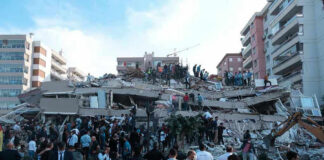
Miracle stories are always embedded in a larger, darker canvas. The Venezuelan earthquakes killed at least hundreds and likely far more; officials and aid organizations have cited figures ranging from around 235 deaths and 4,300 injuries in early official statements to well over 900 dead and tens of thousands missing as the days went on.[10][11][13] In La Guaira and other coastal areas, satellite imagery and ground footage show entire apartment blocks reduced to pancaked layers, interspersed with buildings that remained upright—a pattern that reflects decades of uneven enforcement of building codes and corrosion of public oversight.[10][16][17]
Within that destruction, rescuers pulled out other children, infants, and adults, some after extraordinarily long entrapment. Media compilations of “top rescues” from the Venezuelan quakes highlight a 14‑year‑old girl found under a collapsed church in Caracas, a 12‑year‑old boy in La Guaira, and two other infants recovered alive from a different collapsed building.[18][24] U.S. search and rescue teams documented the extraction of a mother and her nine‑month‑old baby from rubble, with both suffering only minor injuries.[5][6] These rescues, together with the La Guaira newborn, form a cluster of statistically unlikely but well‑documented survivals in a region where thousands of others could not be reached in time.
The human toll behind those statistics is stark. Among the stories that surfaced was that of soccer player Héctor Bellerín’s wife, Andrea, who died shielding their 20‑month‑old daughter Alana during the quakes; Andrea’s body was found in the rubble, while the child lived.[E! News transcript] That account, based on Bellerín’s own testimony and corroborated by a sports charity, mirrors the logic of the La Guaira medic’s speculation: a parent’s instinctive act of protection becomes a physical mechanism of survival.
Why These Stories Spread—and Why They Matter
Disaster sociology has long noted that “miracle rescues” move faster than official casualty lists. They are simple to grasp, emotionally potent, and visually compelling in ways that spreadsheets of missing persons never can be.[3][20][26] In Venezuela, as in other recent catastrophes, clips of babies and children being brought out alive circulated globally on X, Instagram, and YouTube within hours, often stripped of context but still carrying a clear message: amid institutional breakdown, ordinary people and specialized teams are still saving lives.[5][7][18][24]
That speed is a double‑edged sword. It can amplify genuine hope, sustaining both rescuers and families through exhausting operations. It can also create space for miscaptioned or recycled footage if users attach the wrong labels to dramatic images. The La Guaira baby story has so far avoided the latter trap; its imagery has been consistently tied to the Venezuelan quakes of late June, the coastal city context, and the Quintero videos. Yet the broader caution remains valid. In any major quake, responsible consumption of media means asking where a clip came from, who is corroborating it, and whether its details match what is known about the event on the ground.
For policymakers and technical responders, stories like the La Guaira rescue carry practical lessons. They underline the value of rapid, locally embedded USAR capacity rather than relying entirely on foreign teams that may take 36–72 hours to arrive.[22] They highlight the life‑saving impact of basic neighborhood equipment—ladders, ropes, hard hats, first‑aid kits—when used by trained civilians in the first hours after a collapse.[22] And they make visible the cost of lax building regulation: for every baby pulled from a survivable void, there are many others who never had such a chance because their homes were structurally doomed once the ground began to move.[17]
Balancing Hope with Hard Reality
From an evidence standpoint, the rescue of the 18‑day‑old baby in La Guaira is firmly within the category of “documented, highly unlikely but plausible survival.” Multiple independent news outlets, the original eyewitness, and regional broadcasters converge on the core claim, and no structured counter‑investigation has undermined it.[1][3][4][7][9] Some numerical details—the exact entrapment duration, the full medical course afterward—are sourced only to social media and secondary reporting, and should be treated as provisional rather than definitive. But nothing in the broader scientific and operational literature on earthquake survival makes the episode implausible.
Ultimately, the story’s importance is not only that one baby lived. It is that, in a disaster shaped by chronic infrastructural neglect and acute political dysfunction, thousands of Venezuelans and foreign responders nevertheless managed to create small islands of competence: a void located before it was too late, a mother shielded and then rescued, an infant carried out into the light. For anyone trying to think clearly about disaster risk, that is the tension to hold in view—hope, genuine and hard‑won, set against a landscape where it remains the exception rather than the rule.
Newborn rescued from Venezuela earthquake rubble
A baby has been rescued alive from the rubble of a collapsed building in Venezuela, some 32 hours after twin earthquakes struck the South American country.
The rescue took place in the coastal city of La Guaira, one of the areas… pic.twitter.com/ysyJdCwHJ8
— TheCable (@thecableng) June 28, 2026
What This Means for Future Earthquake Responses
Looking ahead, the La Guaira rescue should be read less as a miracle to be passively admired and more as a case study to be actively mined. The technical sequencing of the operation, the role of nearby residents, and the interaction between local and foreign teams are all analyzable components that can inform earthquake preparedness elsewhere.[22][23] There is nothing uniquely Venezuelan about the physics of collapsing concrete or the biology of neonatal survival under stress; what varies is governance, training, and the speed and quality of the response.
In countries with significant seismic risk and aging, poorly constructed urban housing—conditions that describe much of Latin America, parts of the Middle East, and swathes of Asia—the lesson is blunt. Invest in local USAR capacity before the ground moves, enforce building standards that prevent predictable pancaking, and build social networks that can turn neighbors into first responders rather than passive victims.[17][22][23] If those steps are taken seriously, future babies caught in future collapses will not need a miracle to survive. They will need competence. And competence, unlike earthquakes, is entirely within human control.
Sources:
[1] YouTube – Baby rescued ‘against all odds’ from earthquake rubble in Venezuela
[2] Web – 18-day-old baby rescued from rubble of Venezuela quake
[3] Web – 18-Day-Old Baby Defies Death, Rescued Alive After 48 … – Instagram
[4] Web – An 18-day-old baby was rescued in La Guaira, Venezuela after she was …
[5] Web – An 18-day-old baby was rescued from the rubble of a building … – …
[6] Web – An 18-day-old baby was rescued from the rubble of a building … – …
[7] Web – Rescue crews in La Guaira saved an 18-day-old baby who … – Instagram
[9] Web – Rescue crews in La Guaira saved an 18-day-old baby who had been …
[10] Web – Miracle in Ruins: 18-Day-Old Baby Emerges Alive From Venezuela …
[11] Web – Survival window desperately fading with nearly 50000 missing
[13] Web – Sky’s open-source intelligence (OSINT) editor Adam Parker …
[16] Web – Venezuelans recover the living and mourn the dead after earthquakes
[17] Web – Satellite images revealed substantial damage to several areas of the …
[18] Web – Older buildings and substandard construction left Venezuela …
[19] YouTube – Top 5 Miracle Rescues Offer Hope After Deadly Earthquakes
[20] Web – [PDF] Earthquake Disasters ± Lessons to be Learned
[22] Web – Understanding post-disaster population recovery patterns – PMC – NIH
[23] Web – Resilience Against Earthquakes: Some Practical Suggestions for …
[24] Web – Search and rescue after disaster
[26] Web – Advances in earthquake and cascading disasters – ScienceDirect.com
© featurednews.com 2026. All rights reserved.