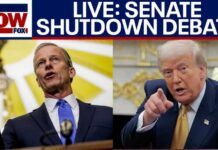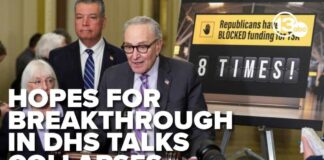
Congress is pushing a controversial multibillion-dollar “handout” to voters in a last-ditch bid to end the longest government shutdown in U.S. history—raising concerns among conservatives about fiscal sanity, government overreach, and dangerous political precedent.
Story Snapshot
- Shutdown has reached 40 days, breaking previous records and intensifying public hardship.
- Congress is considering direct payments and expanded health insurance subsidies as a shutdown-ending compromise.
- Critics warn the proposal sets a perilous precedent of using taxpayer-funded handouts as a political bargaining chip.
- Conservatives are alarmed by the impact on the federal deficit and the move’s potential to undermine constitutional checks and fiscal discipline.
Historic Shutdown Drives Unprecedented Government Response
On November 5, 2025, the U.S. government shutdown entered its 35th day, surpassing all previous records and creating widespread economic pain. Key federal programs like SNAP food assistance and ACA health insurance subsidies have lapsed, leaving millions of Americans—especially federal employees and vulnerable families—without critical support. The impasse began after both Republican and Democratic budget proposals failed, with major disputes over healthcare spending, executive power, and runaway deficits. The shutdown’s unprecedented duration has triggered mounting public frustration and pressure on lawmakers to deliver a solution.
Trump proposes multibillion-dollar handout to voters to end shutdown: ‘To the people!' https://t.co/EdylHVeegY
— Steve Williams (@HISteveWilliams) November 10, 2025
Bipartisan negotiations have intensified as the crisis deepens. Congressional leaders from both parties are now advancing a proposal centered on multibillion-dollar direct payments to voters and a two-year extension of enhanced ACA tax credits. While these measures aim to ease immediate hardship and secure enough votes to reopen the government, their scope and expense have drawn sharp criticism from fiscal conservatives. The White House and select private donors have already intervened to keep military paychecks flowing, but most federal services remain halted, and public patience is wearing thin.
Fiscal Responsibility and Constitutional Concerns Emerge
Conservative lawmakers and policy analysts are sounding the alarm about the proposal’s long-term dangers. Direct payments and expanded subsidies, critics argue, amount to a “budget-busting, pork-filled, lobbyist handout” that will balloon the national deficit and reward political brinkmanship. Many see this as a dangerous erosion of constitutional checks: instead of making tough decisions to rein in spending and restore discipline, Congress is resorting to short-term giveaways that could set a damaging precedent for future standoffs. The proximity to Election Day only intensifies concerns that such measures are designed more for political gain than responsible governance.
Previous shutdowns, including the 2018–2019 episode, never used direct payments as a resolution tool. This novel approach raises questions about the role of government: Should taxpayer dollars be deployed as political leverage, or should leaders prioritize sustainable solutions that respect individual liberty and fiscal sanity? Some conservative groups argue that this move undermines traditional American values of limited government and personal responsibility, fueling frustration among voters already weary of overspending and government overreach.
Economic, Social, and Political Fallout
The shutdown’s immediate impacts are severe: federal employees face missed paychecks, over 40 million SNAP recipients lose food assistance, and ACA enrollees confront rising health costs. The broader economy suffers from lost productivity and delayed payments, while public trust in government erodes further. Looking ahead, the proposal’s precedent could normalize the use of direct financial incentives as a tool for resolving partisan disputes—threatening fiscal stability and opening the door to greater government expansion. Policy analysts warn that repeated reliance on such handouts risks further polarization and undermines the values of self-reliance and prudent governance.
Despite the urgency for compromise, no final agreement has been reached. Negotiations continue under intense electoral and economic pressure, with both sides seeking to balance immediate relief against the broader implications for American democracy and fiscal health. Limited data is available on the exact structure of the proposed payments, but the emerging framework highlights a growing tension between short-term fixes and the conservative principles of limited government, fiscal restraint, and respect for constitutional process.
Sources:
Government shutdown 2025: What to know – USAFacts
Fall 2025 Government Shutdown Updates – Duke Government Relations
Government shutdown latest: Record history, Trump, Senate votes – CBS News
Government Shutdown Fact Sheet – Professional Services Council