The fastest way a distant war reaches your wallet is through a barrel of oil—and this time the price shock is dragging the stock market with it.
Quick Take
- Oil jumped from the high $60s into the $80s and then above $90 a barrel in roughly a week as the Iran conflict escalated.
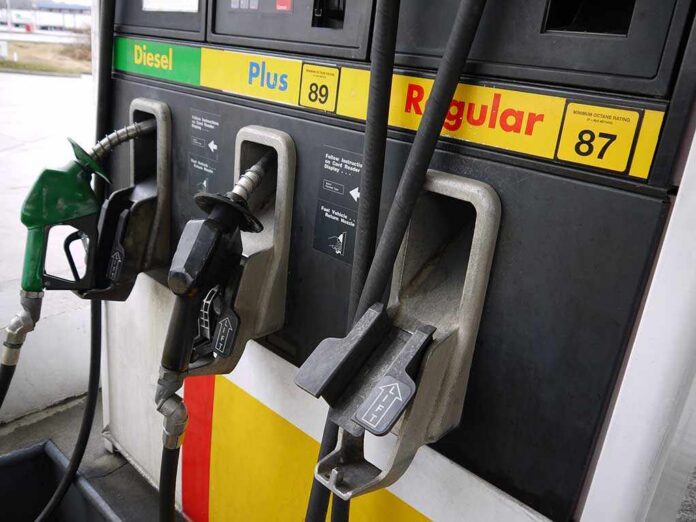
- Gasoline spiked fast, with national pump prices jumping about 32 cents in seven days, the kind of move families feel immediately.
- Markets didn’t treat this as “just another headline”: major U.S. indexes fell as investors started whispering the word policymakers hate—stagflation.
- Treasury tried to add supply by granting a brief waiver tied to Russian oil flows, a rare sign Washington sees energy prices as a political emergency.
Oil’s “War Premium” Is the Tax Nobody Voted For
Oil markets don’t wait for history books. They price fear in real time, and the Iran war injected a clear “war risk premium” into crude—roughly the extra dollars traders tack onto a barrel because shipping lanes, production sites, and political decisions can change overnight. Analysts pegged “fair value” nearer $65, then watched Brent sprint into the $80s and beyond as the conflict timeline tightened and the downside risks widened.
That premium behaves like a stealth tax on everything that moves. Diesel sets the cost of trucking. Jet fuel sets the cost of air travel. Natural gas and oil-linked contracts bleed into manufacturing and heating. The public argument turns instantly emotional—“price gouging,” “greed,” “manipulation”—but the mechanical truth stays boring and brutal: if traders think supply might get interrupted, they demand higher prices today to carry the risk.
Why Iran and the Strait of Hormuz Still Run the Board
Iran’s role matters because oil is a global pool, not a local product. Iran represents about 4.5% of global supply, and that alone can nudge pricing when uncertainty hits. The larger pressure point is geography: the Strait of Hormuz carries about 20% of the world’s oil flows. Even without a full blockade, the mere possibility of disrupted shipping—insurance costs, rerouting, delays, damage—pushes prices higher before a single tanker turns around.
That’s why this conflict hit differently than a routine OPEC headline. Markets can model supply-and-demand. They can estimate spare capacity. They can argue about electric vehicles. They can’t spreadsheet a missile strike or an unexpected escalation. When the Strait becomes a question mark, every importer from Europe to Asia starts competing for “safer” barrels, and that competition shows up in your local station’s sign faster than any politician can schedule a press conference.
Wall Street’s Message: Stagflation Isn’t a Theory, It’s a Risk
Stocks sold off as oil surged because investors smelled a policy trap. Higher energy costs lift inflation while also squeezing consumers, which slows growth—classic stagflation conditions. One day the story is “rate cuts are coming.” The next day it’s “rate cuts might be delayed because inflation could reaccelerate.” That whiplash is poison for portfolios that rely on cheap credit, especially growth stocks and heavily leveraged companies that need lower rates to justify their valuations.
The timing made it worse. Economic data already showed strain in the labor market, with employers cutting more jobs than they created. Layer a sudden energy shock on top of that and you get the 1970s fear: prices rising while paychecks wobble. Conservatives don’t need an academic seminar to understand the common-sense version—families can’t spend what they don’t have, and small businesses can’t hire when fuel and shipping costs jump overnight.
Treasury’s Russia Waiver Signals How Bad the Price Spike Looked
Washington’s most telling move wasn’t a speech; it was a waiver. Treasury temporarily lifted penalties to allow India to purchase Russian oil, framed as a brief policy change to keep oil prices from running hotter. That decision reads like a flare gun: the administration wanted extra barrels moving through the system now, even if it meant bending a sanctions posture for 30 days. Energy security beat messaging discipline.
From a conservative, reality-first perspective, the waiver underscores a hard truth: supply fixes inflation faster than slogans do. When energy spikes, leaders reach for the simplest lever—more supply, fewer bottlenecks, fewer constraints. The risk is moral hazard and mixed signals abroad, but the alternative—letting prices spiral and hoping the Federal Reserve can “manage it”—often punishes working households first through higher prices and later through weaker employment.
What This Means for Households and Retirement Accounts
Households face a two-front squeeze: higher weekly fuel bills and higher prices embedded in groceries and services a month later. Investors face volatility and rotation: energy stocks can benefit when crude rises, but they can also reverse quickly if diplomacy surprises the market or if supply disruptions prove less severe than feared. The smart posture looks boring—cash reserves, lower revolving debt, and disciplined retirement contributions—because panic trading rarely beats steady risk management.
Markets also tend to “overcorrect” emotionally. Traders price a four-week engagement, then reprice it again if the conflict drags, then reprice it again if the Strait looks threatened. The practical takeaway is to separate what you can control from what you can’t. You can’t reopen shipping lanes yourself. You can control consumption, commuting choices, and balance-sheet resilience so that an $80-to-$90 oil jump doesn’t turn into a personal financial emergency.
The fallout is ratcheting up what consumers and businesses will pay for gasoline, diesel, and jet fuel, with some drivers already feeling it at the pump.https://t.co/nfNwVsGsSj
— WTAJ News (@WTAJnews) March 8, 2026
The open loop now is simple and unnerving: does the conflict stay contained, or does it expand into a shipping-and-supply crisis that keeps oil elevated long enough to reset inflation expectations? If crude holds above $90 and flirts with $100, the pain won’t stay at the pump. It will creep into borrowing costs, business confidence, and election-year politics—because nothing tests a country’s patience like paying more to go to work.
Sources:
https://intellectia.ai/blog/oil-prices-surge-iran-war-impacts-stock-market-2026