A political movement that sells unity as its superpower just discovered its real fault line: what “America First” means when missiles start flying.
Story Snapshot
- Trump rebuked Tucker Carlson after Carlson condemned U.S.-Israel strikes on Iran as “disgusting and evil.”
- Carlson’s break matters because he had been a high-profile ally and cultural amplifier for Trump’s coalition.
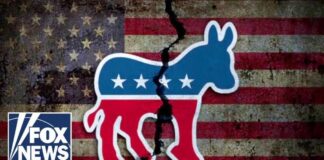
- The fight exposes a long-simmering MAGA split between national-security hawks and anti-intervention populists.
- Trump framed “MAGA” as synonymous with his leadership and with prioritizing safety from nuclear and missile threats.
- The next chapter isn’t just about Iran; it’s about who gets to define the movement before the next election cycle.
The moment Trump said “not MAGA,” the argument stopped being about Iran
Trump’s criticism of Tucker Carlson didn’t land as a routine media spat; it landed as a boundary marker. Carlson blasted the U.S.-Israel attacks on Iran in plain moral terms, and Trump answered with an identity verdict: Carlson had “lost his way” and wasn’t “MAGA.” That matters because movements don’t fracture over policy details first. They fracture when leaders start revoking membership cards in public, especially from former allies.
Carlson’s posture—condemn the strikes, warn of political fallout—was designed to speak to voters who heard “no more foreign wars” as a promise, not a slogan. Trump’s posture—dismiss Carlson’s judgment and intelligence, insist MAGA wants the country safe—was designed to speak to voters who view Iran’s nuclear and missile ambitions as a direct national-security threat. Those are not incompatible concerns in theory. They become incompatible when loyalty becomes the test.
Two versions of “America First” collide under the same banner
One version of America First starts with the border, the factory floor, and the taxpayer, then treats foreign conflicts as expensive temptations. Another starts with deterrence, credibility, and the belief that enemies abroad create emergencies at home. The Iran question forces both versions into the same room. Trump argued that preventing nuclear capability and missile threats is core to protecting Americans. Carlson argued that the strikes violate the movement’s anti-war instincts.
Conservatives tend to reward clarity, and both men offered it—just in different languages. Trump spoke the language of threat reduction and national survival. Carlson spoke the language of betrayal and moral disgust. The danger for the coalition is that each side thinks it holds the original meaning of the brand. When both claim the mantle of “common sense,” the audience starts picking tribes instead of weighing facts, and that’s when persuasion dies.
Why this feud stings: Carlson wasn’t an outside critic, he was an inside megaphone
Carlson’s importance in this story isn’t celebrity; it’s infrastructure. He represented a bridge between Trump-world politics and the conservative media ecosystem that keeps narratives moving when campaigns aren’t on the calendar. That’s why Trump’s response carried extra force, and why other voices—such as lawmakers and influencers already uneasy about escalation—suddenly had a reference point. If Carlson can be labeled “not MAGA,” anyone can.
That dynamic creates an odd incentive structure. Anti-war critics may harden their positions because the cost of dissent has already been paid. Pro-war supporters may cheer the expulsion because it simplifies the coalition into “with us or against us.” Neither outcome improves decision-making. A mature movement should be able to argue about war powers, objectives, and exit ramps without turning strategic disagreement into a purity purge. Conservative voters can handle debate; they can’t stand gaslighting.
The operational timeline fuels distrust, not just ideology
The timeline around strikes and claims matters because credibility is the coin of the realm. Reports described a June 2025 operation targeting Iranian nuclear facilities, followed by a later escalation framed as necessary to end nuclear ambitions and missile threats. Critics seized on the apparent inconsistency: if the earlier effort “wiped out” capabilities, why is a larger operation required now? Supporters answer that deterrence fails when adversaries rebuild, hide, or accelerate programs.
Common sense says both could be partly true, which is exactly why leaders owe the public precision. Conservatives don’t demand perfection; they demand honesty about objectives, limits, and costs. If the mission is counter-proliferation, say so and define success. If the mission drifts toward regime change, admit it and explain the end state. When goals stay foggy, skepticism grows—especially among voters who watched Iraq and Afghanistan turn from decisive language into endless ambiguity.
Carlson’s “I’ll always love him” response is political judo, not surrender
Carlson’s reported response—affectionate, loyal-sounding, and non-escalatory—works because it refuses Trump the clean enemy he implied. Saying “I’ll always love him” keeps Carlson in the emotional neighborhood of the movement while still opposing the war. It’s a familiar conservative tactic: separate the man from the decision, then challenge the decision without declaring yourself the opposition party. That approach can attract readers and viewers exhausted by performative feuds.
Tucker Carlson Responds After Trump Says He’s ‘Lost His Way’ and ‘Not MAGA’: “I’ll Always Love Him' https://t.co/bsoYkc1u6N #gatewaypundit via @gatewaypundit
— Fearless45 (@Fearless45Trump) March 6, 2026
The bigger question is whether the base accepts the distinction. Trump’s argument effectively defined MAGA as personal leadership plus national-security action. Carlson’s argument defined MAGA as anti-intervention fidelity. If the movement chooses the first definition, media dissent becomes a loyalty problem. If it chooses the second, presidents face tighter constraints on force abroad. Either way, the Iran debate just became a referendum on who owns the label.
Sources:
Trump Slams Tucker Carlson Over Criticism Of Attacks On Iran: ‘Has Lost His Way’
Trump’s Iran decision sparks backlash from Tucker Carlson, MAGA
Tucker Carlson on Trump’s Iran strikes
Cracks appear in Trump’s MAGA base as leading figures criticize the Iran war