When a flight crew falls ill in midair and the cockpit diverts, the system is doing exactly what it was built to do: prioritize safety, stabilize the situation, and restore the operation with a relief aircraft and crew—often before the public ever learns precisely what triggered the event.
At a Glance
- A Frontier Airlines flight diverted after four flight attendants became ill following an unusual odor onboard; the aircraft landed safely and no passengers requested medical attention.
- Airlines routinely execute “service recovery” after diversions, including arranging a replacement aircraft and relief crew when duty-time limits prevent the original crew from continuing.
- Fume/odor complaints and in-flight medical events are uncommon but expected risks; diversions occur in roughly 4%–7% of in-flight medical emergencies.
- Most post-diversion details remain operational rather than forensic; the safety case turns on procedure and outcomes—safe landing and medical assessment—not instant cause attribution.
What happened and why the response looks familiar
Frontier’s account is straightforward and consistent with standard airline practice: a flight encountered an unusual odor aloft, four cabin crew reported symptoms, and the pilots diverted to the nearest suitable airport. The aircraft landed uneventfully, medical responders evaluated those affected, and—critically—no passengers requested treatment. Frontier arranged a replacement aircraft and relief crew to continue transporting customers. This pattern aligns with how U.S. carriers handle unplanned events that potentially impair crew performance: secure the airplane on the ground, assess medical needs, and reset the operation with rested personnel if original crew members are unfit or time-limited.
If you follow airline operations, none of this is surprising. When a flight diverts for a medical or crew-incapacitation event, the original crew may “time out” under duty and rest rules, even if the aircraft is technically serviceable. Carriers then dispatch a relief crew or reposition another airplane to carry customers onward. Frontier has done exactly that in prior diversions, including a Bermuda medical stop where the airline brought in a relief crew before the flight could continue—an unglamorous but routine piece of the safety machinery that underwrites modern reliability.
How a diversion decision gets made
From the cockpit’s perspective, the diversion call pivots on three variables: severity, uncertainty, and proximity. Severity captures how sick the affected person is—or, in cabin-air events, whether symptoms are spreading or degrading crew capability. Uncertainty looms large with odors or suspected fumes, because root causes often aren’t diagnosable at altitude; with ambiguity, safety doctrine favors landing. Proximity is the calculus of where to put the airplane: the nearest suitable runway with medical support, ground handling, and, ideally, maintenance and crew resources.
Medical literature helps anchor how unusual a diversion is. Across large datasets of in-flight medical emergencies, diversion is the exception rather than the rule, occurring in about 4.4% of such events in one JAMA review, with other clinical guidance bracketing the range from roughly 4% to 7%. Cabin-odor cases sit at an odd intersection: they may present like a cluster of medical complaints, yet the underlying concern is operational—protecting the crew and passengers from a poorly characterized risk while preserving aircraft control and systems integrity. A safe, prompt landing is therefore the correct outcome, even when post-landing tests find no acute hazard.
Odors, “fume events,” and why causes can be elusive
Commercial jets are sealed pressure vessels fed by conditioned bleed or electric-pack air; any unusual odor will be noticed quickly in the confined environment of a cabin or galley. Potential sources range from benign—de-icing residue, galley equipment, lavatory chemicals—to more serious possibilities like oil seal leaks or electrical components overheating. The critical point is that symptoms, not definitive diagnosis, drive the initial response. If multiple crew report dizziness, nausea, or headache, the threshold for diversion is appropriately low.
Odor-linked events at airlines routinely trigger hazmat out of an abundance of caution. In prior Frontier cases, responders conducted on-stand evaluations and found no passenger illnesses requiring treatment while still taking crew complaints seriously—a split outcome that is common in these scenarios and reinforces the prudence of landing early rather than troubleshooting aloft. Quick ground determinations are not always conclusive; some compounds dissipate, and aircraft ventilation exchanges cabin air rapidly on descent and taxi. The absence of a smoking gun does not negate the decision to divert; it validates a conservative safety bias.
What happens after the wheels are on the ground
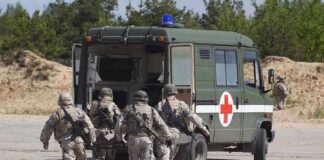
Once parked, three workstreams start in parallel. Medical responders evaluate those reporting symptoms and stand by for any delayed presentations. Maintenance inspects the aircraft, focusing on air conditioning packs, ducts, electrical bays, galleys, and recent service history—anything that could plausibly produce an odor. Operations teams then confront the constraint that governs the rest of the day: crew legality. Even if the jet checks out, the original crew may be medically unfit or out of duty time because the diversion and extended ground time eroded their flight-time window. That is why airlines pre-plan relief operations; guidance used in airline manuals and safety knowledge bases explicitly asks dispatchers and flight crews to consider the availability of replacement crews at diversion points.
Frontier’s service recovery approach in these circumstances—reaccommodating passengers on a replacement aircraft or subsequent flights, sometimes into the next day—is consistent with industry norms and with the airline’s own prior diversions where relief crews were flown in to restart the schedule. Customer-facing policies then govern rebooking and refunds depending on whether the original flight was canceled, significantly delayed, or successfully resumed; the operational backbone is designed first around safety, then around restoring connectivity for the greatest number of travelers.
How often this happens—rare, but built into the system
To place this event in context, a modern narrowbody might complete thousands of legs a year. Even if only a small fraction of flights experience an in-flight medical issue, and a smaller fraction still divert, the absolute number of diversions across a national network is not trivial. The medical literature’s 4.4% diversion rate among in-flight medical emergencies translates to an operational tempo that every major carrier staffs and trains for; it explains why, when events do occur, the choreography looks practiced rather than ad hoc. Clinical guidance for physicians who volunteer in-flight likewise anticipates the diversion question and frames it in terms of patient condition, aircraft capability, and proximity to definitive care.
The lesson is not that odor-linked crew illness is common—it is not—but that it sits inside a well-understood safety envelope. The costs are time, inconvenience, and occasionally an overnight; the benefit is removing uncertainty from 30,000 feet and trading it for ground-based certainty, medical access, and maintenance diagnostics.
Why quick public answers about “what it was” are rare
Passengers and readers understandably want a tidy root cause: was it oil, ozone, cleaning fluid, or something else? The reality is that many odor incidents yield no single definitive culprit. Airflow clears volatile compounds quickly; maintenance findings may be circumstantial—heat discoloration near an electrical relay, a minor pack seal weep, residue near a galley drain. Airlines, regulators, and manufacturers share data, but public summaries tend to emphasize outcomes and corrective actions rather than chemical specifics, because the safety case rests on process adherence and conservative decision-making, not on perfect diagnosis in the moment.
In this Frontier case, the key outcomes are clear: pilots diverted, the aircraft landed safely, multiple crew were evaluated, and passengers did not require medical attention. The airline then executed relief operations to continue the schedule. Each element maps to established practice and to the statistical profile of diversions associated with in-flight medical events.
For travelers: practical takeaways when your flight diverts
First, accept that the diversion is a safety decision made under uncertainty; it is not a referendum on the airline’s competence. Second, after landing, follow crew instructions and allow medical teams space to work. Third, assume that duty-time rules may necessitate a crew swap—even if the airplane is fine—and that a replacement aircraft might be the fastest way to get you moving again. Finally, use the airline’s channels to rebook or request refunds if your original itinerary cannot be salvaged; carriers publish these policies and generally apply them consistently following irregular operations.
Sources:
nypost.com, flyfrontier.com, aafp.org, abcnews.com, traveltourister.com, openanesthesia.org, abc7.com, reddit.com
© featurednews.com 2026. All rights reserved.