When Washington divides, presidential power doesn’t disappear; it reconfigures. The presidency’s most potent tool becomes negative power—foremost the veto—backed by whatever lawful control the executive can exert over the administrative state. Understanding the boundary between a hard-nosed veto strategy and an expansive theory of unilateral authority is the real work for citizens, not reacting to a headline verb like “threaten.”
At a Glance
- President Trump publicly vowed he would wield “tremendous powers,” including the veto, if Democrats controlled Congress; he embraced the moniker “Mr. Veto.”
- The Constitution’s Presentment Clause gives a president the power to block legislation unless two-thirds of both chambers vote to override—a high bar by design.
- Trump linked broader executive control claims to a Supreme Court decision he described as expanding presidential authority over agencies; the specific legal contours were not detailed in the reporting.
- Critics warn that governing by executive action risks eroding checks and balances; the practical limits still turn on courts, appropriations, oversight, and coalition politics.
What Trump Said, and the Concrete Tool He Named
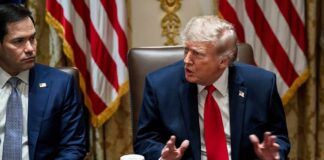
In an on-record phone interview with CBS News, President Trump said he was prepared to use “tremendous powers—tremendous powers, executive powers” if Democrats captured either chamber of Congress, adding that he would be “Mr. Veto.” He underlined the mechanism bluntly: “I have the ultimate power—it’s called ‘veto.’” Those are not paraphrases filtered through surrogates; they are attributed to the president in a direct report and video segment from CBS, which framed the remarks around the prospect of divided government and a White House leaning on executive authority to advance its agenda.
The veto is not rhetorical flourish. Article I, Section 7 requires that bills passed by Congress be presented to the president, who may return them with objections; only a two‑thirds vote in both houses can override the veto and enact the bill into law. In institutional terms, that is hardball by design. It empowers a president to halt unwanted legislation outright or to force bargaining—what scholars call “veto bargaining,” in which credible threats shape the content of legislation before it ever reaches the Resolute desk.
How Negative Power Works in Divided Government
Modern Washington spends a great deal of time in divided government, and in that environment the veto becomes the president’s central instrument of leverage—not to rewrite statutes unilaterally but to prevent their enactment unless Congress assembles a supermajority. Presidents exploit that negative power in two ways. First, by blocking bills that would reverse or constrain executive policies. Second, by signaling a veto early enough to induce Congress to pare back provisions unlikely to survive. Trump articulated that logic directly—veto for “a couple of months,” then demand a deal—a distillation of the bargaining model political scientists have documented for decades.
That negative power is potent precisely because it is bounded. The president cannot legislate by veto; he can only stop legislation. Congress retains appropriations, oversight, confirmation, and the ability to legislate around executive action when coalitions are strong enough. When coalitions are not, stalemate is not a constitutional failure; it is the equilibrium the framers anticipated in the separation of powers.
The Claim of “Tremendous Powers” Beyond the Veto
Trump also anchored his broad language about executive power to a Supreme Court decision he called “the Slaughter case,” asserting that it “gives the president tremendous powers that it never had before,” particularly over agencies, boards, and commissions. CBS reported that linkage but did not supply the opinion’s text, docket, or precise holding; the account therefore documents the claim, not its legal reach. The difference matters: the constitutional basis for a veto is black-letter law, while the scope of any decision expanding presidential control over independent agencies turns on the actual opinion, its reasoning, and how lower courts apply it in future disputes.
Recent jurisprudence has, in general, pushed the executive–independent agency line toward greater presidential removal and control, and advocates on both sides know that the details—removal standards, statutory structures, and remedy—are everything. Until the contours of the cited decision are established on the record, the only defensible takeaway is limited: Trump publicly tied his broader claims to an asserted Supreme Court ruling, but reporting did not specify the legal boundaries of those powers or how they would apply across the administrative state.
Where the Real Disagreement Lies
Critics argue that Trump has used and intends to use executive authority not merely to navigate gridlock but to dominate governance, and that Congress has been slow or unwilling to respond. Their case collects examples from tariffs to immigration enforcement, foreign policy, and workforce actions that proceeded without fresh legislation, contending that the pattern amounts to a strategy to govern without Congress when partisan control shifts. That critique goes beyond the veto’s constitutionally settled terrain and questions the breadth and frequency of unilateral action as a mode of rule.
Two points are worth separating. First, as a descriptive matter, presidents of both parties reach for executive action when Congress is inhospitable; trade delegations, emergency authorities, and enforcement discretion are longstanding levers. Second, as a prescriptive matter, the line between energetic administration and executive overreach is drawn by law, appropriations, oversight, and courts. Even robust executive action remains vulnerable to targeted riders, confirmation leverage, inspector general investigations, and judicial review. Claims that nothing can constrain a president overstate the case; constraints exist, but they require institutional will and coalition building to activate.
Mechanics and Limits: What Would Actually Happen
If Democrats controlled a chamber, a “Mr. Veto” strategy would immediately reorder legislative bargaining. Expect fewer large omnibus bills that dare the veto and more narrow vehicles sculpted to attract cross‑pressure votes. Expect Congress to lean more heavily on appropriations riders to shape executive behavior and on oversight to extract information and slow or redirect agency initiatives. In response, expect the White House to test the edge of existing statutory delegations—trade, immigration, procurement, national security—without crossing the bright lines that might unify a veto‑proof coalition against it. Each side fields real leverage; neither possesses a blank check.
Litigation would mediate the gray zones. If the administration asserted heightened removal authority over “independent” officials or restructured boards, challenges would force courts to reconcile the cited Supreme Court decision with specific organic statutes. If regulations moved quickly, Congressional Review Act timelines and appropriations constraints would become central. The story is not a president acting in a vacuum; it is a three‑branch game with well‑worn moves and genuine, if time‑consuming, checks.
"Trump should 'take stock' and 'own' election outcome, Sen. Tillis says"
"Tillis warns that GOP lawmakers are afraid to challenge President Trump, Congress is surrendering its power, and some of the president's closest advisers are leading him toward failure."…
— Aisha (@aishamusic) October 31, 2026
Reading the Rhetoric Without Losing the Substance
Rhetoric travels faster than doctrine. “Tremendous powers” grabs attention; “presentment and veto bargaining” does not. Yet the latter is the constitutional core of what Trump put on the table, and it is dispositive of the near-term stakes: a president can and will halt bills he opposes unless Congress can muster supermajorities. The larger claim—that a Supreme Court ruling has opened a wider aperture for presidential control of the administrative state—may prove consequential, but its scope will be defined in court opinions, not in an interview gloss. Until those contours are documented, the responsible way to understand the moment is simple: in divided government, the veto dominates, executive action fills the lawful gaps, and the other branches still have tools to answer in kind.
Sources:
mediaite.com, cbsnews.com, abc7chicago.com, ilmattino.it
© featurednews.com 2026. All rights reserved.