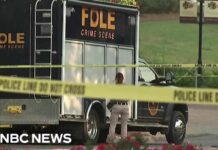
An innocent hiker was tackled by law enforcement in the middle of the Idaho wilderness because he happened to look like a fugitive accused of the most heinous crime imaginable—killing his own children.
At a Glance
- Innocent hiker in Idaho mistaken for wanted fugitive Travis Decker, accused of murdering his three daughters.
- Multi-state manhunt triggered massive law enforcement and media response across the Pacific Northwest.
- Case underscores dangers of mistaken identity and raises questions about law enforcement tactics in high-profile chases.
- Public outrage grows over how government responses disrupt lives of innocent citizens while the real suspect remains at large.
Massive Manhunt Unleashed After Unimaginable Crime
Washington state was rocked to its core when Travis Decker, a father and avid outdoorsman, failed to return his three daughters to their mother after a routine custody visit. Within days, the nightmare escalated: all three girls—Paityn, Evelyn, and Olivia, ages 9, 8, and 5—were found murdered at a remote campsite, each with plastic bags over their heads and their wrists zip-tied. Bloody handprints on Decker’s abandoned truck told the world what law enforcement would not: something absolutely evil had happened, and the main suspect had disappeared into the wild, triggering a multi-agency manhunt that spanned state lines and consumed millions in taxpayer resources.
From the moment the story broke, the media and government agencies turned the region upside down. The U.S. Marshals Service, local sheriffs, and even the National Guard joined forces, flooding wilderness areas with officers, dogs, helicopters, and drones. The public was told Decker was armed, dangerous, and a survival expert—exactly the kind of man who could vanish for months while law enforcement scrambled to catch up. The $20,000 reward plastered across every screen in the Northwest only added to the fever pitch, ensuring that every camper and hiker would be scrutinized, questioned, and, as we’d soon see, potentially put through hell for simply being in the wrong place at the wrong time.
Idaho Hiker Caught in the Crosshairs of Government Overreach
On July 5, a family camping in Idaho’s Sawtooth National Forest called in a supposed “sighting” of Decker. What followed was a full-blown federal response—swarms of agents, roadblocks, and yet another round of breathless media coverage. The man in question, a hiker named Nick, soon found himself surrounded by law enforcement, interrogated, and yanked out of his normal life for the crime of looking vaguely like the fugitive plastered on every wanted poster from Wenatchee to Boise.
Nick’s life was thrown into chaos. His workplace received calls from the media, his every movement was scrutinized, and his personal safety was jeopardized by the sheer scale of the government’s dragnet. After a lengthy interview and background check, authorities finally admitted they had the wrong man. But the damage—emotional, professional, and reputational—had already been done. Law enforcement, in a rare moment of candor, shut down the Idaho search and sheepishly acknowledged the mistake, but offered little in the way of apology or restitution for turning an innocent citizen’s life upside down.
Public Trust Frays as Government Fumbles the Pursuit
This fiasco is just the latest example of what happens when the government’s appetite for control tramples the rights and dignity of its own citizens. The tragic murders of three innocent girls should have been a rallying cry for real justice and competence, not an excuse for bureaucratic overreach and media hysteria. Instead, we watched as millions of taxpayer dollars were thrown at a manhunt that managed only to victimize a law-abiding hiker, while the real suspect, Travis Decker, remains at large—free, it seems, to outsmart the very agencies meant to protect us.
The episode has stoked fears among outdoor enthusiasts, families, and local business owners who rely on tourism in the very wilderness areas now haunted by armed patrols and government checkpoints. The economic ripple effect is real: canceled reservations, lost income, and an atmosphere of suspicion that threatens to linger long after the headlines fade. All this while the grieving family of the victims endures relentless public scrutiny and the gut-wrenching knowledge that justice is nowhere in sight.
Mistaken Identity: The Collateral Damage of a Broken System
Law enforcement and politicians love to talk about the importance of public vigilance, but when that vigilance turns into paranoia and innocent people are swept up in the dragnet, it’s time to ask who is really being protected. The mishandling of the Idaho incident is a warning to every American who values personal freedom and the presumption of innocence: in a system obsessed with optics and control, anyone can become collateral damage.
Real questions remain. Will there be any accountability for the agencies that harassed and disrupted the life of an innocent hiker? Will taxpayers ever see a return on the millions spent chasing ghosts in the forest? And more importantly, will the government ever admit that its heavy-handed tactics often make things worse—not better—for the people it claims to serve? Until there are real answers, don’t expect trust in the system to improve anytime soon.