The moment ICE showed up near schools, students turned attendance into a weapon and forced adults to admit they were no longer in control of the room.
Story Highlights
- Student walkouts on January 30, 2026 spread nationally under the “ICE Out” and “National Shutdown” banner.
- The flashpoint wasn’t only deportation politics; it was the reported killings of U.S. citizens Renee Good and Alex Pretti in Minneapolis tied to ICE incidents.
- Schools responded with a mix of safety planning, attendance leniency, and virtual learning options after disruptions and fear spiked.
- The rescission of the federal “sensitive locations” approach fueled anxiety about enforcement actions near classrooms.
January 30 became a civics lesson schools didn’t schedule
January 30, 2026 landed like a snow day that never came: students arrived, checked the exits, and then left anyway. The “ICE Out” walkouts aimed to jam normal life—classes, cafeteria lines, even after-school routines—as a statement against expanded immigration enforcement. Viral clips did what flyers never could, turning scattered local anger into a synchronized national gesture. Schools faced an immediate choice: punish, accommodate, or defuse.
The protests carried a sharper edge than the typical student cause-of-the-week because the backdrop included deadly incidents attributed to ICE actions in Minneapolis. That distinction matters. Many older Americans can tolerate noisy activism; fewer can ignore headlines involving civilians killed. Students weren’t just arguing policy. They were arguing proximity: the idea that enforcement could operate close enough to school doors that a routine drop-off might become a crisis scene.
The Minneapolis killings changed the tone from ideology to fear
Reports tied the movement’s ignition to two deaths in Minneapolis: Renee Good on January 7 after dropping off her child at school, and registered nurse Alex Pretti on January 24. Those details spread fast because they collide with a basic American expectation: schools should function as predictable, protected places. Once that expectation cracks, the politics change. A debate about borders becomes a debate about whether daily life remains governable.
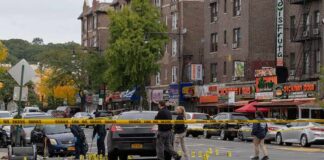
Minneapolis also delivered the kind of visuals that accelerate movements: schools closing temporarily, confrontations near Roosevelt High School, and arrests after protests reached a hotel housing ICE officers. Events like those compress complex policy into a single parental nightmare—kids caught near force, confusion, and crowds. Students didn’t need a white paper to persuade their peers; they needed a video, a rumor, and a friend saying, “Don’t go back inside.”
Schools reacted like institutions under stress, not like neutral referees
Administrators and school boards rarely get credit for the bind they operate in, and this moment exposed it. Schools must keep students safe, meet state attendance requirements, protect free expression, and prevent riots—all at once. Reports from Portland and other districts showed a pragmatic playbook: acknowledge student anxiety, emphasize safety plans, and in some cases offer virtual learning options or flexible absence policies. That isn’t activism; it’s damage control.
Free-speech debates resurfaced because walkouts happen on school time, on school property, with minors. That creates immediate questions adults can’t dodge: When does a “protest” become a safety hazard? What discipline is fair if hundreds leave at once? The conservative common-sense view doesn’t deny young people a voice; it asks whether schools should reward disruption that puts other students at risk, including those who just want to learn.
The “sensitive locations” reversal made schools the stage
The biggest structural driver wasn’t a hashtag; it was the fear that enforcement could again operate near schools, churches, and hospitals after the “sensitive locations” posture changed. Educator groups described classrooms full of kids showing stress symptoms and families keeping children home. That response is predictable: parents behave cautiously when they suspect the rules around school boundaries have shifted. Students then interpret that caution as a call to action rather than a reason to lay low.
Unions and national education groups moved beyond statements into legal and political pressure, including emergency court motions seeking to restore limits around enforcement near schools. Critics will call that union politics. Supporters will call it basic safeguarding. The practical question for communities is simpler: if law enforcement activity near schools intensifies, districts must plan for attendance drops, parent panic, and the very walkouts that officials claim they want to prevent.
Why the “general strike” fizzled but the student walkouts didn’t
Organizers pitched the January 30 action as more than a walkout—an economic blackout, a general strike, a shutdown. That broader labor component largely failed to materialize at scale, for a reason adults understand: most workers can’t risk a paycheck on a day’s notice. Students can. The viral nature of the movement exploited the one group with the lowest financial barrier to participation and the highest social payoff for showing up.
That asymmetry creates a lasting impact even when the “shutdown” doesn’t. Schools measure disruption in headcounts and staffing, not ideology. A thousand students leaving class creates immediate operational problems, even if the rest of the city goes to work. Students learned a powerful lesson: you don’t need to win the policy argument to force the institution to respond. You just need to make normal operations impossible to ignore.
What happens next: safety protocols, lawsuits, and a trust gap
The aftermath points in three directions: district-level safety adaptations, courtroom battles over enforcement boundaries, and a widening trust gap between families and federal authority. Protests continued into early February in smaller waves, suggesting the movement will behave like a franchise: easy to replicate, hard to centrally control. Communities should also expect competing narratives—some emphasizing civil-rights echoes, others highlighting episodes of disorder and property risk.
Student ‘ICE Out’ Protests Go Viral Across US – Now Schools are Taking Action
https://t.co/NdA4jnbeWj— Townhall Updates (@TownhallUpdates) February 21, 2026
Conservatives should resist the lazy impulse to dismiss every walkout as manipulation while still demanding accountability for any violence, vandalism, or intimidation that rides along with a crowd. Schools exist for students who protest and students who don’t. If enforcement near schools triggers panic, officials should clarify rules and boundaries in plain English. If activists want credibility, they should keep kids out of danger and tell the truth about risks.
Sources:
January 30, 2026 protests against ICE
2026 U.S. immigration enforcement protests
Oregon businesses, students participate in general strike protesting immigration enforcement
Free-Speech Debates Resurface With Student Walkouts Over ICE Raids
NEA Files Emergency Motion to Stop ICE Enforcement Near Schools
Protest season: Operation Metro Surge timeline in Minnesota and at the UMN