The deliberate torching of a Minneapolis street memorial has exposed a glaring contradiction that demands scrutiny: those who once dismissed property destruction as mere “voice of the unheard” now label the same tactics despicable when targeting their political cause.
Story Snapshot
- Arsonist doused Renee Good memorial with gasoline and set it ablaze on February 17, 2026, six weeks after her fatal shooting by ICE
- Community members and volunteers extinguished flames before police arrived, preserving most of the memorial site
- Minneapolis police investigating as deliberate arson; no arrests made despite clear evidence of premeditation
- Local officials and activists condemn fire as “despicable” attack on grieving space, pledging permanent memorial
- Incident highlights sharp double standard in reactions to property destruction based on political alignment
The Fire That Revealed the Hypocrisy
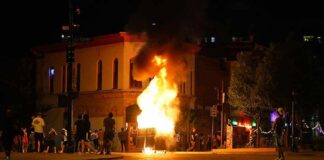
Someone walked up to the memorial for Renee Good at East 34th Street and Portland Avenue around nine o’clock on a Tuesday night, poured gasoline over wood piles and memorial items, and struck a match. Neighbors spotted the flames immediately and rushed to extinguish them before Minneapolis firefighters arrived. The gasoline fumes lingered for days, requiring volunteers to dispose of contaminated materials. Minneapolis police confirmed deliberate arson, yet weeks later, no suspect has been identified or arrested despite the brazen nature of the crime.
Context Behind the Controversy
Renee Good, a 37-year-old mother and artist, died on January 7, 2026, when ICE officer Jonathan Ross shot her during Operation Metro Surge, an immigration enforcement operation. Good was ordered from her vehicle and attempted to flee before the fatal shooting occurred. The incident sparked immediate national outrage and anti-ICE protests across Minneapolis. Community members established a grassroots memorial at the shooting location within hours, maintaining it continuously for over six weeks with flowers, candles, signs, and messages of resistance.
The shooting triggered unprecedented turmoil within federal law enforcement. Justice Department leadership ordered the FBI and prosecutors to treat Good’s death as an assault on a federal officer rather than investigate the shooting itself. This directive prompted mass resignations across the Justice Department, the Minneapolis FBI field office, and the Minneapolis U.S. Attorney’s office. The Minnesota Bureau of Criminal Apprehension was denied access to evidence, and no federal criminal investigation into Good’s killing has been initiated. Lawmakers continue pressing for joint federal and state investigation, but bureaucratic stonewalling persists.
The Property Destruction Double Standard
Council Member Jason Chavez labeled the arson “despicable” and thanked community members who extinguished the flames. Community volunteer David Gilbert-Pederson characterized it as “revictimization of our neighborhood, of immigrant families and our entire city.” Photojournalist Ryan Vizzions, who has maintained a six-week vigil documenting the memorial, called it “a clear case of arson” requiring community vigilance. The chorus of condemnation rings loudly from officials and activists who spent 2020 explaining why property destruction represented legitimate political expression during riots that devastated Minneapolis.
The sudden reverence for property becomes particularly striking when Minneapolis still bears scars from $500 million in damage inflicted during riots these same voices defended or minimized. Burned buildings, looted businesses, and destroyed livelihoods were dismissed as insurance problems or justified rage. Now, charred fencing and damaged memorial items constitute attacks worthy of investigation and permanent government response. The contrast illuminates not principle but partisanship. Property matters when it advances the preferred narrative; property becomes expendable when destruction serves opposing political purposes.
Community Response and Official Actions
Despite the damage, community volunteers pledged continued memorial maintenance. The city announced plans for permanent memorials honoring both Good and Alex Pretti, another individual shot by Border Patrol agents on January 24, 2026. Council Member Soren Stevenson acknowledged complexity in creating permanent structures, noting “There’s lots of layers to work through. We know there’s going to be a memorial, we just haven’t figured out what it’s going to be yet.” The Minneapolis Fire Department issued statements prioritizing “community space to grieve and heal” while investigators canvassed the scene for evidence that apparently yielded no actionable leads.
The Broader Pattern Nobody Wants to Address
This incident exposes the manufactured outrage that characterizes contemporary political discourse. The same Minneapolis that tolerated weeks of property destruction now mobilizes city resources to preserve a street memorial and promises permanent government-funded monuments. The same activists who explained away arson as understandable frustration now demand justice for burned wood and singed flowers. The principle supposedly at stake—respect for community expressions of grief—applies selectively based on whose grief receives official sanction. When federal officers enforce immigration law and someone dies, memorials become sacred spaces requiring protection and permanence. When small business owners lose everything to rioters, they hear lectures about insurance and systemic injustice justifying their losses.
The investigation continues without apparent progress, suggesting either investigative incompetence or the challenge of identifying perpetrators in incidents lacking witnesses willing to cooperate. Meanwhile, the memorial remains, volunteers maintain their vigil, and city officials plan permanent structures that will cement a particular narrative about federal law enforcement. The arson succeeded in one respect: it exposed the conditional nature of property rights and the selective application of moral outrage that now defines American political life.
Sources:
Fire intentionally set at Renee Good memorial, Minneapolis police say – KSTP
Renee Good memorial fire south Minneapolis – CBS Minnesota
Renee Good memorial site damaged Tuesday night fire – Fox 9
Renee Good memorial site doused in gasoline – Star Tribune
Fire Renee Macklin Good memorial in Minneapolis causes damage – MPR News
Killing of Renée Good – Wikipedia