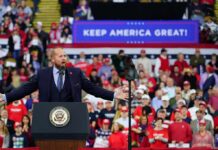
A violent incident tied to a would-be attack near Washington’s political class is now colliding with an ugly media fight over how a suspect’s “manifesto” gets used on air.
Story Snapshot
- CNN’s Jake Tapper interviewed U.S. Attorney for D.C. Jeanine Pirro about a shooting suspect linked to the White House Correspondents’ Dinner security incident.
- Available reporting confirms Pirro said evidence points to suspect Cole Tomas Allen and that a manifesto indicated President Trump was the intended target.
- Public claims that Tapper “smeared” Trump or that Pirro delivered a “smackdown” cannot be verified from the limited source material provided.
- The episode spotlights a broader trust problem: Americans across the political spectrum increasingly doubt both institutions and the narratives built around high-profile political violence.
What the available reporting confirms about the interview
San.com reports that CNN’s “State of the Union” featured an exchange between host Jake Tapper and Jeanine Pirro, the U.S. attorney for the District of Columbia, about a shooting suspect connected to the White House Correspondents’ Dinner scene. The same reporting says Pirro discussed evidence against a suspect identified as Cole Tomas Allen. It also states Pirro said the suspect’s manifesto indicated President Donald Trump was the intended target.
Those confirmed details matter because they place the conversation in the context of political violence and federal law enforcement messaging. When prosecutors publicly describe evidence and motive—especially involving a president—public confidence can rise or fall based on clarity and restraint. At the same time, the public often wants more than process; they want accountability, a clear chain of events, and assurances that political status does not distort how threats are treated or communicated.
Why the “manifesto” dispute is hard to assess from the research provided
The headline framing supplied with the topic claims Tapper read from an “evil manifesto” and used it to “slyly” smear Trump, followed by Pirro offering a “perfect response.” The problem is straightforward: the provided research notes that the available excerpt does not include the specific back-and-forth, the precise wording used on air, or the full context around the manifesto references. Without a transcript or full clip, intent and tone cannot be responsibly verified.
This limitation is not just a technicality; it is the core integrity issue. Selective quoting is how modern political narratives get built, whether the target is a Republican president or a Democratic official. Conservatives tend to see manifesto-reading as potential narrative laundering—turning a suspect’s grievance into a broader political insinuation. Liberals often argue that discussing a suspect’s statements can be relevant to motive. With incomplete context, neither interpretation can be confirmed here.
Media incentives collide with public fears about political violence
The reporting indicates Pirro described the manifesto as pointing at Trump as the intended target. That detail alone raises the stakes for how television news handles the suspect’s words. Broadcasting excerpts can inform the public, but it can also amplify notoriety or shift focus away from concrete facts such as timelines, security posture, and evidentiary thresholds. For viewers already convinced that “elites” protect their own, media handling becomes part of the story, not just the messenger.
What the episode signals for 2026 politics and institutional trust
In 2026, with Republicans controlling Congress and Trump in a second term, Democrats still have strong incentives to use hearings, media cycles, and messaging campaigns to blunt administration priorities. Republicans, meanwhile, face pressure to show that federal agencies can protect political leaders while remaining neutral and lawful. When a prosecutor and a major network host spar over framing, many Americans hear less about public safety and more about institutional self-preservation—an impression neither side can afford.
WATCH: Jeanine Pirro Smacks Down Jake Tapper with a Perfect Response After He Slyly Smears Trump by Reading His Would-Be Assassin’s Evil Manifesto
READ: https://t.co/ahsvkbvbtO pic.twitter.com/8OtXgvm8HI
— The Gateway Pundit (@gatewaypundit) May 3, 2026
Based on the material provided, the most defensible takeaway is narrow: Pirro publicly described evidence and a stated target, and the broader “smear” versus “smackdown” narrative cannot be proven without fuller primary-source context. If additional documentation emerges—full video, transcript, or multiple independent write-ups—audiences should compare what was actually said with how it was clipped and circulated. That habit is one practical way to reduce manipulation in an era when trust is already in short supply.
Sources:
Pirro says there’s evidence WHCD shooting suspect shot at Secret Service agent