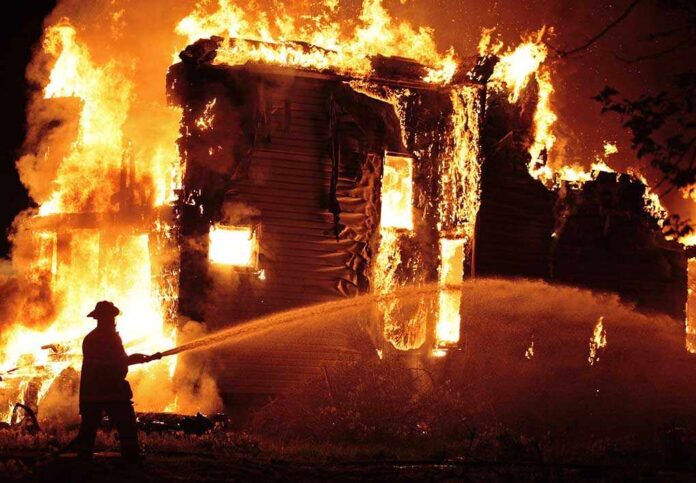
As California’s historic Chinese Camp burns, questions erupt over state leadership and the real cost of years of failed wildfire policies.
Story Snapshot
- A lightning-sparked wildfire devastated the Gold Rush town of Chinese Camp, destroying homes and irreplaceable history.
- Fire remains 0% contained, forcing evacuations and overwhelming local emergency resources.
- The blaze exposes the vulnerability of historic sites and raises concerns about leadership and resource allocation.
- Governor Newsom’s reported absence during the emergency draws scrutiny from frustrated residents.
Historic California Town Ravaged by Unchecked Wildfire
On September 2, 2025, the 6-5 Fire ignited by lightning swept through Tuolumne County, targeting the historic Gold Rush town of Chinese Camp. By evening, the fire had rapidly consumed over 6,473 acres, destroying at least five homes and threatening buildings with deep roots in California’s pioneer era. Mandatory evacuations were ordered as the fire’s swift advance left local residents little time to gather belongings. The event underscores the persistent threat of wildfires in rural California, especially in communities with limited resources and aging infrastructure.
Wildfires Destroy Historic California Town as Newsom Leaves State — Again https://t.co/Y74PtlsnQq via @BreitbartNews
— Rosie Ohl (@ohl_roseann) September 3, 2025
Chinese Camp, established in the 1850s by Chinese immigrants expelled from neighboring camps, stands as a testament to the state’s complex migration history. The Foreign Miners Tax and other discriminatory policies forced these pioneers to forge their own community, which now faces permanent loss as flames destroy structures that survived for over a century. Local emergency services, supported by CalFire, have struggled to contain the blaze, which remains 0% contained as of September 3. Residents, historians, and preservation groups mourn the loss of cultural heritage and the displacement of families.
Leadership Gaps and Resource Strain Under Scrutiny
The timing of this disaster has intensified frustration among many Californians. Reports indicate that Governor Gavin Newsom was out of state on personal travel as the fire broke out—a claim circulating widely, though not directly confirmed by official sources. For a region already skeptical of Sacramento’s priorities, the perceived absence of leadership during a crisis only fuels existing resentment. This episode renews calls from conservative voices for greater state accountability and questions the effectiveness of policies that have, for years, prioritized costly climate agendas over practical wildfire prevention.
Fire officials have requested significant reinforcements as the 6-5 Fire, part of the larger TCU September Lightning Complex, continues to threaten rural communities and historic landmarks. CalFire’s updates reflect the ongoing struggle to marshal enough personnel and equipment amid a surge of lightning-induced blazes in the broader region. Local families face displacement, property loss, and uncertainty as they await containment progress. The lack of decisive executive presence during such emergencies is seen by many as emblematic of a broader leadership disconnect from rural and historic communities.
Enduring Impact on Heritage, Economy, and Public Trust
The destruction of Chinese Camp delivers a severe blow to California’s historical fabric. Beyond immediate property losses, the fire’s aftermath will likely include diminished tourism, economic hardship for local businesses, and a challenging road to recovery for affected families. Preservationists warn that the loss of unique, irreplaceable buildings erases tangible links to the state’s multicultural origins. Meanwhile, residents and policymakers must grapple with tough questions about disaster response, resource allocation, and the long-term viability of rural, historic settlements as wildfire seasons grow longer and more intense.
While California’s emergency agencies remain on the front lines battling flames, the ongoing crisis exposes enduring tensions about state priorities and leadership effectiveness. Many in the region see this disaster as the predictable outcome of years of mismanaged budgets, overemphasis on progressive climate strategies, and neglect of basic fire prevention and rural support. As communities assess the damage and seek a path forward, the debate over who bears responsibility—and how to restore faith in government action—will only intensify.
Sources:
Wildfire Scorches Historic California Gold Mining Town, Burning Homes
Quick-Moving Wildfire Scorches Historic California Gold Mining Town
Wildfire Destroys Historic California Gold Rush Town, Burns Homes
A Wildfire Sweeps Through a Historic California Gold Rush Town, Burning Homes
A Wildfire Sweeps Through a Historic California Gold Rush Town, Burning Homes