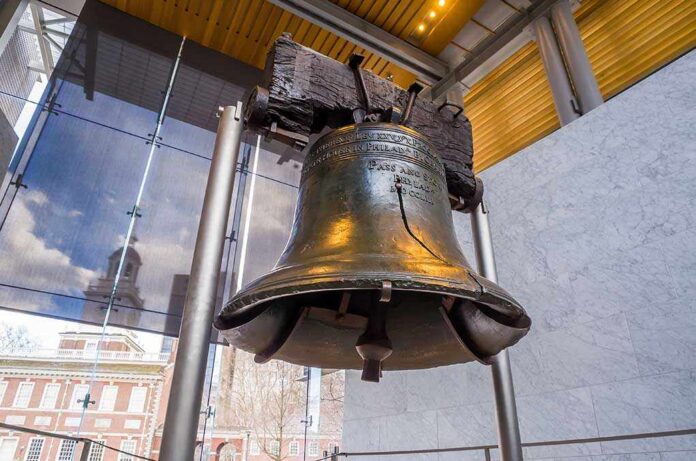
A newly installed bell in Italy rings out in defense of the unborn, igniting a firestorm of criticism from leftist politicians who see it as a threat to secular values.
Story Highlights
- Italian diocese installs a “Bell for Unborn Children,” sparking political backlash.
- Bishop Antonio Suetta frames the bell as a rational act of remembrance.
- Leftist politicians criticize the initiative as an ideological imposition.
- The bell rings on pro-life remembrance days, tied to natural law philosophy.
Bell Installation and Its Significance
The Diocese of Ventimiglia-San Remo, led by Bishop Antonio Suetta, installed a “Bell for Unborn Children” to commemorate babies lost to abortion. This initiative is framed as a non-sectarian act of remembrance, grounded in natural law and reason. The bell is positioned as a response to the secular challenges facing Italy, where the Catholic Church continues to advocate for pro-life values amidst legalized abortion since 1978.
Italian bishop’s “Bell for Unborn Children” triggers OUTRAGE from leftists.https://t.co/2rezp8Yhvv pic.twitter.com/9SwK6wxSkP
— Sign of the Cross (@CatholicSOTC) January 5, 2026
Despite the bell’s symbolic intent, it has provoked a strong backlash from leftist politicians who argue that it imposes religious morality on public spaces. These critics view the bell as an affront to secularism, highlighting the ongoing cultural tensions in Italy’s politically contested regions, like Liguria.
Political and Social Reactions
Leftist politicians have publicly condemned the bell, labeling it as provocative and ideologically driven. However, Bishop Suetta and theologian Stefano Fontana defend the initiative, asserting that it represents a rational duty to remember unborn children lost to abortion. This controversy underscores the broader debate between religious expression and secular governance in Italy, a nation where cultural Catholicism often intersects with political divisions.
Amid this backlash, pro-life organizations, such as Italy’s Movement for Life, continue to support the initiative, viewing it as a reinforcement of their mission to create a “culture of life.” They operate numerous centers and hotlines aimed at providing practical aid to mothers and at-risk pregnancies, further intertwining religious advocacy with social services.
Implications and Future Developments
As of early 2026, the bell remains installed and operational, with the political backlash confined largely to initial statements. Long-term, the initiative could inspire similar symbols elsewhere, promoting pro-life remembrance and challenging secular policies across Europe. While the bell has energized local Catholic communities, it has also alienated secularists and leftist voters, reflecting Italy’s ongoing cultural and political polarization.
The controversy surrounding the bell highlights the enduring power dynamics between Italy’s Catholic Church and secular state, with Bishop Suetta leveraging ecclesiastical authority to counter perceived secular encroachments. The initiative remains a focal point in Italy’s cultural landscape, with its impact on both religious and political spheres yet to be fully realized.
Sources:
Message from Pope Thanks Italian Movement for Supporting Culture of Life
Bishop Suetta’s Pro-Life Bell Defends Natural Law
Pope at Audience: We Must Lend Our Voice to Those Who Have None
Pope Francis Blesses Bell that Will Ring Out in Defense of Unborn