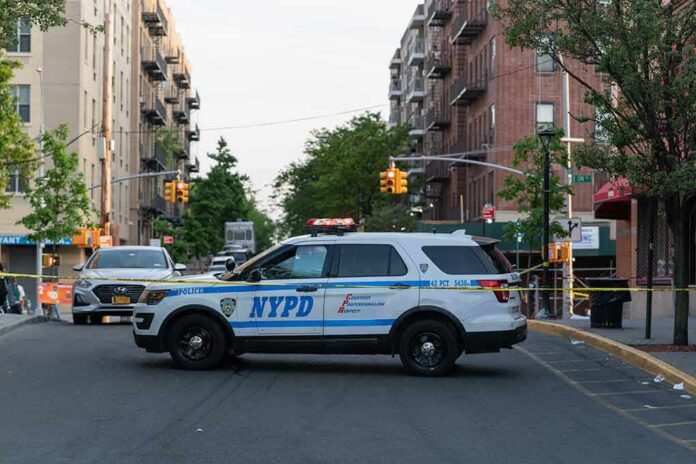
When a passenger unexpectedly enters a high‑speed roadway, causation becomes a chain, not a single link—and New York law routinely holds an allegedly impaired motorist criminally responsible when their driving is a sufficiently direct cause of a death that follows.
At a Glance
- A woman riding in the rear of a moving SUV on the westbound BQE near Exit 28 entered the roadway around 2:25–2:30 a.m. and was fatally struck.
- Police said the transporting SUV and the striking car did not collide; the victim was pronounced dead at the scene.
- A 29‑year‑old driver, Destiny Mendez, was arrested on vehicular manslaughter and DWI‑related charges tied to the fatal impact.
- Under New York law, prosecutors must link intoxication and dangerous operation to the death; causation is assessed as a chain of events, not a single cause.
What Happened on the BQE
Shortly after 2:25 a.m. on the westbound Brooklyn-Queens Expressway approaching Exit 28, near the Brooklyn Bridge, 37‑year‑old Chasna Thelemaque was riding in the rear passenger area of an SUV when she opened a door and entered the right travel lane. Moments later, she was struck by a passing vehicle. Emergency medical personnel responded and pronounced her dead at the scene from severe trauma. Police accounts indicate the two vehicles involved—the SUV carrying Thelemaque and the striking car—did not collide with each other, and both drivers remained on scene. The basic sequence and location have been reported consistently across outlets drawing from NYPD information.
Investigators arrested 29‑year‑old Destiny Mendez in connection with the fatal impact. According to contemporaneous reporting, Mendez faces charges including vehicular manslaughter, vehicular assault, DWI, and driving while ability impaired. News 12’s coverage, sourced to police, similarly described the early‑morning timing, the westbound BQE location near Exit 28, the victim’s entry into the roadway from a rear passenger position, and the fatal strike, adding that EMS pronounced the victim at the scene.
How Police Say the Sequence Unfolded
Police accounts place Thelemaque in the rear of a moving Toyota SUV when its door opened and she entered the right lane of the expressway; within that lane, a separate car struck her. That reconstruction is supported by two details that often anchor early fatal‑collision narratives: first, authorities specified the time window—about 2:25 to 2:30 a.m.—and the exact expressway approach (westbound, Exit 28); second, they distinguished the pedestrian strike from any vehicle‑to‑vehicle crash, stating the SUV and the striking car did not make contact. Those particulars matter because they shape both criminal‑law theories and civil‑liability pathways. A pedestrian strike in an active lane, without a preceding two‑car collision, frames causation around roadway exposure and driver condition rather than metal‑to‑metal fault.
As for the precipitating act—why the rear door opened and how the passenger came to be in the travel lane—early reporting does not resolve intent or mechanism. Language in contemporaneous stories ranges from “opened the door and fell” to “tumbled out,” but the legal focal point in the charging decision lies elsewhere: whether the striking driver operated while intoxicated and whether that intoxicated operation was a sufficiently direct cause of the fatality.
Charging Decisions and the Law of Causation in New York
New York’s vehicular manslaughter framework ties criminal liability to intoxicated operation that, as a result of such intoxication, causes death. Courts do not demand that the defendant’s conduct be the sole cause; they ask whether the defendant’s operation was a sufficiently direct cause in the chain of events culminating in the death. Appellate decisions have repeatedly articulated this causal approach in the vehicular context, including where other hazardous conditions or actions are also present.
Two doctrinal threads are especially relevant here. First, impairment under the Vehicle and Traffic Law concerns whether alcohol or drugs actually diminished, to any extent, the abilities required of a reasonably prudent driver; that is the threshold that undergirds DWI elements and, by extension, vehicular manslaughter predicated on intoxication. Second, prosecutors must prove not just that the defendant was intoxicated and a death occurred, but that the death was caused as a result of the intoxicated operation. New York decisions discussing ejections and roadway fatalities emphasize this linkage between the impaired driving and the lethal outcome; the causation analysis does not dissolve simply because another actor’s conduct contributed to the sequence.
Why the “No Collision” Detail Matters
The police statement that the transporting SUV and the striking vehicle did not collide supports a two‑stage sequence: roadway entry followed by impact. In practical terms, that detail narrows the inquiry into what each driver could perceive and avoid in real time—sight distance, closure speed, lighting, and reaction time—rather than the dynamics of a multi‑car crash. It also aligns with how collision reconstructionists segment events: hazard creation, driver perception‑response, and impact. Where intoxication is alleged, the core question becomes whether impairment degraded perception or response sufficiently to transform a survivable near‑miss into a fatal hit. Courts analyzing vehicular manslaughter often tether that question to whether intoxication resulted in dangerous operation that was a direct cause of death.
In parallel, civil liability typically spreads along the chain as well—transporting carrier, striking driver, and potentially others—each assessed against their duties at the time. While criminal charges focus on proof beyond a reasonable doubt with statutory elements, civil claims turn on negligence standards and insurance coverage layers; both frameworks, however, are sensitive to the precise sequence of roadway entry and impact.
What Comes Next in a Case Like This
After an arrest on DWI and vehicular‑manslaughter charges, the evidentiary center of gravity usually shifts to chemical‑test results, field‑sobriety observations, and any video or reconstruction analyses that quantify speed, lane position, and driver reaction. Prosecutors must connect the dots between intoxication and operation, then from operation to fatality—showing, in effect, that impairment made the driving dangerous and that the danger caused the death. New York appellate cases addressing roadway ejections, impaired driving, and fatal impacts outline this architecture: impairment defined as diminished driving abilities, causation assessed as a sufficiently direct chain, and vehicular manslaughter hinging on operation in violation of the DWI statute “and, as a result,” a death.
For families and carriers, the administrative and civil tracks run alongside the criminal case: insurance notifications, potential wrongful‑death filings, and, in carrier‑transport situations, scrutiny of trip records and safety protocols. Although those processes are separate from the question of criminal guilt, they are informed by the same sequence facts—time, place, roadway entry, impact—and by any official reconstructions that describe what each driver reasonably could have done to avoid the fatal outcome.
Sources:
1stheadlines.com, bronx.news12.com, hudsonvalley.news12.com, cohenjaffe.com, nycourts.gov, law.justia.com
© featurednews.com 2026. All rights reserved.