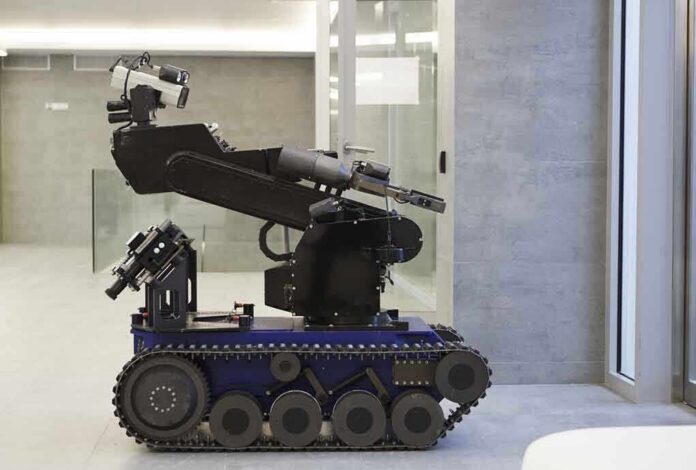
featurednews.com — Robotic gun platforms reportedly held and even seized positions from Russian forces, signaling a battlefield shift that raises big questions about America’s readiness and procurement priorities.
Story Highlights
- Ukraine claims a historic capture of a Russian position using only unmanned ground systems and drones, with no Ukrainian losses [1][3].
- A Ukrainian machine-gun robot is credited with stopping a Russian assault and holding a position for weeks [2][10].
- Kyiv plans to field 25,000 ground robots this year, accelerating replacement of soldiers in frontline logistics [8].
- Analysts caution most systems remain human-controlled and vulnerable to jamming, limiting full infantry replacement [6][12].
Ukraine’s Claimed All-Robot Assault And Why It Matters
Ukrainian leadership publicly said an enemy position was taken using only unmanned ground platforms and aerial drones, describing the operation as a first in the war and completed without Ukrainian losses [1]. Video reporting and official messaging further amplified the claim of an “all-robot” land attack, emphasizing that uncrewed vehicles breached and cleared a Russian-held site [3][4]. For a conservative audience focused on American deterrence, the core issue is clear: adversaries and partners are racing ahead in battlefield automation, and the United States must not fall behind.
Ukraine’s message is not only propaganda; it also indicates a maturing robotics ecosystem. Kyiv is contracting large numbers of unmanned ground vehicles this year, designed to move ammunition, evacuate wounded, and increasingly provide direct fire support [8]. Ukraine’s General Staff has reported reduced personnel casualties from fielding robotic platforms, a metric that, if sustained, has implications for force preservation and recruitment over long wars [6]. The practical takeaway for U.S. planners is that low-cost robotics may offset manpower stress while expanding tactical options.
Frontline Performance: Defense, Endurance, And Logistics
Ukrainian outlets showcased a ground robot armed with a machine gun that reportedly halted a Russian assault and secured a defensive position, with claims that such platforms have held trenches under constant threat for extended periods [2][10]. Additional videos highlight robots towing damaged vehicles and delivering supplies along contested routes, tasks that would otherwise expose soldiers to lethal fire [10]. These battlefield functions map to urgent American needs: protecting troops, conserving ammunition, and sustaining positions without risking more lives than necessary.
Even with promising performance, the systems are not miracle solutions. Reporting and expert commentary describe most ground robots as teleoperated, with human controllers guiding platforms from relative safety rather than the robots acting as autonomous infantry substitutes [12]. Communication links remain vulnerable to electronic warfare and physical damage, imposing range and reliability limits [6]. These constraints mean robots can supplement small units and reduce casualties, yet cannot fully replace disciplined infantry for complex combined-arms breakthroughs—at least not yet.
Scaling Up: From Dozens To Thousands Of Ground Robots
Defense industry reporting says Ukraine will field about 25,000 ground robots in the first half of the year, more than doubling last year’s total, to push unmanned systems deeper into frontline logistics and support roles [8]. Industrial growth also matters: companies focused on building these platforms have emerged to meet wartime needs, indicating a local supply base that adapts quickly under pressure [11]. American procurement should study this speed, because slow, cost-bloated programs at home risk ceding tactical advantages to faster-moving combatants abroad.
Ukrainian Robot Evacuates Damaged "Brother-in-Arms" from the Battlefield
Rare footage of Ukrainian unmanned ground vehicles in action on the front lines has been shared online. In the video, one UGV evacuates a damaged robotic platform from a dangerous section. The footage was… pic.twitter.com/OfHNVYS9Vy
— EMPR.media (@EuromaidanPR) May 19, 2026
Strategically, conservatives should view Ukraine’s robotics surge through a constitutional and national-security lens. First, keeping U.S. service members out of unnecessary harm aligns with limited-government principles that demand accountable, efficient use of force. Second, ensuring supply chains and production stay in friendly hands advances national sovereignty over dependence on hostile states. Third, rigorous testing and clear rules for human control preserve moral responsibility and reduce risks of government overreach through opaque algorithmic decisions.
Verification, Limits, And What Comes Next
Independent verification of dramatic battlefield “firsts” is hard during active combat, where operational security and information warfare shape the narrative [6]. Still, multiple, distinct reports support the core trend: unmanned ground systems are moving beyond novelty and into daily use for defense, resupply, and targeted assaults [1][2][3][8]. The prudent conclusion for U.S. policymakers is to double down on cost-effective, operator-in-the-loop robotics, electronic-warfare resilience, and rapid acquisition pathways that deliver useful capability now—not a decade from now.
Sources:
[1] Web – Ukraine said it captured a Russian position using only ground robots …
[2] Web – Ukraine’s Machine-Gun Robot Takes on Russian Assault—and Wins
[3] YouTube – Ukraine’s all-robot land attack captures Russian position in historic …
[4] YouTube – Combat robots take back positions on the front from the Russians
[6] Web – Networked for War: Lessons from Ukraine’s Ground Robots
[8] Web – Ukraine to field 25,000 ground robots in push to replace soldiers for …
[10] YouTube – This Robot Held the Frontline for 45 Days | Ukraine’s @nc13.ab3 …
[11] Web – Frontline Robotics — robots that will change the course of the war
[12] Web – Ground Robots to Proliferate on Ukraine Battlefields Following …
© featurednews.com 2026. All rights reserved.