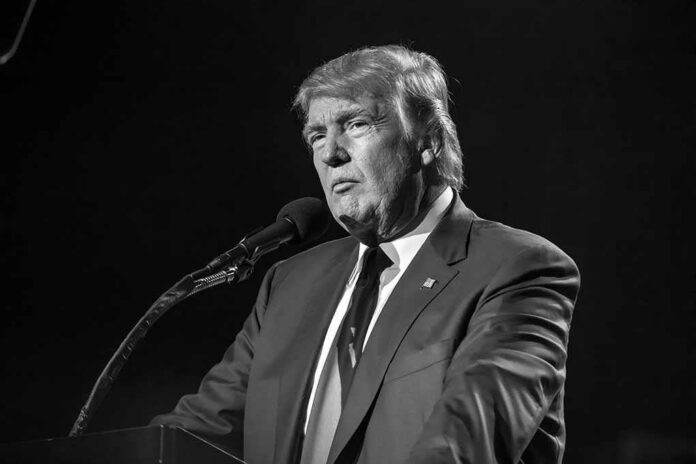
The fight over President Trump’s White House renovations isn’t really about taste; it’s a collision between three traditions that have always defined changes to the Executive Mansion—structural necessity, curatorial restoration, and presidential personalization—and the outcome turns on evidence, funding transparency, and preservation law, not punchlines.
The Short Version
- Trump defends visible repairs and additions—fixing deteriorated exteriors, building a ballroom, and adding a heliport—as stewardship of a national symbol.
- Critics focus on extravagance, demolition, and aesthetics, arguing the program exceeds maintenance and skirts norms of preservation and public funding.
- Hard facts are mixed: a Supreme Court opinion acknowledges a privately funded ballroom, while reporting cites total renovation figures approaching or exceeding $900 million and contested approvals.
- The sober test is not taste but process: necessity documented by independent assessments, lawful approvals, and a clear accounting of who paid for what.
What Trump Says He’s Fixing—and Why That Matters
Trump’s public case is straightforward: the White House is a national symbol, and visible deterioration—broken windows, cracked stone—required action. He cast the program as practical, not merely decorative, pointing to exterior plaster repairs and functional additions like a heliport and a ballroom. He also framed spending as modest relative to the building’s value and even claimed the White House was in better shape than at its founding—rhetoric intended to place the effort within the bounds of civic stewardship rather than personal vanity. That framing is not trivial. Historically, presidents have personalized interiors, but major work has been justified to Congress and the public when it is necessary for safety, function, or the long-term conservation of the institution.
A key factual anchor in the record is the status of the ballroom’s funding. A Supreme Court opinion describes the project as a privately funded state ballroom—a significant data point because it separates at least one marquee element from ordinary appropriations. Private funding is not unheard of in White House projects, though it is atypical at this scale, and it complicates oversight and public-trust questions that accompany federally owned historic property.
What Critics Actually Challenge
The loudest objections are about scale, taste, and symbolism—gold surfaces, a massive ballroom, a helicopter pad—shorthand for opulence rather than stewardship. Hillary Clinton and Barack Obama leaned on the visual argument, calling the aesthetic gaudy and framing the changes as a distortion of the people’s house. Those barbs travel far on television, but they do not, by themselves, refute the necessity or legality of specific projects. What does raise substantive flags are the scope and cost reports: demolition of the East Wing, a 90,000‑square‑foot addition, and price estimates that reportedly climbed from a $200 million concept to figures in the $600–900+ million range for the broader renovation program. Those numbers, if sustained, transform the debate from taste to governance—cost control, prioritization, and compliance with preservation rules.
Litigation by the National Trust for Historic Preservation and the legal questions presented to the Supreme Court underscore that this is not a routine paint-and-plaster job. The dispute centers on whether existing maintenance authorities and private donations can lawfully underwrite demolition and large additions to a federally protected historic complex—a fundamentally different proposition than reupholstering sofas or mending stucco.
How White House Construction Has Worked When It Works
There is a durable template for doing major work at the White House without losing public trust. When engineers determined in 1948 that the Executive Residence was structurally unsound, President Truman pursued a near-total interior reconstruction—but only after independent assessments, congressional authorization, and a public process documented the necessity. That precedent clarifies the modern standard: big changes can be justified, but they require transparent evidence of need, preservation-sensitive design, and clear lines of authority and funding.
Within that lens, three tests separate legitimate modernization from discretionary aggrandizement. First, documentation: an engineering and facilities-condition assessment that names the defect, rates its severity, and prescribes the remedy. Second, process: adherence to the preservation and planning regime that governs federal historic property—the National Historic Preservation Act, Section 106 review, Commission of Fine Arts and National Capital Planning Commission oversight, and environmental compliance where applicable. Third, money: an auditable account of sources and uses, distinguishing appropriations, executive-agency transfers, private donations, and any presidential personal funds, with contemporaneous agreements to guard against conflicts.
What We Know—and What Still Has to Be Proved
On the “know” ledger, Trump has offered contemporaneous, on-camera rationales for exterior repairs and functional additions, and the Supreme Court described the ballroom as privately funded—evidence that at least some elements have a distinct funding stream. On the other side, independent reporting aggregates a renovation footprint beyond ordinary maintenance—ballroom, heliport, East Wing demolition—and projects costs that greatly exceed early figures, drawing congressional scrutiny. Senator Richard Blumenthal’s documented request for contracts and ledgers reflects precisely the accountability gap that large, fast-moving, mixed-finance projects can create.
Where evidence is thin is where judgment should be cautious: claims that Trump personally financed “the exterior” in whole or in part are not substantiated by itemized records in the public domain; assertions that each major element was necessary lack an independent engineering record. Equally, the most colorful criticisms focus on aesthetics and symbolism, not on contradictory condition data or a definitive legal finding that specific approvals were bypassed. The Supreme Court characterization of the dispute captures the real issue: authority and funding for large-scale alteration, not whether gold leaf offends some eyes.
If the White House was already designated a National Monument, how was Trump allowed to do all the shitty renovations?
It’s as if he is the only one who is allowed to do whatever the fuck he wants
— KellDA 2🇺🇸🇨🇦🇬🇱🇺🇦🏳️🌈 (@KellDAChicago) November 6, 2026
The Right Questions to Ask Next
Transparency can resolve most of this. A complete facilities-condition assessment and photographic log would show which defects existed and why options like repair-in-place were inadequate, especially regarding the East Wing and exterior stone. A project-by-project accounting—contracts, change orders, and payment ledgers—would reconcile the journey from early budgets to final spend, clarifying what the ballroom, heliport, and exterior work actually cost and who paid. And the administrative record from the National Park Service and federal design commissions would settle whether the statutory preservation process was followed in letter and spirit. Each of these artifacts exists somewhere; producing them would move the conversation from late-night-comedy shorthand to institutional stewardship.
What It Means for the White House as an Institution
Presidents will continue to change the White House; the building is a working campus, not a reliquary. The line that matters is the one between care for a national symbol and bending public property to the sitting president’s personal brand. The evidence to date supports two conclusions: Trump did pursue projects that go well beyond maintenance, and at least one centerpiece—the ballroom—has a documented private-funding lane recognized in court records. Between those poles sits the unresolved core: cost growth, scope creep, and preservation compliance. Until independent assessments and full ledgers are public, the fairest institutional stance is neither to sneer at gold trim nor to accept necessity on assertion, but to demand the ordinary proofs that have underwritten past reconstructions of the people’s house.
Sources:
nine.com.au, people.com, usatoday.com, supremecourt.gov, thegrio.com, yahoo.com, cbsnews.com, newyorker.com, thehill.com, whitehousehistory.org, nhpr.org, home.nps.gov, usafacts.org
© featurednews.com 2026. All rights reserved.