Public mourning is never just about the departed; it reveals how leaders frame character, loyalty, and winning in the American imagination. President Trump’s on-camera tribute to Mike Ditka—“a winner,” “a tough cookie”—fit that template exactly, blending personal praise with a familiar vocabulary of toughness that also happens to mirror Ditka’s football legacy.
The Short Version
- President Trump, informed by reporters that Mike Ditka had died, called the Bears legend “a winner” and “a tough cookie,” adding that Ditka “was with me all the way.”
- Ditka’s death at 86 was announced by his family and widely reported; no cause of death was provided in initial statements.
- Independent records of Ditka’s career make “tough” and “winner” apt summaries: Hall of Fame player, Super Bowl–winning coach, and enduring Chicago icon.
- The exchange illustrates how modern tributes merge sports legacy, political affinity, and media framing without altering the uncontested facts of what was said and what Ditka achieved.
What Happened: A candid presidential tribute on hearing of Ditka’s death
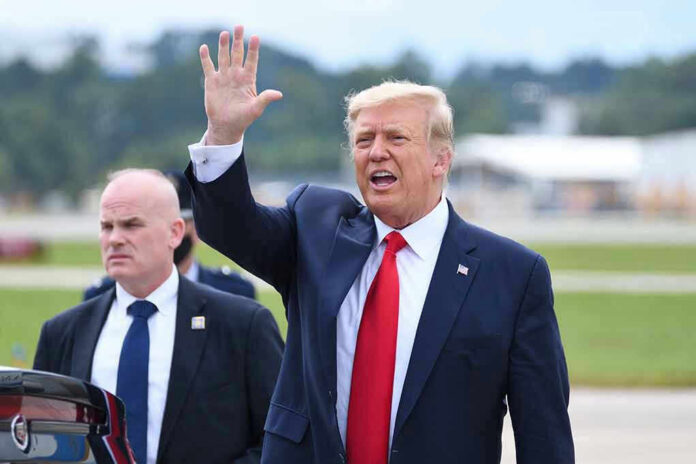
During an on-camera exchange with the press, President Trump was told that Mike Ditka had died; he responded immediately, praising the Hall of Famer as “a winner” and “a tough cookie,” and describing him as “a great guy” and a strong supporter. The contemporaneous account comes from a Fox News/OutKick report that captured the phrasing and the circumstance that the news reached the President via the press pool. Other outlets quoted similar language from the moment. The core facts here are not in dispute: Ditka died at 86, the President learned of it on camera, and he framed Ditka with the attributes—toughness and winning—that defined his public persona.
Ditka’s passing was announced by his family, whose statement emphasized his roles as husband, father, grandfather, friend, and football icon. Initial reports did not include a cause of death; what mattered in that first wave was the loss of a figure who bridged eras in the sport and became a cultural shorthand for a distinctly Chicago form of grit.
Why “tough” and “winner” resonate with Ditka’s historical record
In the language of football, these are not platitudes. Ditka’s career offers direct evidence for both claims. As a player, he redefined the tight end position with an edge that made him a first-ballot Hall of Famer. As a head coach, he led the 1985 Chicago Bears to a Super Bowl title—an apex season remembered as much for defensive ferocity as for the personality management it required to keep a roster of strong egos moving in the same direction. The NFL’s retrospective appreciations consistently center on that toughness and leadership, which is why the President’s phrasing tracks so closely with how the league and the franchise themselves narrate Ditka’s legacy.
In Chicago, Ditka’s influence outlived his tenure. He became a civic archetype—blue-collar, blunt, loyal—instantly recognizable in silhouette: the mustache, the sweater vest, the sideline glare. Media remembrances have long described him as a touchstone for a city’s identity as well as its team’s; players, coaches, and fans measure intensity against the standard he set. That is the context into which Trump’s adjectives landed: a compressed, emotionally efficient summary of a life lived in full pads and on visible sidelines.
Where politics enters—and how much it matters to the facts
Trump’s remarks included that Ditka “was with me all the way” and “a big supporter,” tying the tribute to political affinity. That detail will inevitably color interpretation—some will read kinship, others signaling. But the factual core of the exchange does not depend on adjudicating the depth of their relationship; the story is what the President said and the figure he was describing. The same contemporaneous report that captured “tough cookie” also recorded the support language, and no competing account has challenged the substance of the tribute. The result is straightforward: a President praising a football titan in terms that match the record books and the mythology around him.
It is also true that modern media ecosystems emphasize different moments of the same clip. Some coverage highlights the spontaneity—Trump learning the news in real time. Others lead with the words themselves. The selection effect is real, but it does not alter the underlying facts: Ditka died; the President expressed admiration; the language aligned with Ditka’s public legacy.
Ditka’s legacy in sport: mechanism of a culture-shaping coach
To understand why “winner” felt accurate in the mouth of any public figure reacting to Ditka’s death, consider the mechanics of that 1985 Bears team. Its identity rested on coordinated aggression—Buddy Ryan’s 46 defense dictating terms—and a head coach whose job was as much synthesis as strategy. Ditka’s Bears were a study in role clarity: channel singular talents into a team-wide posture that imposed itself week after week. That year’s dominance, capped by a Super Bowl rout, turned a roster into a cultural event—from the Super Bowl Shuffle to the must-win expectation that still shadows Bears seasons. This was coaching as culture formation; the wins were proof.
As a broadcaster and pitchman, Ditka extended that culture to national audiences. He embodied a form of straight talk that pairs well with America’s appetite for competitive candor. That is why, decades later, an epitaph made of two short descriptors still reads as specific rather than generic: “tough” and “winner” are not clichés when the subject is Mike Ditka; they are a resume.
How the moment fits a broader pattern of mourning language
Leaders reach for archetypes when eulogizing public figures, especially athletes whose narratives already come pre-loaded with achievement metrics. Toughness valorizes resilience; winning affirms outcomes. In Ditka’s case, the pair fuses cleanly because his persona and his box-score record never drifted far apart. That coherence is rare, and it is why tributes from institutions closest to him—league, team, and city—tend to the same vocabulary as the President’s. Institutional memorials from the NFL and the Chicago Bears, published alongside the family’s announcement, reinforce that consensus frame.
Audience reactions follow suit. Fans and former players often cite work ethic, demand for accountability, and the permission structure Ditka granted for playing—and living—with intensity. Those elements became part of how Chicago tells its own story, which helps explain why national figures default to the same descriptors: they are paying respect in the dialect the city taught them to use.
Donald Trump reacts on the South Lawn after learning from EWTN that Catholic NFL icon and former Chicago Bears coach Mike Ditka has died at age 86: “He was a winner. He was a tough cookie. He was great.” The Chicago Bears icon, who died on Friday, gave to charities, lectored at… pic.twitter.com/luuVqrH05n
— EWTN News Nightly (@EWTNNewsNightly) October 9, 2026
What endures from this exchange
Two things will last beyond the clip. First, the factual scaffolding: a presidential tribute, on camera, that distilled Ditka’s life into the attributes that both fans and formal histories attach to him. Second, the reminder that American mourning often functions as a mirror; the adjectives we choose for the departed reveal the values we wish to claim for ourselves. In the language of sport and of public life, “tough” and “winner” remain durable, legible signals. For Mike Ditka, they were also, quite simply, true.
Sources:
foxnews.com, nbcnews.com, nfl.com, chicagobears.com
© featurednews.com 2026. All rights reserved.