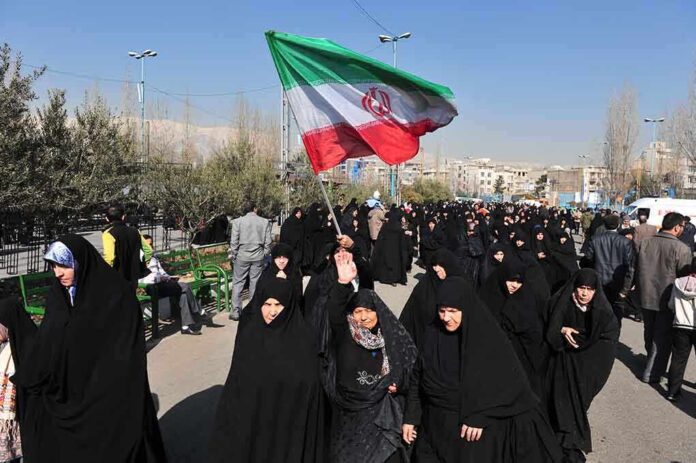
Millions of Iranians have chosen to face bullets rather than live another day under the Islamic Republic’s rule, transforming what began as economic protests into the bloodiest challenge to theocratic power since 1979.
Story Snapshot
- Protests erupted December 28, 2025, across all 31 Iranian provinces, triggered by economic collapse but quickly escalating to demands for regime overthrow.
- Death toll estimates range from Iran’s regime claim of 3,117 to human rights groups reporting 43,000 killed and 350,000 injured as security forces fire live ammunition into crowds.
- Revolutionary Guard and Basij paramilitary forces deployed snipers and shotguns, deliberately targeting protesters’ eyes while internet blackouts concealed the scale of killings.
- Hospitals and morgues remain overwhelmed with gunshot victims, many shot in the head, as families are silenced and funeral services banned by authorities.
When Economic Desperation Ignites Revolutionary Fury
Tehran’s Grand Bazaar shuttered on December 28, 2025, as merchants walked away from their stalls. Currency collapse had rendered the rial worthless. Inflation devoured savings. Water shortages left neighborhoods dry. What began as shop closures and strikes morphed within hours into something far more dangerous for Supreme Leader Ali Khamenei: chants demanding the end of the Islamic Republic itself. Within three days, demonstrations spread to all 31 provinces, drawing millions into streets despite knowing the regime’s history of crushing dissent with overwhelming force.
The scale distinguishes these protests from all predecessors. The 2022 Woman, Life, Freedom movement following Mahsa Amini’s death killed hundreds. The 2019 fuel price protests resulted in approximately 1,500 deaths. This uprising dwarfs both. By January 8 and 9, peak violence consumed every province simultaneously. The Islamic Revolutionary Guard Corps and Basij militias received orders directly from Khamenei: use live ammunition. They complied with ruthless efficiency, killing an estimated 2,000 people in 48 hours, with Tehran alone accounting for 217 deaths.
The Anatomy of State-Sponsored Massacre
Security forces deployed tactics designed not merely to disperse crowds but to inflict maximum casualties and terror. Snipers positioned on rooftops. Shotguns loaded with pellets aimed deliberately at protesters’ faces, a tactic repeated from 2022 that has blinded an estimated 10,000 people. IRGC units in Lorestan and Ilam provinces, home to Kurdish and Luri ethnic minorities, proved particularly lethal. By January 3, these two provinces accounted for 13 of the initial 28 verified deaths. Authorities implemented nationwide internet blackouts, ensuring the world couldn’t witness the bloodshed in real time.
Morgue videos smuggled out and verified by BBC Persian reveal the carnage authorities attempted to hide. Roughly 200 bodies stacked in a single facility, most bearing gunshot wounds to the head. Hospitals in Tehran and Shiraz suspended elective surgeries, overwhelmed by the influx of shooting victims. Body bag shortages forced facilities to store corpses in makeshift spaces. Healthcare workers reported treating children among the casualties, including a five-year-old shot dead in Nishapur. The regime prohibited funerals and pressured families into silence, threatening further retaliation if they spoke publicly about their losses.
Competing Numbers in a Propaganda War
Iran’s National Security Council admits to 3,117 total deaths, claiming 2,427 were “innocent” civilians while categorizing the remainder as security personnel and unspecified others. Human rights organizations paint a drastically different picture. HRANA documented 4,902 verified deaths through hospital records and witness accounts, with an additional 9,387 cases under review. Iran International and CBS News reported estimates between 12,000 and 20,000 killed by January 13. By January 20, coalition human rights groups placed the toll at 43,000 dead and 350,000 injured.
UN Special Rapporteur Mai Sato estimated deaths may surpass 20,000, acknowledging the internet blackout makes precise accounting impossible. Academics analyzing hospital data calculated 6,000 deaths by January 11. NewsNation reported approximately 30,000 by late January. The disparities reflect the fog of war the regime deliberately created. Nobel laureate Shirin Ebadi warned the blackout enabled complete massacre without international witnesses. Roughly 26,000 arrests compound the humanitarian crisis, with detainees facing torture and extrajudicial execution based on the regime’s historical patterns during previous uprisings.
Why This Time Feels Different
Protesters continue filling streets despite watching thousands gunned down beside them. That persistence signals something fractured irreparably between the Iranian people and the theocracy claiming to govern in Islam’s name. Previous uprisings focused on specific grievances: fuel prices, women’s rights, election fraud. This movement demands total system change. Chants call for Khamenei’s downfall, not reform. The willingness to face certain death for abstract concepts like dignity and freedom demonstrates how thoroughly the regime exhausted its legitimacy among ordinary Iranians trapped in economic freefall.
Iranians Continue to Protest Despite Thousands Dead – They Don’t Want to Live Under the Murderous Islamic Regime Anymore https://t.co/zQFSk48sh1
— The Gateway Pundit (@gatewaypundit) January 24, 2026
The international community watches a potential turning point in Middle Eastern history. The Islamic Republic survived 45 years through calculated brutality, crushing dissent before movements gained unstoppable momentum. This crackdown may prove too savage even for a regime accustomed to violence. Killing tens of thousands creates martyrs, hardens resolve, and broadcasts weakness masked as strength. Every family mourning a murdered protester becomes a permanent enemy of the state. Every blinded teenager symbolizes the regime’s moral bankruptcy. The question shifts from whether Iranians want freedom to whether enough blood has been spilled to make their liberation inevitable or their subjugation permanent.
Sources:
2025–2026 Iranian protests – Wikipedia
Iran: Deaths, injuries as authorities unleash protest bloodshed – Amnesty International
Iran Protests: Death Toll Continues to Rise – Iran International
Iran Update, January 8, 2026 – Institute for the Study of War