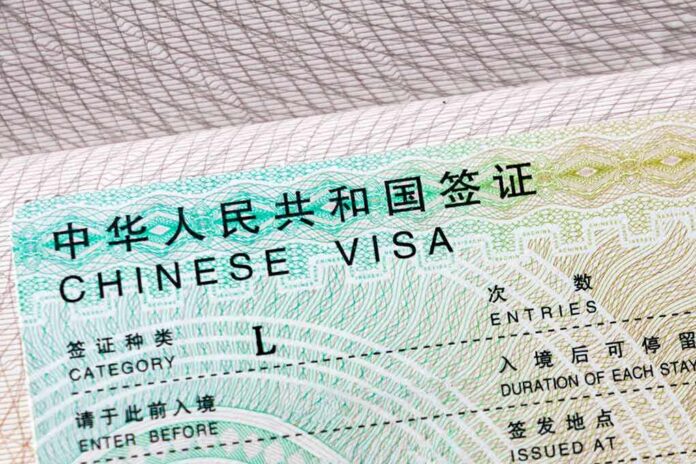
When Washington wants to change behavior at scale without rewriting the statute book, it reaches for the tools it already controls; the State Department’s new Birth Tourism Prevention Task Force is a textbook example of that strategy applied to the front door of U.S. citizenship and the integrity of nonimmigrant visas.
The Short Version
- The State Department has created a Birth Tourism Prevention Task Force to identify cases of birth tourism, revoke visas, and disrupt the businesses behind them.
- Backed by an executive order defining “birth tourism,” the department is using existing visa authorities and interagency data-sharing to act quickly.
- Officials say more than 600 visas tied to birth tourism activity were revoked in the first month of intensified enforcement.
- This fits a familiar model in immigration enforcement: global screening, rapid administrative actions, and headline totals, followed by targeted investigations of facilitation networks.
What the task force is and what it is designed to do
The State Department has stood up a Birth Tourism Prevention Task Force with a clear mandate: review nonimmigrant visa activity worldwide to identify instances of birth tourism, revoke visas held by participants and facilitators, and dismantle the profit-making networks that sell access to U.S. soil as a pathway to citizenship for newborns. The legal posture is straightforward. A visa is a conditional travel document issued under the Secretary of State’s discretionary authority; it can be denied or revoked when the holder’s purpose is inconsistent with visa class, or when fraud or misrepresentation taints the application. The task force centralizes that discretion, layers in data from partner agencies, and directs it at a single, well-defined target set.
That target is defined in black-letter terms. Executive Order 14419 sets out what counts as birth tourism: entry on a nonimmigrant visa with the purpose of giving birth in the United States to secure citizenship for the child, or any effort to facilitate that objective for another. This definition gives consular officers and the task force a shared, administrable standard. It does not create new criminal offenses; rather, it frames an intent-based misuse of existing visas as grounds for denial or revocation. In practice, that means front-end screening at consular posts, pattern-detection across travel and financial data, and back-end action against those already in possession of visas whose activities align with the defined conduct.
How this kind of enforcement works in practice
Consular adjudication is an art backed by statute. Officers assess eligibility, credibility, and purpose; they are trained to spot inconsistent narratives, coached itineraries, and third-party facilitation signals. A centralized task force augments those eyes and ears by building typologies—repeat hotel bookings marketed to expectant mothers, paid “packages” that bundle tourist visas with U.S. obstetric services, or social-media advertising that targets pregnant clients abroad—and by pushing those patterns back out to posts as risk indicators. On the back end, when new information surfaces—financial flows to known facilitators, travel consistent with late-term arrival and immediate postpartum departure—revocation can be executed electronically and, if needed, coordinated with the Department of Homeland Security at ports of entry.
Early activity suggests the model is already being used at scale. Within the first month of intensified operations, officials reported more than 600 visa revocations tied to birth tourism schemes, a concrete measure of both the scope of the practice and the government’s ability to move quickly when the predicates are administrative rather than criminal. Revocation is not a guilty verdict; it is the government’s exercise of its prerogative to withdraw permission to travel when purpose diverges from the visa’s terms. That speed—paired with network targeting—shifts the economic calculus for facilitators who have long monetized predictable adjudication and low odds of consequence.
Why this is happening now: the policy architecture behind the move
The task force aligns with a broader emphasis from President Trump and Secretary of State Marco Rubio on “visa integrity” as the first line of immigration control. The White House executive order defines the phenomenon in operational terms and signals priority; State operationalizes that signal through consular policy and interagency partnerships. This is not the first time a presidential directive has been used to tighten the discretionary screws. Over the past two decades, national-security, fraud-prevention, and public-charge initiatives have ridden the same rails: define a misuse category, push analytic support to posts, centralize revocation authority, and publicize action totals to recalibrate incentives abroad.
Importantly, the enforcement environment is not limited to birth tourism. Federal prosecutors and homeland security investigators have been dismantling adjacent fraud markets—marriage-for-visa schemes, sham labor petitions, document mills—that feed the same demand for shortcuts to lawful presence. A recent Justice Department case charging 11 defendants for orchestrating over a thousand sham marriages demonstrates the appetite and capacity to pursue complex facilitation networks when the facts support criminal prosecution; the birth tourism task force is the administrative complement that acts earlier and faster, without waiting for indictments [DOJ video summary]. Together, these efforts illustrate a layered strategy: stop misuse at the visa stage when you can; build criminal cases when you must.
The legal scaffolding: citizenship, visas, and intent
Two legal facts organize this space. First, under longstanding interpretation of the Fourteenth Amendment’s Citizenship Clause, a child born on U.S. soil is a U.S. citizen, regardless of the parents’ status, absent narrow exceptions like diplomatic immunity. Second, a nonimmigrant visa is purpose-bound: B-2 visitor status, for example, covers tourism and certain medical treatments, but not travel undertaken with an ulterior aim to secure a separate immigration benefit. The executive order and State Department guidance do not—and cannot—alter constitutional birthright citizenship on their own. What they do is police intent at the visa boundary: if the purpose of travel is to leverage birthright citizenship through commercial schemes, that purpose is inconsistent with the visa and grounds for refusal or revocation.
Intent is often inferred rather than confessed. That is where patterns matter. Advertising that markets “U.S. passport for your baby,” all-inclusive packages bundling late-term lodging with hospital arrangements, scripted answers for consular interviews, and facilitators’ fee structures are evidence of purpose beyond ordinary tourism or medical care. The task force’s mission statement—identify instances, revoke, dismantle networks—reflects that evidentiary reality: the networks leave trails, and those trails point to both the facilitators and the travelers whose applications they package.
What changes for travelers, hospitals, and facilitators
For bona fide visitors, the rules are stable but the scrutiny is higher. Consular interviews may probe pregnancy timing, funding, and medical planning; documentation offered to support a legitimate medical trip will be assessed more closely against the definition of birth tourism. Visa issuance is never a right; the presumption is always that the applicant bears the burden to establish eligibility and permissible purpose. At ports of entry, Customs and Border Protection can question and, if necessary, deny admission even with a valid visa if the facts suggest an impermissible purpose.
Hospitals and clinics that market to international patients will see more compliance pressure. There is nothing inherently unlawful about treating a foreign national, including an expectant mother, who is present lawfully; what draws enforcement interest is collusion with facilitators who sell citizenship outcomes or coach misrepresentation. Expect more subpoenas for records in cases tied to advertised “passport packages,” and more cooperation requests from investigators tracing payments and referrals through shell companies and recruiters.
How this fits the modern enforcement playbook
Stepping back, the task force exhibits the standard shape of a politically salient enforcement campaign: a new, precise definition of the abuse; interagency data flows to illuminate it; a centralized team to ensure consistency; and public metrics to signal consequence. The State Department’s own materials describe a global review of visa-holder activity and coordination designed to “dismantle the networks that profit” from birth tourism. Public reporting amplified the early action total—more than 600 visas revoked within a month—which both deters would-be clients and draws out the facilitators who adapt to enforcement by shifting marketing claims. None of that requires new legislation; it requires focus, analytic horsepower, and institutional will.
The policy aim is equally clear. Citizenship is a profound status that carries obligations and rights; the administration’s argument is that it should not be commodified through visa misuse and commercial schemes. By anchoring the response in visa integrity—rather than in novel statutory changes to citizenship rules—the government is operating on durable ground. Expect this model to persist: targeted definitions via executive action, rapid administrative enforcement via State and DHS, and criminal cases for the worst actors when the evidence crosses that threshold.
Birth Tourism / SCOTUS Fail
State Department Creates Task Force to Go after Birth Tourismhttps://t.co/PBpInpa3Wh
— Biff Smallberries (@B_Smallberries) August 14, 2026
What to watch next
Three markers will tell you whether this initiative is doing what it set out to do. First, the trajectory of revocations and refusals: initial spikes are common, but sustained reductions in identified cases suggest deterrence. Second, the posture toward facilitators: administrative disruption is faster, but the long tail of the market shrinks only when organizers face civil forfeiture and criminal exposure backed by solid casework. Third, international messaging: as posts push out clearer guidance and consequences become widely known in source countries, the demand curve can bend. In the world of visa fraud, information spreads quickly; so must enforcement.
Sources:
zerohedge.com, state.gov, kmph.com, economictimes.indiatimes.com, whitehouse.gov
© featurednews.com 2026. All rights reserved.