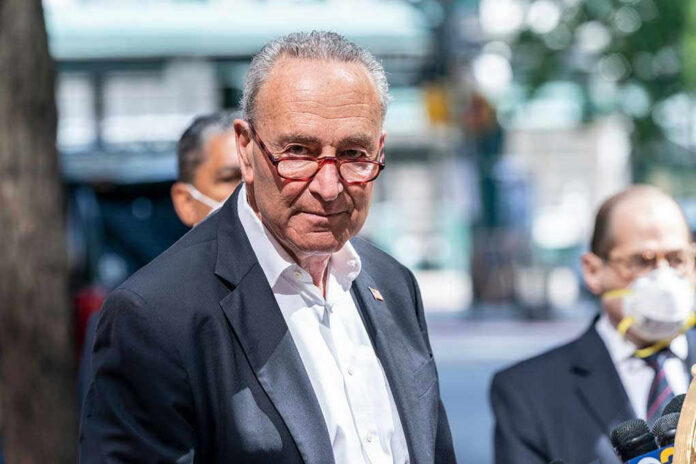
Democrats demanded body cameras for ICE agents one week, then scrambled to restrict their use the next, after discovering the footage might actually vindicate law enforcement instead of condemning them.
Story Snapshot
- Democratic leaders initially demanded ICE agents wear body cameras as a key reform measure in DHS funding negotiations
- Within days, they reversed course after realizing footage could exonerate agents and undermine activist narratives
- House already passed $20 million in funding for ICE body cameras with bipartisan support
- Video evidence from Minneapolis shooting showed legal observer struck agent after obstructing operation, contradicting initial claims
- Privacy advocates raised surveillance concerns, but timing suggests Democrats feared cameras would protect agents from false accusations
When Reform Backfires on the Reformers
Senate Minority Leader Chuck Schumer and House Minority Leader Hakeem Jeffries sent a letter to Republican leadership in early February demanding body cameras for ICE agents as one of ten “guardrails” for Department of Homeland Security funding. The demand came amid protests following two shooting incidents in Minneapolis involving federal immigration enforcement. DHS Secretary Kristi Noem responded February 3 by announcing mandatory body cameras for all federal agents in Minneapolis, with plans for nationwide expansion pending congressional funding. The House had already passed legislation allocating $20 million specifically for ICE body cameras, seemingly giving Democrats exactly what they requested.
Check Out the Hilarious Whiplash As Dems Flip-Flop on Bodycams When They Realize There's a Problem https://t.co/uYKihiJxLf
— divide_by_zero 🇺🇸 (@Dee_Bee_Zee_) February 9, 2026
The Inconvenient Truth Captured on Camera
The January 7 fatal shooting of Renee Nicole Good, a legal observer in Minneapolis, sparked the initial outcry. ICE agent Jonathan Ross shot Good during an enforcement operation. Video footage from the agent’s phone, however, told a story activists did not anticipate. The recording showed Good physically striking the agent after deliberately obstructing the operation, not accidentally caught in crossfire as protesters claimed. A second incident on January 24, when Border Patrol shot Alex Pretti, intensified calls for accountability measures. These events set the stage for what Democrats assumed would be a winning political issue, demanding transparency through mandatory body cameras.
The Swift Reversal Nobody Saw Coming
Days after their initial demand, Democratic leaders proposed new legislation to severely limit how body camera footage could be used. Left-wing privacy advocates raised concerns about mass surveillance capabilities, particularly facial recognition technology that could identify protesters at demonstrations. The National Immigrant Justice Center and similar organizations argued the cameras would enable tracking of activists and immigrants through advanced surveillance systems. Democrats cited these privacy fears as justification for restricting footage access and use, despite the Department of Homeland Security denying their cameras employ facial recognition technology. The speed and completeness of this reversal raised eyebrows across the political spectrum.
Following the Money and the Motives
Axon Enterprise, the primary manufacturer of body cameras and Tasers for law enforcement, stood to benefit substantially from the $20 million allocation. The company had already secured a $5 million contract with ICE in March 2025 and actively lobbied on the DHS funding bill. Axon donated to Democratic politicians including Senator Ruben Gallego of Arizona, who cosponsored the body camera legislation. Critics on the left, including publications like Jacobin, characterized the entire body camera push as a giveaway to defense contractors rather than genuine reform. Meanwhile, the Heritage Foundation’s Lora Ries argued cameras serve a different purpose entirely: protecting agents from false accusations of misconduct.
What the Footage Really Reveals
President Trump voiced support for body cameras, specifically noting they protect law enforcement officers from lies and fabricated claims. His assessment aligned with what actually happened in the Good shooting. The video evidence directly contradicted activist narratives, showing intentional obstruction rather than innocent bystander victimization. This pattern explains the Democratic pivot better than privacy concerns. If footage consistently exonerates agents and undermines efforts to obstruct immigration enforcement, cameras become a liability rather than an accountability tool for those opposing Trump administration policies. Secretary Noem stood firm on the body camera requirement despite the Democratic backtracking, ensuring the policy would proceed with or without their support.
The Broader Implications for Law Enforcement Oversight
Body camera efficacy remains disputed in academic research. A 2020 review found no definitive evidence that cameras change officer behavior, though some conditional effectiveness exists under specific circumstances. The ICE situation differs from typical police body camera debates because it intersects with immigration enforcement during heightened political tensions. Biden had issued an executive order in 2022 mandating body cameras agency-wide for federal law enforcement, which Trump rescinded upon returning to office. ICE maintained a similar policy dependent on congressional funding. The current legislation makes the $20 million allocation optional rather than mandatory, according to Senator Angus King of Maine, who pushed for required camera use and visible agent identification.
Political Fallout and Future Consequences
Seven Democrats broke ranks to support the DHS funding bill, citing the body camera provision among reasons for their votes. This exposed divisions within the party between those genuinely seeking accountability measures and those primarily focused on obstructing immigration enforcement. The reversal undermines Democratic credibility on law enforcement reform generally. If video evidence favors agents rather than activists, the entire premise of using cameras as an accountability mechanism collapses for those operating from a predetermined conclusion about ICE operations. Republicans secured body camera funding as a concession in broader DHS funding negotiations, avoiding a shutdown while enabling nationwide camera deployment that may ultimately shield agents from the very accusations Democrats hoped to substantiate.
Sources:
Democrats Flip-Flop On ICE Agents And Body Cameras
Democrats’ ICE Reform: Body Cameras
Senate Dems Demand Immigration Agents Unmask, Wear Body Cameras and Carry IDs
DHS Secretary Noem Stands by Body Camera Requirement for Federal Agents Following Trump Comments
House GOP Offer to Dems: Explicit Funding for ICE Body Cameras Following Minneapolis Shooting