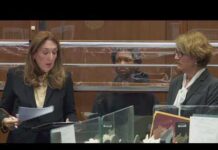
Calls to censure Rep. Rashida Tlaib after her fiery remarks at a pro-Palestinian conference signal a new flashpoint in Congress, reigniting concerns over antisemitism, free speech, and the infiltration of radical agendas into American politics.
Story Snapshot
- Rep. Rashida Tlaib faces a GOP-led censure threat after condemning both parties’ support for Israel at a Detroit pro-Palestinian event.
- Her remarks, criticized as inflammatory and potentially antisemitic, have sparked bipartisan outrage and renewed debate over congressional standards.
- The controversy underscores growing divisions in Congress over Middle East policy, free speech, and what critics see as the normalization of radical rhetoric.
- The censure resolution is pending, with implications for party unity, public discourse, and U.S. policy moving forward.
Rashida Tlaib’s Conference Speech Sparks Congressional Backlash
On August 31, 2025, Rep. Rashida Tlaib, the only Palestinian-American in Congress and a familiar figure in progressive circles, delivered a forceful speech at the People’s Conference for Palestine in Detroit. Her remarks condemned both Democratic and Republican lawmakers for ongoing U.S. support of Israel amid the Gaza conflict, challenging what she described as a bipartisan consensus enabling human rights abuses. Critics, including many in her own party, accused Tlaib of “celebrating terrorism” and using language that endangers Jewish Americans. The event featured speakers long identified with anti-Israel and, according to opponents, antisemitic rhetoric, further fueling controversy.
The GOP, led by Rep. Buddy Carter of Georgia, responded swiftly, introducing a censure resolution on September 4. The move follows a pattern: Tlaib was previously censured in 2023 for similar rhetoric regarding the Israel-Hamas conflict. The censure effort is more than symbolic; it reflects a sharpened resolve among Republicans to confront what they view as the mainstreaming of radical, anti-Israel positions within Congress. Carter and his supporters argue that Tlaib’s statements cross a line, undermining congressional decorum and the safety of Jewish Americans. The House Democratic leadership now faces pressure to address internal divisions as the censure process unfolds.
Conference Context and Political Fallout
The Detroit conference was organized by a coalition of pro-Palestinian groups, drawing activists, former detainees, and controversial figures with histories of anti-Israel positions. Tlaib’s speech resonated with attendees but ignited a political firestorm on Capitol Hill. Her use of charged language—such as “Outside of the decaying halls of the empire in Washington, D.C., we are winning. They are scared”—was cited by critics as evidence of contempt for congressional norms and a willingness to vilify colleagues. Supporters counter that her words reflect principled dissent and legitimate criticism of U.S. foreign policy. The discord highlights deepening polarization over Middle East policy, with conservative lawmakers warning that such rhetoric erodes foundational American values and emboldens extremism.
The censure threat also exposes rifts within the Democratic Party. While some progressives defend Tlaib’s right to speak out, others worry about the political costs of being tied to controversial statements. The episode fits a broader pattern of escalating tensions over congressional discipline, free speech, and the boundaries of acceptable political discourse. As the censure resolution awaits a vote, the outcome will signal how far Congress is willing to go in policing its own members and what message it sends about the limits of radical activism within its ranks.
Broader Implications for U.S. Policy and Public Debate
Beyond the immediate controversy, the Tlaib censure effort has far-reaching consequences for U.S. politics. In the short term, the move amplifies partisan divisions and places pro-Palestinian activism under heightened scrutiny. Conservative lawmakers and advocacy groups argue that unchecked radical rhetoric threatens national unity, undermines constitutional values, and invites further polarization. In the longer term, repeated censures risk politicizing congressional discipline and chilling legitimate dissent, while also deepening fractures within parties—especially on contentious issues like Israel-Palestine policy.
Democrat Rashida Tlaib Facing Censure Threat over Remarks Made at Pro-Palestinian Conference – REMOVE TRAITORS LIKE TLAIB FROM OFFICE. https://t.co/aPFA4orrJQ
— Jon Holloway (@HX1MAN) September 4, 2025
The debate over Tlaib’s remarks is emblematic of larger struggles over free speech, minority representation, and the direction of American foreign policy. Pro-Israel groups condemn her rhetoric as dangerous and antisemitic, while pro-Palestinian activists defend her as a needed voice for the marginalized. Multiple credible sources confirm the core facts: Tlaib spoke at the conference, made inflammatory statements, and now faces a formal censure threat. Yet, the interpretation of her speech and its broader meaning remain fiercely contested, reflecting the unresolved tensions shaping American public life.
Sources:
Meet the radical anti-Israel activists joining Squad Dem Tlaib at Detroit confab
Power & Pushback: The People’s Conference for Palestine
Jerusalem Post: Antisemitism in the context of Tlaib’s remarks