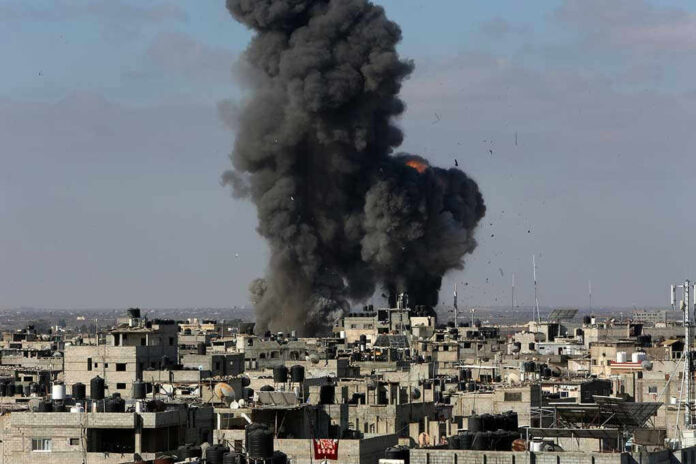
A Russian airstrike in eastern Ukraine killed at least 24 civilians waiting for their pensions, exposing the persistent threat to innocent lives and raising urgent questions about international accountability.
Story Snapshot
- Russian forces used a precision-guided glide bomb to strike a pension queue in Yarova, Donetsk, killing at least 24 civilians.
- The attack targeted elderly individuals collecting essential social benefits, not a military site.
- Ukrainian authorities and President Zelenskyy condemned the strike as a deliberate attack on civilians and called for increased international action.
- The incident illustrates the ongoing humanitarian crisis and the dangers faced by noncombatants in eastern Ukraine.
Deliberate Civilian Targeting in Pension Line Attack
On September 9, 2025, Russian military forces launched a deadly attack in the village of Yarova, Donetsk region, using a glide bomb to strike a group of civilians gathered to collect their pensions. The strike resulted in at least 24 fatalities and left dozens wounded. According to Ukrainian officials, the victims were primarily elderly individuals relying on these payments for survival. The deliberate use of a precision-guided weapon at a civilian gathering point indicates a targeted strike, not an accidental hit on a military objective. This event stands out as one of the deadliest attacks on Ukrainian civilians in recent months, amplifying global concern over the protection of noncombatants in conflict zones.
Following the attack, Ukrainian President Volodymyr Zelenskyy condemned the strike, describing it as “brutally savage” and calling for increased international pressure on Russia. Local authorities urged residents to avoid large gatherings, highlighting the heightened risks faced by civilians in contested areas. Emergency services responded immediately, working to rescue survivors and manage the aftermath, while the government reiterated its commitment to providing essential services despite ongoing threats. The international community voiced strong condemnation, with calls for investigations into potential war crimes and demands for accountability from Russian leadership. The attack has intensified scrutiny on Russia’s military conduct and the effectiveness of current mechanisms to protect civilians.
Context: Escalating Conflict and Vulnerable Populations
The Donetsk region, where Yarova is located, remains a focal point of the protracted conflict between Russia and Ukraine. Since the full-scale invasion in February 2022, eastern Ukraine has endured relentless bombardment, with civilians frequently caught in the crossfire. Ukrainian authorities have prioritized maintaining social services, such as pension distributions, even in frontline areas—a necessity for many residents but one that has increasingly made these gatherings targets for hostile action. Past incidents—including strikes on train stations, markets, and aid distribution points—demonstrate a troubling pattern of attacks on places where civilians congregate for basic needs. The persistent targeting of these sites erodes trust in the safety of humanitarian and social service provision, compounding the hardships faced by already vulnerable populations.
The use of a glide bomb in this attack is significant, as it is a precision-guided weapon designed to maximize impact on designated targets. Military analysts and human rights organizations note that such weaponry, when used against known civilian assemblies, raises grave legal and ethical concerns. Legal experts suggest this incident could be investigated as a war crime under international statutes. The ongoing risk to civilians has forced humanitarian organizations to reassess safety protocols, and there is growing pressure for the international legal community to accelerate war crimes investigations. The Ukrainian government, while striving to uphold morale and deliver essential aid, faces mounting challenges in safeguarding its citizens amid an environment of sustained military aggression.
Impact and International Response
In the immediate aftermath, the attack resulted in widespread trauma, disrupted essential services, and prompted fears of further displacement among the local population. Economic activity in the affected area has been severely impacted, as pension payments and local commerce are interrupted. Socially, the community grieves the loss of life and endures heightened anxiety over future attacks. Politically, Ukrainian leaders are under increased pressure to enhance civilian protection and secure more robust international support. The broader humanitarian sector faces new challenges in delivering aid safely. International condemnation has been swift, with many governments and organizations calling for accountability and emphasizing the urgent need for mechanisms to deter further attacks on noncombatants.
Long-term, the incident deepens distrust in the safety of designated service points and may lead to further population displacement in frontline regions. The attack also adds to the body of evidence used by international legal bodies to investigate alleged war crimes. The persistent threat to civilians highlights the urgent need for renewed international focus on upholding humanitarian law and protecting innocent lives in conflict zones. As rescue operations continue and casualty figures may rise, the situation remains fluid, but the central fact is clear: the deliberate targeting of civilians represents a profound humanitarian and legal crisis that demands decisive global action.
Sources:
Russian glide bomb attack in eastern Ukraine kills at least 24 people collecting their pensions
Russia strike in eastern Ukraine kills at least 24 people waiting for pensions