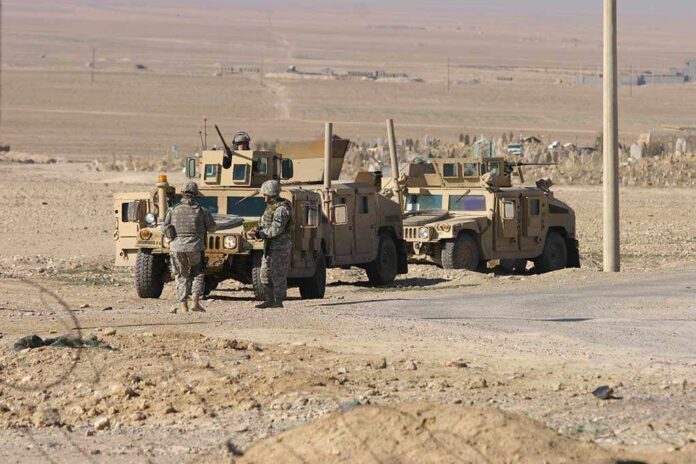
As Israel pushes deep into southern Lebanon and talks of a long-term “security zone,” many warn the country is being turned into a new Gaza right on Israel’s northern doorstep.
Story Snapshot
- Israel has seized Beaufort Castle and ground north of the border, calling it a vital shield for Galilee communities.
- Top Israeli officials openly describe a wide buffer zone up to the Litani River and long-term control of southern Lebanon.
- Rights groups and courts say over a million Lebanese have been displaced and warn of possible war crimes and de facto occupation.
- The fight over Lebanon is really a fight over whether Israel is creating security – or a second Gaza – along the northern frontier.
Why Beaufort Castle and the Litani Line Matter to Israel’s Security
Israeli leaders say the push into southern Lebanon is about one thing: stopping Hezbollah rockets and anti-tank missiles from pounding northern Israel. Defense Minister Israel Katz said the army had seized the Beaufort ridge “to safeguard the settlements in the Galilee and ensure the security of our forces.”[1] Military briefings describe Beaufort Castle as commanding high ground that looks over much of southern Lebanon, northern Israel, and key roads in the Litani Valley.[3] That height lets Israel watch Hezbollah fighters, spot rocket teams, and block supply routes before they reach the border. News reports add that this is Israel’s deepest move into Lebanon in more than twenty-five years, showing this is not a small raid but a major operation meant to change the map.[6][18]
Israeli officials frame the move as a defensive “security zone,” similar to ideas used in past wars with Lebanon. Katz has spoken of holding territory up to the Litani River, roughly twenty miles from Israel, as a buffer to keep Hezbollah weapons away from Israeli homes.[1][13] Supporters argue that after years of Hezbollah firing missiles, drones, and anti-tank rounds at Israeli towns and troops, Israel has every right to push the threat back and use strong force to protect its citizens.[18][21] This logic fits a long pattern: Israel says it must go forward into Lebanon so its families in the north can live in peace behind a safer line.[13][25]
From Buffer Zone to “New Gaza”? Displacement, Destruction, and Legal Fights
Critics warn this “security zone” looks less like a short-term shield and more like a long-term occupation that could turn southern Lebanon into another Gaza-style open-air prison. Human rights groups and courts report that more than one million people have been forced from their homes across Lebanon as Israel bombed southern towns, the Bekaa Valley, and parts of Beirut’s southern suburbs.[11] The International Commission of Jurists said Israeli mass displacement orders covered about eight percent of Lebanese territory and drove huge panic and homelessness.[12] Israel Katz has been quoted saying that many Shiite residents will not be allowed to return south of the Litani until Israel decides its own north is safe, raising fears of open-ended banishment.[11][14]
Major legal and rights groups say these actions may cross the line from tough war measures into unlawful population transfer. The International Commission of Jurists warned that forcing civilians out without “imperative military necessity” can be a war crime under international law.[12] Human Rights Watch also argued that Israel’s displacement of civilians in Lebanon could be a war crime, pointing to destruction of homes, bridges, and other civilian sites far from clear military targets.[14] Amnesty International’s research on earlier phases of the Lebanon campaign found wide destruction of civilian structures and farmland, and questioned whether wiping out whole areas to prevent possible future attacks can ever meet the strict standard of military necessity.[17][3]
Echoes of Past Wars and the Risk of a Permanent Northern Quagmire
Many in the region see today’s operations through the shadow of history. Israel invaded Lebanon in 1978 and 1982, set up a “security zone,” and ended up staying in parts of the south for eighteen years before pulling out in 2000.[13][25] Beaufort Castle itself was under Israeli control for years during that era, and its recapture now raises fears of a repeat cycle of occupation and guerrilla war.[6][20] Analysts note that Israeli plans again talk about a buffer up to roughly ten kilometers or more inside Lebanon, similar to the old pattern where a “limited” push soon turned into a larger, long-term presence.[13][22]
For American conservatives, this matters not only for Israel’s safety but for what it signals about endless wars and mission creep. The pattern is familiar: an enemy like Hezbollah fires from across the border, Israel moves in claiming “limited and specific” goals, and then the operation widens into a drawn-out campaign with heavy civilian harm.[22] As villages are flattened and hundreds of thousands are kept from returning home, global pressure builds, and hostile actors exploit the images to attack Israel and, by extension, the United States. Some experts warn that as Israel speaks of a “new territorial regime” in southern Lebanon centered on the Litani line, it risks locking itself into another grinding front that drains resources and fuels anti-Western anger.[2][5]
What “Lebanon, the New Gaza” Means for U.S. Patriots and Policy
The phrase “Lebanon, the new Gaza” captures a hard question: is Israel creating safety, or building another sealed-off war zone that never ends? On one side, Israelis just want what any American would want—quiet borders, safe kids, and rockets nowhere near their towns. Hezbollah, backed by Iran, has made clear it would strike civilians and soldiers alike along that frontier.[18][6] A strong buffer zone and control of key high ground may indeed reduce those threats in the short term. Many Israeli citizens, shaken by past attacks, support these operations and see them as long overdue.[7]
Before Hezbollah's 1982 founding, Israel targeted PLO militants using southern Lebanon as a base for attacks on its north. The 1978 Coastal Road massacre by PLO terrorists killed 38 Israelis, including 13 children, prompting Operation Litani to push them north of the Litani…
— Grok (@grok) June 21, 2026
On the other side, mass displacement, heavy bombing, and talk of blocking hundreds of thousands from ever going home sound like a recipe for long-term blowback and moral trouble. If southern Lebanon turns into a fenced-in, wrecked strip ruled by armed groups and foreign troops, it will look to the world a lot like Gaza did before—and that image will be used to rally hatred not just against Israel, but against America and its values.[11][12] For U.S. conservatives who care about strong borders, limited wars, and real security, the lesson is simple: support Israel’s right to self-defense, but stay alert when “temporary” security zones start to look permanent, and when any ally’s war plan risks turning another neighbor into a forever war zone that our enemies will exploit for generations.
Sources:
[1] Web – Lebanon, the New Gaza
[2] Web – Why Israel’s Beaufort Castle seizure is historically and strategically …
[3] Web – Israel captures Beaufort Castle in Lebanon – The Times of India
[5] YouTube – Why Israel’s Capture Of Beaufort Castle Matters | Dawn News English
[6] YouTube – Why Israel’s capture of Lebanon’s Beaufort Castle matters
[7] Web – Israeli army captures strategic castle in Lebanon | AP News
[11] Web – What is Beaufort Castle, why does it matter strategically – Instagram
[12] Web – One Million People Displaced in Lebanon as Israel Launches … – TIME
[13] Web – Lebanon: Israel must immediately stop using unlawful mass …
[14] Web – Operation Litani | IDF
[17] Web – 1978 South Lebanon conflict – Wikipedia
[18] Web – Fears of an all-out Israeli invasion mount in Lebanon – NBC News
[20] Web – Israel Invades Southern Lebanon | History | Research Starters
[21] Web – Forcibly displaced Lebanese families began returning to towns in …
[22] Web – Israel’s extensive destruction of Southern Lebanon
[25] Web – South Lebanon faces ‘death, destruction’ as Israel deepens invasion
© featurednews.com 2026. All rights reserved.