A 211-204 vote rarely tells the whole story of a political failure, and the attempt to force a House vote on impeaching Defense Secretary Pete Hegseth is a textbook case: the margin was close enough that eleven absent Democrats, by simple arithmetic, could have changed the outcome, yet the deeper lesson is less about one roll call than about the gap between what party leaders say in interviews and what their caucus actually delivers on the floor.
Key Points
- The House voted 211-204 to refer Thomas Massie’s eight-article impeachment resolution against Hegseth to the Judiciary Committee, effectively shelving it for the rest of the 119th Congress
- Eleven Democrats, including Nancy Pelosi and Marilyn Strickland, did not vote; Minority Leader Hakeem Jeffries had publicly called himself a “hard yes” on impeachment but was also absent
- Progressive commentators seized on the absences as evidence of a leadership coordination failure, while Jeffries said the effort was “not the end of it”
- Thomas Massie disputed that the absences were decisive, saying Republicans had enough votes to secure referral regardless
- The vote was procedural — a referral to committee, not a direct up-or-down vote on the impeachment articles themselves — a distinction that shapes how the episode should be read
What Actually Happened on the Floor
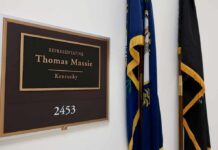
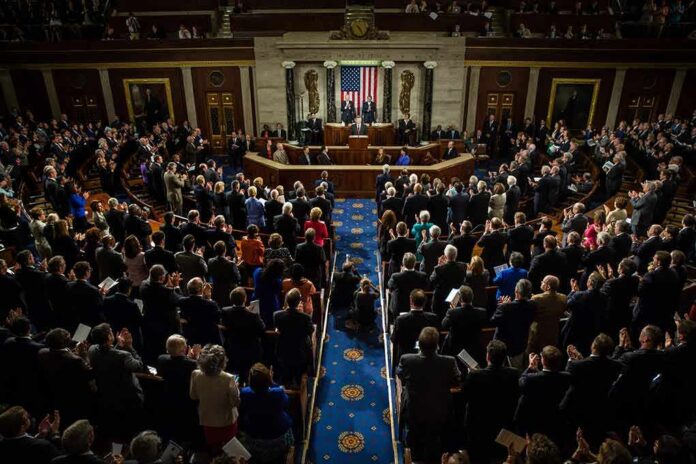
Representative Thomas Massie, a Kentucky Republican, filed a 34-page resolution containing eight articles of impeachment against Hegseth, alleging unauthorized war-making, abuse of office, and conduct that the resolution said demonstrated he “will remain a threat to the Constitution if allowed to remain in office.” The House disposed of the matter not by voting on those articles but by voting 211-204 to send the resolution to the Judiciary Committee, a procedural maneuver that effectively ends consideration for the remainder of this Congress. Eleven Democrats — Julia Brownley, Lou Correa, Nancy Pelosi, Laura Gillen, Steven Horsford, Jonathan Jackson, Brittany Pettersen, Melanie Stansbury, Haley Stevens, Marilyn Strickland, and Frederica Wilson — did not cast votes.
That detail matters because the margin was thin enough that commentary across outlets converged on a single counterfactual: had those eleven Democrats shown up, the referral motion would likely have failed and the impeachment articles would have moved forward for floor debate. Arithmetic alone makes the absences consequential. What it does not establish is intent, coordination, or culpability — and that distinction is where the controversy actually lives.
The Rhetoric-Attendance Gap
Jeffries had not been coy about where he stood. Days before the vote he told reporters he was a “hard yes” on the impeachment effort, accusing Hegseth of having “abused his power, undermined our national security, and engineered this reckless and costly war of choice in Iran.” Those are not hedged words; they are the language of a leader staking a public position. Yet Jeffries himself did not appear for the vote his own rhetoric had endorsed, and his explanation afterward — that he “hadn’t had a conversation with anyone on the floor team about what may or may not have happened” — left the mechanics of the absence unaddressed even as he insisted “this is not the end of it. It’s just the beginning.”
Progressive critics read that sequence as a leadership failure rather than bad luck. Writer Jared Yates Sexton’s comment that Jeffries “didn’t think it was important to make sure 11 Democrats didn’t skip the Hegseth impeachment vote” captured a broader frustration documented across left-leaning commentary: a minority leader can declare support all he likes, but a caucus that cannot assemble for a decisive vote has not actually delivered that support. The criticism intensified because it arrived just as Jeffries faces questions about his standing heading into a prospective speakership, turning a single missed vote into a proxy fight over his command of the caucus.
The Counter-Case: Timing, Caucus Process, and a Disputed Counterfactual
The documented pushback is narrower than the outrage suggests, but it is specific. Marilyn Strickland’s office said she arrived one minute too late to vote — a timing failure, not a political choice. Jeffries, for his part, had been careful before the vote to distinguish his personal position from a caucus commitment, telling reporters he didn’t want to “get ahead of the caucus” and that members would discuss the resolution together once they reconvened. That is a meaningfully different posture than a whip operation failing to deliver votes it had promised; it suggests Jeffries never claimed authority to compel attendance in the first place.
Massie himself undercut the central premise that Democratic absences decided the outcome, telling reporters flatly, “No, there were enough Republicans to rally to get here.” If accurate, that claim means the referral would have passed regardless of who among the eleven showed up — though no outlet has yet reconstructed the vote with each Republican’s position accounted for, so the counterfactual remains contested rather than settled in either direction. No public statements from the other ten absent Democrats have surfaced, which leaves most of the roll call’s story untold.
Why Absenteeism Looks Different in a Lame-Duck Session
Congress is chronically imperfect at attendance, and lame-duck periods make it worse. Research examining more than 52,000 House and Senate roll-call votes found members roughly 46% more likely to miss a vote during lame-duck sessions than during regular ones, with absenteeism rates climbing from a baseline near 9% to over 13%. Separate research puts average abstention across congressional votes at about 4.2%. None of that excuses a leadership-endorsed vote falling short by seven votes — but it does mean eleven absences, in isolation, sit within a historical pattern rather than outside it. What made this instance land differently was stakes and timing: a formal impeachment resolution, a leader’s own “hard yes,” and a margin thin enough that every empty chair became legible as a choice.
What the Episode Actually Settles — and What It Doesn’t
The procedural referral, not a merits vote, is what killed the effort this Congress — a distinction many headlines blurred by describing the House as having “rejected” or “killed” impeachment outright. The allegations in Massie’s resolution remain allegations, untested by any Judiciary Committee hearing, inspector general finding, or judicial record. And the question of whether Jeffries could have, or should have, ensured attendance remains unresolved by any public whip records or internal caucus communication yet made available. What the episode does settle, cleanly, is that a leader’s floor-interview conviction and his caucus’s floor-vote execution are not the same instrument — and voters, donors, and activists who track accountability promises will keep measuring the distance between the two.
At the EXACT TIME there's a backlash to the coronation of Hakeem Jeffries as Speaker, he FUCKS UP THE IMPEACHMENT OF HEGSETH BY NOT WHIPPING VOTES!!!!!!!!!!!! https://t.co/gR6uIN1mSq
— Secular Talk ([email protected]) (@KyleKulinski) November 11, 2026
Sources:
mediaite.com, abc7.com, commondreams.org, nbcchicago.com, usatoday.com, cnbc.com, politico.com, courier-journal.com, nytimes.com, congress.gov
© featurednews.com 2026. All rights reserved.