Body-worn cameras have turned late-night street encounters into public records that decide reputations as much as they document probable cause; when the subject is a statewide officeholder, the camera’s unblinking account often outruns the courtroom and drives the governance question first.
The Short Version
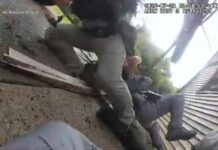
- Edmond police bodycam video shows Secretary of State Benjamin Lepak questioned outside a McDonald’s, exhibiting classic indicators officers associate with intoxication before being arrested for public intoxication.
- The arresting officer states the basis on tape: “You’re under arrest for public intoxication,” adding Lepak is “lucky it’s not a DUI.”
- Lepak gives inconsistent accounts about drinking and how he arrived; Oklahoma’s attorney general, after reviewing the footage, publicly concluded Lepak was “thoroughly inebriated.”
- No breath test result appears in the public record, so the case, and the public narrative, rest on officer observation and the video’s credibility rather than chemistry.
What the bodycam shows and why it matters
The decisive artifact in this episode is not a lab printout but the body-worn camera. In the released footage, an Edmond officer engages Benjamin Lepak outside a McDonald’s drive-thru late at night, noting slurred speech, odor of alcohol, and balance issues before placing him under arrest for public intoxication. On camera, the officer states the charge plainly and tells Lepak he is “lucky it’s not a DUI,” signaling the officer’s view that driving had likely occurred but the available evidence supported the lesser offense. Multiple local outlets published the same sequence from the recording; none materially contradict the core interaction depicted.
Lepak’s own statements on camera complicate his defense. He initially denies drinking, then acknowledges a small amount (“a beer” or “less than one beer”), and gives conflicting accounts about how he reached the location—first indicating he drove, later saying he walked from a nearby church event. Those inconsistencies, paired with sensory observations, are exactly the kind of “totality of circumstances” police are trained to marshal for probable cause in alcohol-related offenses when a breath test is not in play.
Probable cause without a breath test: how these cases are actually built
Public intoxication is not DUI; the statute does not hinge on a blood-alcohol number but on whether a person is in public while intoxicated to a degree that may endanger themselves or others. Across jurisdictions, courts describe probable cause in pragmatic terms: facts and circumstances sufficient to warrant a reasonably cautious person in believing an offense has been committed. In alcohol cases, those facts often include odor of alcohol, slurred speech, unsteady gait, and incoherent answers, sometimes coupled with admissions—partial and shifting though they may be. That framework is why prosecutions can proceed, and often do, without chemical testing.
The flip side is just as familiar to practitioners: observation-based arrests are contestable. Defense counsel routinely probe whether slurring could reflect fatigue, medications, or a speech pattern; whether “odor of alcohol” proves impairment rather than mere consumption; and whether the narrative has been compressed by memory or editing. But as a threshold for arrest, the law does not demand laboratory certainty—only a reasonable officer’s basis under the totality of the circumstances.
What the attorney general’s intervention signals
Oklahoma Attorney General Gentner Drummond reviewed the bodycam and declared publicly that Lepak was “thoroughly inebriated,” going further to suggest Lepak likely lied about his drinking and travel. That is an unusually unequivocal institutional judgment delivered before a court adjudicates the charge; it also reflects an official staking his credibility on the same video the public can view. In political reality, such a statement reframes an incident from a municipal alcohol ticket into a suitability-for-office question, accelerating consequences that typically come only after filings and hearings.
For readers parsing weight, the AG’s statement is not forensic proof; it is, however, a named constitutional officer taking a side after reviewing primary material. In disputes like this, that kind of on-the-record assessment often shapes the outcome inside government well before the docket closes.
Competing claims, weighed
Lepak’s office has emphasized two points: he was waiting for food outside McDonald’s, and no breathalyzer test was administered. Both are accurate as far as the public record goes, and they aim at the perceived gap between suspicion and scientific confirmation. Yet neither point undercuts the arrest’s stated legal basis. Public intoxication focuses on condition in public, not on a driving blood-alcohol threshold, and the officer’s articulated reasons—speech, balance, odor, inconsistent answers—fit the normal evidentiary pattern for such charges.
On the video, Lepak’s narrative shifts: first no alcohol, then some; first he drove, then he walked. Jurors and judges treat that kind of vacillation as probative because it suggests impairment in cognition or credibility. While discrepancies exist among secondary summaries about whether he said one beer or two, the bodycam itself anchors the essential through-line—admission of at least some drinking paired with indicators of impairment. On this record, the arrest is factually supported by what viewers can see and hear themselves.
Why prior history surfaces—and how to treat it
Coverage has referenced a prior alcohol-related case, including a reported no-contest plea to public intoxication in 2022. Prior incidents are not evidence of guilt in a new case, but they are politically relevant: they color public interpretation and can stiffen an attorney general’s confidence in calling for removal. In court, admissibility would be constrained by evidence rules; in governance, pattern and perception carry their own gravity. Readers should keep the lanes separate: the bodycam must stand on its own for this arrest, regardless of past dockets.
What to expect as the record fills in
Observation-led arrests like this one ripen through paperwork. The complete incident report, dispatch logs, any 911 audio, and the unedited bodycam with timestamps will either reinforce the initial portrayal or reveal nuance around timing and risk. If no chemical test was attempted or offered, that choice will be scrutinized; if a test was refused, that fact often appears in booking or refusal forms. But none of those later documents are likely to contradict the core on-camera exchange: the officer’s description of slurring and imbalance, Lepak’s conflicting accounts, and the explicit announcement of arrest for public intoxication.
The enduring lesson
In an era when official conduct is mediated by video, the evidentiary posture of a public intoxication charge is inseparable from the reputational stakes of what the audience sees. Here, the publicly available bodycam provides a sufficient factual spine for the arrest and for the attorney general’s political judgment, even absent a breath test. That does not pre-judge the courtroom; it does explain why the governance verdict often arrives first.
Sources:
koco.com, tmz.com, youtube.com, oklahoman.com, yahoo.com, law.okcu.edu, govinfo.gov, chicagocriminallawyer.pro
© featurednews.com 2026. All rights reserved.