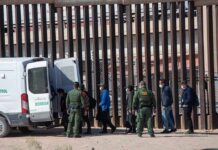
President Trump’s Day One executive order challenges 127 years of birthright citizenship precedent, potentially restoring the true meaning of American citizenship against illegal immigration exploitation.
Story Highlights
- Trump’s EO 14160 denies automatic U.S. citizenship to children born to undocumented immigrants or temporary visa holders, citing the 14th Amendment’s “subject to the jurisdiction thereof” clause.
- Issued January 20, 2025, the order marks the first direct presidential reinterpretation without Congress, targeting “anchor babies” to protect citizenship’s value.
- Ongoing Supreme Court challenges as of March 2026 test this conservative view against Wong Kim Ark precedent from 1898.
- Both conservatives and liberals express frustration with federal overreach, seeing this as a step toward limiting elite-driven policies that dilute national sovereignty.
Trump’s Bold Executive Action
President Donald Trump signed Executive Order 14160 on January 20, 2025, his first day of the second term. The order denies automatic citizenship to babies born in the U.S. to mothers unlawfully present or lawfully but temporarily here, and fathers who are non-citizens or non-permanent residents. This targets children of undocumented immigrants and temporary visa holders like students or workers. Trump administration officials argue the 14th Amendment’s “subject to the jurisdiction thereof” excludes those owing allegiance to foreign powers. This move fulfills a long-standing campaign promise to end birthright citizenship abuse.
Historical Roots of the Debate
Birthright citizenship traces to English common law, adopted in the U.S. pre-Constitution but excluding Native tribes and diplomats. The 1857 Dred Scott decision denied citizenship to Black Americans, prompting the Civil Rights Act of 1866 and 14th Amendment ratification in 1868. That amendment states: “All persons born or naturalized in the United States, and subject to the jurisdiction thereof, are citizens.” The 1898 Supreme Court case United States v. Wong Kim Ark affirmed citizenship for children of non-citizen immigrants. Conservatives contend “jurisdiction” requires full political allegiance, barring undocumented parents’ children.
Stakeholders and Power Struggles
Trump and his administration lead the push to restrict “anchor babies” and preserve citizenship exclusivity for those truly under U.S. jurisdiction. Immigration groups like the American Immigration Council and Brennan Center oppose the EO, citing Wong Kim Ark precedent. Legal scholars such as Gerald Neuman of Harvard and Gregory Downs of UC Davis defend broad jus soli. Businesses worry about labor disruptions from affected immigrant families. Power pits the executive branch against judiciary precedent and congressional statutes like 8 U.S.C. §1401, with SCOTUS as final arbiter.
Ongoing Legal Battles and Impacts
As of March 2026, lawsuits challenge the EO, with SCOTUSblog previewing arguments. Lower courts issue expected injunctions, heading to the Supreme Court. Short-term effects include hospital birth record chaos and potential stateless children if upheld. Long-term, it could require constitutional amendment or spark workforce issues. Undocumented families with over 4 million U.S.-born children face status loss; native citizens see precedent threats. Economically, verification costs rise; socially, family separations grow. This polarizes immigration but advances restrictionist goals amid shared bipartisan frustration with government failures.
The True Constitution Doesn’t Grant Universal Birthright Citizenship https://t.co/bP8CyzfjPm pic.twitter.com/Fiz2WVmkf9
— NA404ERROR (@Too_Much_Rum) April 20, 2026
Expert Views and Broader Significance
Pro-EO arguments hold “jurisdiction” demands full allegiance, excluding undocumented, per Trump officials and scholars like Peter Schuck. Opponents call it unconstitutional, noting Wong Kim Ark settled the issue for immigrants’ children and no 1868 bar for “illegals.” Mainstream consensus limits exclusions to diplomats and tribes. This EO revives fringe conservative interpretation into national policy, connecting to conservative values of limited government, secure borders, and protecting the American Dream from dilution by unchecked immigration. Both sides agree federal elites prioritize power over citizens’ interests.
Sources:
Brief History of Citizenship and the 14th Amendment
Birthright Citizenship – American Immigration Council
Birthright Citizenship Under the U.S. Constitution – Brennan Center
Birthright citizenship in the United States – Wikipedia
Protecting The Meaning And Value Of American Citizenship – White House
Birthright citizenship: hard questions – and the best answers – SCOTUSblog
14th Amendment Essay – Congress.gov
Can Birthright Citizenship Be Changed? – Harvard Law School