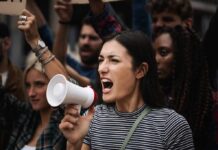
Nine people died when hundreds of pro-Iranian protesters breached the outer wall of the US Consulate in Karachi, Pakistan, transforming grief over Iran’s slain Supreme Leader into a deadly confrontation that exposed the fragile balance between America’s diplomatic interests and seething anti-Western sentiment in South Asia.
Story Snapshot
- At least nine protesters killed and over 30 injured during violent clashes at the US Consulate in Karachi following the death of Iran’s Supreme Leader Ayatollah Ali Khamenei in US-Israeli airstrikes
- Protesters breached the consulate’s outer wall, set vehicles ablaze, and stormed a UN office building in Skardu while demonstrations erupted across Karachi, Lahore, Islamabad, and other cities
- Pakistani Prime Minister Shehbaz Sharif condemned the killing of Khamenei as a violation of international law while ordering investigations into protester deaths
- The incident reveals Pakistan’s precarious position between its alliance with the United States and its significant Shiite population’s allegiance to Iran’s leadership
When Diplomatic Walls Cannot Hold Back Rage
Hundreds of protesters descended on the US Consulate in Karachi with a fury that overwhelmed security barriers. They breached the compound’s outer wall while police deployed tear gas and gunfire to repel the advancing crowd. Vehicles outside the consulate erupted in flames as demonstrators attempted to penetrate the main building. The chaos continued into the afternoon, with clashes still ongoing at 3:00 PM local time. Hospital records confirmed nine fatalities from gunshot wounds, though uncertainty remains about who fired the lethal shots. The ambiguity surrounding responsibility for the deaths raises troubling questions about crowd control tactics and the level of force deployed against civilians expressing political grievances.
Protests Spread Beyond the Consulate Walls
The violence in Karachi represented only the most deadly flashpoint in a nationwide eruption of anti-American sentiment. In Skardu, located in the Gilgit Baltistan region known for Himalayan tourism, protesters stormed and set fire to a UN office building, completely destroying at least three vehicles parked nearby. Hundreds gathered outside the US Consulate in Lahore, though those demonstrations produced minor clashes without reported violence. Authorities in Islamabad blocked roads leading to the red zone housing diplomatic missions and parliament buildings, attempting to prevent crowds from reaching sensitive government areas. The coordination across multiple cities suggests organized mobilization by pro-Iranian networks with significant reach throughout Pakistan’s Shiite communities.
Government Caught Between Two Powers
Prime Minister Shehbaz Sharif found himself walking a diplomatic tightrope. He publicly characterized the killing of Khamenei as a violation of international law, declaring that the people of Pakistan stand with Iran in their grief. This statement directly criticized America’s military action despite Pakistan’s historical alliance with the United States. Sindh Province Chief Minister Syed Murad Ali Shah ordered a transparent investigation into the protester deaths, responding to domestic pressure for accountability. The government’s response reflects the impossible position of maintaining relations with Washington while managing a domestic population that views American Middle East policy with deep hostility. One protester captured the sentiment bluntly, stating that Pakistani leaders are nothing but American stooges and that Americans and Israelis will pay for their actions.
The Broader Regional Security Crisis
The death of Iran’s Supreme Leader through joint US-Israeli military action represents a dramatic escalation in decades of conflict stemming from the 1979 Iranian Revolution. Pakistan hosts substantial Shiite populations concentrated in urban centers like Karachi and mountainous regions like Gilgit Baltistan, making the country particularly responsive to events affecting Iran’s religious and political leadership. The targeting of both American and UN facilities demonstrates that anti-Western sentiment extends beyond specific grievances against US foreign policy. The US and British embassies issued travel advisories urging their citizens to exercise caution, acknowledging the heightened threat environment. The vulnerability of diplomatic facilities in countries with significant pro-Iranian populations now stands exposed, creating precedents that will shape security protocols throughout the region.
At least 10 killed in Pakistan as pro-Iran protesters clash with police after Iran's Supreme Leader killedhttps://t.co/WO8Jhyn954
— Human Events (@HumanEvents) March 1, 2026
The incident forces uncomfortable questions about America’s approach to regime change and military intervention in the Middle East. While eliminating hostile leadership may achieve short-term tactical goals, the violent reaction across Pakistan illustrates the broader destabilizing consequences. The Pakistani government’s condemnation of the strikes as illegal, despite its alliance with Washington, signals that even partner nations view such actions as overreach. The protesters who died were civilians expressing political views, however hostile those views may be toward American interests. Their deaths during what authorities acknowledge requires transparent investigation suggests security forces either lost control of the situation or employed excessive force. Neither scenario inspires confidence in Pakistan’s ability to protect diplomatic facilities or manage the domestic fallout from American military adventurism in neighboring countries.
Sources:
Protests Break Out in Pakistan, Iraq Over Khamenei’s Death; 9 Die in Karachi – Arab News Japan
9 Killed in Pro-Iran Protest at US Consulate in Pakistan’s Karachi – NBC Right Now