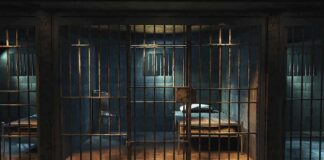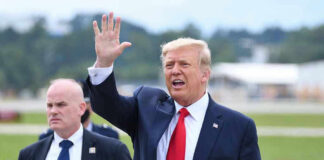
When a government flirts with broadcasting a killing, it is not deciding a production choice; it is deciding what kind of power it intends to display — punitive transparency or theatrical punishment — and whether the costs to security, dignity, and legitimacy are worth the spectacle.
At a Glance
- The Pentagon initially confirmed plans to livestream Nidal Hasan’s firing-squad execution; senior officials later leaned against doing so.
- Proponents framed a public broadcast as deterrence and accountability; opponents warned of spectacle, jihadist propaganda, and loss of dignity.
- Empirical evidence that publicity around executions deters violence is weak and contested; legal precedent does not create a public right to film executions.
- The episode revives an old conflict: making punishment visible versus avoiding turning state killing into a stage.
What was proposed, and why it mattered
The Pentagon didn’t just muse about visibility; it said Hasan’s execution “will be livestreamed,” after Defense Secretary Pete Hegseth publicly argued Americans should see consequences and recommended a firing squad — a method the military has not used since the 1940s — a recommendation he said President Trump approved. The timing was to be symbolic, fixed for the hour of the Fort Hood attack to underscore retribution and state resolve. In short, this was framed as public accountability through direct observation: don’t ask citizens to take capital punishment on trust; let them witness it. For a modern American military execution, that is extraordinary both historically and institutionally.
Yet extraordinary claims demand extraordinary coherence. After the on-record confirmation, reporting quickly indicated senior officials were leaning against the livestream and that no final presidential decision had been made. That whiplash created a credibility gap: either this was a settled transparency measure or an unsettled idea carrying unresolved risks. The latter view dominated subsequent coverage, and with reason — execution broadcasts are not merely technical feeds; they are political, legal, and security commitments that require precise design and rare consensus.
The case for a public broadcast — and what it actually requires
Proponents argue that a broadcast communicates consequences, honors victims with visible justice, and denies the antiseptic distance that can make state killing abstract. Hegseth’s rationale was explicit: people need to understand that serious crimes carry serious punishments; therefore, show it. If taken seriously, that logic implies more than a camera in a room. It demands a philosophy of access (who watches and how), editorial rules (single static feed or multiple angles; audio or silent), delay and interlocks (guardrails against hijacking or technical failure), and a doctrine explaining what images the state should be willing to own in perpetuity. None of those operational specifics had been publicly articulated; even the platform was unclear, which weakened the claim that this was about civic transparency rather than political messaging.
There is also the perennial deterrence question. Decades of research into capital punishment’s supposed crime-reduction effect is methodologically contested and inconclusive; claims that publicity itself strengthens deterrence are even more fragile. Some “immediate impact” studies have found no decrease, and at times slight increases, in homicide after highly publicized executions. A respectable minority of econometric work points the other way, but the field lacks a consensus mechanism that turns visibility into measurable safety. As policy scaffolding for something as grave as broadcasting a death, that’s thin ice.
The counter-case: security, dignity, and the risk of spectacle
Opposition cohered quickly around three themes: security, dignity, and precedent. Security officials and lawmakers warned that a government-produced execution video could become jihadist recruiting fodder or confer martyr status on the condemned — an asymmetric gift to propagandists. While the Homeland Security chief publicly dismissed those risks, no public threat assessment detailing the methodology behind that judgment accompanied the defense. In an era when extremist media thrives on symbolism, that absence of published analysis mattered.
Dignity concerns were more moral than instrumental: broadcasting a death, critics argued, collapses solemn punishment into entertainment and borrows the aesthetics of regimes the United States condemns. Republican lawmakers — many supportive of the death sentence itself — denounced the livestream as undignified, “beyond disgusting,” and aligned with practices of oppressive states. Their point was not abolitionist; it was custodial. The state must kill, if it kills at all, with restraint that preserves institutional legitimacy. That argument lands heavily in a military context, where command decisions teach as much as they punish.
The law and the line between access and exhibition
American law does not grant the public or press a general right to film executions. Courts have repeatedly upheld prison and state restrictions limiting who may witness and what may be recorded; media claims to a First Amendment right of execution access have failed. A recent federal appellate decision reaffirmed that states may control attendance tightly and do not violate the Constitution by declining to conduct executions “in the public’s name” for an unrestricted audience. These holdings do not forbid a voluntary broadcast — they simply make clear it is a policy choice, not a constitutional obligation. That pushes the debate back to prudence: if you can, should you?
Historically, the United States moved executions out of the square and behind institutional walls as part of a broader civilizing project. Early American public hangings were purposeful theater, aimed at moral instruction through fear; they often devolved into unruly crowds and commerce, eroding the very authority the scaffold was meant to project. The 20th century’s drift toward the death chamber reflected a lesson: legitimacy can be lost by spectacle as surely as by secrecy. Contemporary scholarship still finds little empirical basis to assert that capital punishment’s visibility makes communities safer; what visibility reliably does is shape perception — of the condemned, the crime, and the state that kills.
The archbishop who oversees the U.S military's Catholic community condemned plans to livestream the execution of former Army officer Nidal Hasan and urged any Catholic service members assigned to carry out the sentence to seek exemption. (from @pwwellman) https://t.co/DzJuCeemsD
— Stars and Stripes (@starsandstripes) October 14, 2026
Why officials ultimately leaned away — and what would have been required to lean in
Given the unsettled evidence on deterrence, the unresolved operational questions, and the concentration of benefits in symbolism while costs clustered in security and legitimacy, it is unsurprising that senior officials began to lean against the livestream. Reports that even President Trump harbored private doubts underscored that this was less a routine transparency decision than a high-salience departure with few institutional precedents to lean on and many reputational tripwires to trigger. The initial on-record certainty, followed by retrenchment, made critics’ charges of improvisation more persuasive than proponents’ claims of clarity.
Could a broadcast ever be justified? Possibly — but only if its designers could meet a stringent burden: publish a rigorous threat assessment; specify platform, delay, and editorial controls; ground the justification in more than deterrence rhetoric; secure survivor and victim-family input; and anchor the choice in a durable legal and ethical framework that would survive changes in administration. Absent that spine, a livestream is not transparency. It is theater.
Sources:
cbsnews.com, nbcnews.com, npr.org, dw.com, cnn.com, bbc.com
© featurednews.com 2026. All rights reserved.