A passenger was removed from a U.S. flight after allegedly consuming cannabis onboard, triggering a two-hour delay and reigniting debate about the clash between state-level cannabis legalization and strict federal bans that govern air travel.
Story Snapshot
- Passenger’s in-flight cannabis use leads to removal and legal action.
- Incident exposes ongoing conflict between state legalization and federal prohibition.
- Airlines and federal agencies maintain zero-tolerance policies despite shifting state laws.
- Operational disruptions highlight the costs of regulatory confusion in aviation.
Passenger’s Actions Spur Major Flight Disruption
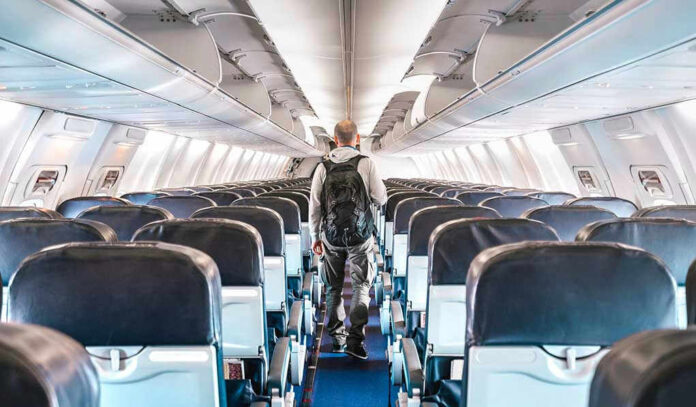
On a recent domestic U.S. flight departing from a state where recreational cannabis is legal, a passenger was observed consuming cannabis in the aircraft cabin, reportedly through vaping. Flight attendants quickly detected the violation and alerted the cockpit. The crew followed established procedures, notifying law enforcement and detaining the passenger until landing. The incident resulted in a two-hour delay, inconveniencing fellow travelers and prompting a full law enforcement response upon arrival. The passenger now faces potential federal charges, as cannabis remains illegal under the Controlled Substances Act regardless of state law. Airlines reiterated their zero-tolerance policies in the wake of the event.
The passenger’s removal, while controversial to some, demonstrates the uncompromising stance airlines and federal agencies have adopted regarding drug use during air travel. Flight crews are trained to address potential safety threats swiftly, and in this case, the presence of cannabis—an impairing substance—was treated as a violation of federal aviation law and airline policy. The incident is far from isolated; similar events have occurred in recent years, especially on flights departing from states with legal recreational cannabis. In each case, the outcome is consistent: immediate removal, possible arrest, and legal consequences for the offending passenger.
Federal Law Overrules State Legalization in Aviation
Despite growing acceptance of cannabis in more than 24 states by 2024, federal law remains unchanged regarding its use and possession in air transit. The Federal Aviation Administration (FAA) and Transportation Security Administration (TSA) have repeatedly warned that federal prohibition applies to all commercial flights, regardless of state policies at departure or arrival points. The FAA’s 2023 advisory explicitly stated that “cannabis is prohibited on all commercial flights, regardless of state law,” reaffirming the primacy of federal regulation in the nation’s skies. Airline executives have echoed this position, issuing public reminders and updating passenger guidelines to emphasize zero-tolerance for any in-flight cannabis consumption.
Airports in states such as California and Colorado have tried to clarify the rules, often allowing adults to possess limited amounts of cannabis in non-secure areas. However, once passengers pass through security and board a plane, they are subject to federal jurisdiction. The TSA’s public messaging makes it clear: while the agency’s primary concern is security, any discovery of cannabis is referred to local or federal law enforcement for further action. High-profile incidents, such as the 2019 JetBlue flight diversion after a passenger vaped cannabis oil, have served as precedent for strict enforcement and swift legal penalties.
Costs and Consequences for Airlines and Passengers
Flight delays and diversions caused by passenger misconduct are not just a legal issue—they translate into significant operational costs. Airlines face expenses associated with additional fuel, crew time, and logistical disruptions, while passengers endure delays and rebookings. According to aviation industry watchdogs, such incidents cost airlines millions annually and pose reputational risks that can impact consumer trust. For the individual involved, the consequences are severe: risk of arrest, fines, loss of travel privileges, and a permanent mark on their record. Law enforcement and airline officials maintain that these measures are necessary to ensure safety and regulatory compliance in an era of shifting state laws and persistent legal ambiguity.
Advocacy groups and legal analysts continue to press for harmonization of federal and state cannabis regulations, arguing that current policies create confusion and unfairly penalize travelers who may not be aware of the law’s reach. Some public health experts warn of the safety risks associated with in-flight impairment and secondhand exposure, reinforcing the rationale for strict enforcement. Yet, until Congress acts to reform federal cannabis law, the status quo remains, with passengers bearing the burden of regulatory contradiction.
Calls for Reform Amid Ongoing Enforcement
Legal scholars and cannabis industry advocates point to the persistent conflict between state and federal law as a source of ongoing confusion and legal jeopardy for travelers. Despite mounting pressure from states and industry stakeholders, there is no indication of imminent change at the federal level. The FAA, TSA, and Department of Homeland Security continue to enforce existing law decisively, with airlines following suit to avoid liability and uphold public safety. The latest incident serves as a cautionary tale: until Congress resolves the disconnect between state legalization and federal prohibition, passengers must err on the side of caution and strictly comply with federal rules when traveling by air.
The debate over cannabis and air travel is emblematic of broader tensions in American law and policy, where states’ rights collide with federal supremacy. For now, the message from regulators and airlines is unequivocal: leave the cannabis at home, or risk facing the full weight of federal enforcement, no matter where your journey begins or ends.
Sources:
Passenger kicked off flight after causing 2-hour delay over major plane violation