A single, unscripted question about Taiwan can expose whether a politician understands the most dangerous flashpoint on Earth—or only knows the talking points.
Story Snapshot
- Rep. Alexandria Ocasio-Cortez appeared at the Munich Security Conference and was asked whether the U.S. should commit to defending Taiwan from China.
- Fox News circulated video of her response, characterizing it as a struggle and using it to question her readiness on national security.
- The Taiwan question is politically loaded because U.S. policy relies on deterrence and “strategic ambiguity,” not a simple yes-or-no pledge.
- The clip’s impact lands mostly at home: it feeds a familiar campaign-year argument about competence, credibility, and American resolve.
Munich, One Microphone, and a Question with No Safe Shortcut
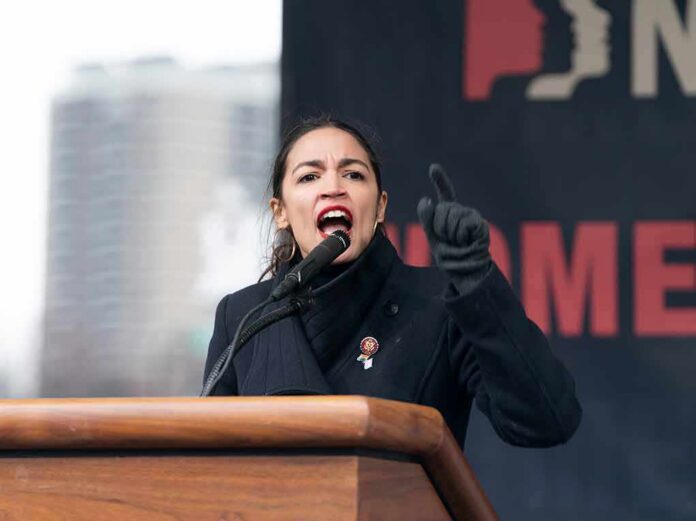
Rep. Alexandria Ocasio-Cortez, a high-profile progressive Democrat, attended the Munich Security Conference and faced a question that looks simple but isn’t: should the United States commit to defending Taiwan if China attacks? Fox News highlighted her answer as halting or uncertain. That framing matters because Munich isn’t a campus forum; it’s where allies measure seriousness. A pause there reads differently than a pause anywhere else.
Adults who’ve watched Washington for decades know the trap: the Taiwan question forces a politician to choose between clarity and flexibility. A clean pledge can sound strong but carries escalation risk. A careful answer can be prudent but sounds weak on television. That tension is the entire game. The headline writers want a “gaffe.” Beijing wants doubt. Taipei wants reassurance. Voters want confidence. The microphone doesn’t care.
Why Taiwan Is the Foreign-Policy Lie Detector for American Leaders
Taiwan sits at the intersection of military logistics, economic reality, and political will. The island anchors critical shipping routes and plays an outsized role in advanced technology supply chains. China frames Taiwan as a core sovereignty issue, while U.S. policy has long tried to deter aggression without issuing a formal defense guarantee. That balance—sell defensive arms, signal resolve, avoid locking in automatic war—creates answers that sound messy on purpose.
Fox News presented AOC’s response as a “struggle,” and conservative viewers immediately recognize the deeper concern: when adversaries probe, hesitation can invite pressure. Common sense says deterrence works when the other side believes you mean what you say. Conservative values also prioritize national strength, preparedness, and clear-eyed threat assessment. If a leader can’t discuss the Taiwan Strait crisply, critics argue, how will that leader handle crisis bargaining when time is short and stakes are nuclear?
Media Incentives: Turning “Strategic Ambiguity” into a Viral Stumble
The segment’s power came from packaging. A short clip, a high-status venue, and a charged question combine into a neat story: a prominent Democrat looks unready on China. That may or may not reflect the full exchange, but it reflects modern politics. Cable segments reward moments, not memos. The audience doesn’t get footnotes about the Taiwan Relations Act or nuanced signaling; they get a facial expression and a beat of silence.
Republicans and Democrats both exploit this dynamic when it helps them. Conservatives highlight confusion to argue that the progressive wing talks big domestically but lacks command of hard power abroad. Progressives often argue that “tough talk” can become a blank check for intervention. Both arguments can be made in good faith. The problem is the clip format rarely allows good faith; it pushes every participant toward performance, not policy.
What a Strong Answer Would Have Accomplished Without Starting a War
The best Taiwan answers do three jobs at once. First, they deter China by emphasizing consequences and American capability. Second, they avoid reckless specificity that removes options for U.S. commanders and diplomats. Third, they reassure allies that the U.S. won’t fold under pressure. Leaders can do that by stressing alliance coordination, credible force posture, and the principle that disputes must be resolved peacefully—while pointing to existing U.S. commitments and long-standing policy frameworks.
If AOC hesitated, it could reflect unfamiliarity, or it could reflect caution in a policy area where every word gets parsed by foreign intelligence services. Fox’s interpretation leans toward unfamiliarity, and that’s a fair political critique if the full context shows she couldn’t articulate basics. The missing piece is verification: without a full transcript and broader coverage beyond a single outlet, viewers should treat “faceplant” language as an argument, not a fact.
The Real Stakes: Confidence, Credibility, and America’s Signal to Allies
The immediate consequence of a viral clip is domestic: it becomes ammunition in a larger “competence” storyline, often compared to other prominent Democrats and their public stumbles. The longer-term consequence is subtler. Allies watch American political culture for signs of steadiness. Adversaries watch for division and uncertainty. The Munich Security Conference exists because perception shapes deterrence. When Americans turn strategy into a punchline, other capitals read it as volatility.
Voters over 40 have seen this movie: a moment gets amplified, then it becomes shorthand for a whole résumé. Sometimes that shorthand is accurate; sometimes it’s lazy. The disciplined approach is to ask two questions. Did the speaker show command of the core tradeoffs—deterrence versus escalation, clarity versus flexibility? And did the media present enough context to judge competence fairly? If the answer to either is no, skepticism is the only adult response.
https://twitter.com/MustReadNewz/status/2022728343645536585
The open loop is what happens next: whether AOC or her office clarifies her position, whether longer footage surfaces, and whether anyone uses the moment to educate the public on why Taiwan policy is deliberately complicated. The country doesn’t need every politician to be a Pentagon briefer. It does need leaders who can speak plainly about threats, values, and consequences without collapsing into slogans. Munich has a way of exposing who can.
Sources:
AOC appears to struggle to answer whether US should commit to defending Taiwan – Fox News Video