America’s biggest “sanctuary” airports may soon face a blunt choice: cooperate with federal immigration enforcement, or lose the customs operations that make international flights possible.
Quick Take
- DHS Secretary Markwayne Mullin said he is considering pulling CBP operations from international airports in sanctuary jurisdictions that refuse to cooperate with ICE.
- Without CBP staffing and “port of entry” processing, affected airports could be unable to accept direct international arrivals, forcing reroutes to compliant cities.
- As of April 7, 2026, DHS has not announced a formal policy, a timeline, or a list of targeted airports; the idea is at the “hard look” stage.
- The dispute revives a long-running federal-versus-local clash over sanctuary laws, with likely legal challenges if DHS attempts to implement a shutdown.
Mullin’s Warning Targets the Operational Lifeline of International Travel
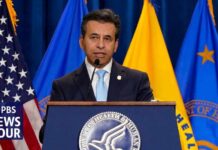
DHS Secretary Markwayne Mullin raised the stakes in the sanctuary-city fight during an April 6 Fox News interview, signaling that DHS could reconsider whether to keep U.S. Customs and Border Protection staffing at major airports in jurisdictions that limit cooperation with ICE. CBP operations are not a symbolic detail; they are the practical mechanism that processes international arrivals. Removing them would effectively block direct international flights into those airports.
Reporting across outlets converged on the same core point: Mullin framed the concept as a resource-and-priorities question, arguing DHS should “focus on cities that want to work with us.” Critics framed it as retaliation aimed at blue cities. The immediate uncertainty is that DHS has not released implementation details, leaving airlines, airport authorities, and travelers to parse a policy that could be disruptive even as a bargaining threat.
How Sanctuary Policies Became a Federal Flashpoint Again
Sanctuary policies began decades ago but have matured into state and local rules that restrict cooperation with federal civil immigration enforcement. The reporting cited a federal list recognizing 12 states plus Washington, D.C., along with several counties and cities as sanctuary jurisdictions as of August 2025. In practical terms, these laws can limit when local agencies share data, honor detainers, or facilitate interviews, even after someone enters the country.
The current clash did not start with Mullin. In August 2025, then-Attorney General Pam Bondi sent cease-and-desist letters to dozens of sanctuary jurisdictions warning of consequences if they did not change policies viewed as obstructing federal enforcement. Washington state was singled out in reporting for rules that prohibit local assistance in civil immigration enforcement and restrict custody decisions or information-sharing based solely on immigration status—precisely the type of friction ICE complains about.
What Happens if CBP Is Pulled: Reroutes, Delays, and Legal Risk
CBP officers and facilities are what make an airport an effective international “port of entry.” If CBP processing is withdrawn, the immediate operational impact described in coverage is straightforward: international arrivals would need to be rerouted to airports where passengers can clear passport control and customs, or routes could be canceled. That means missed connections, longer travel times, and knock-on delays—costs absorbed by ordinary travelers and local economies.
The Lynnwood Times reporting highlighted how disruptions could collide with high-profile economic expectations, including Washington state’s interest in international travel tied to major events. No outlets cited firm dollar figures, and none described a finalized DHS plan. That gap matters because the legal question is likely to be as important as the logistical one: past sanctuary-city battles often ended up in court, especially when federal actions looked like broad coercion rather than narrow administration of federal programs.
Politics, Leverage, and the Deeper Trust Problem
The political lines are predictable, but the public frustration runs deeper. Conservatives see sanctuary rules as a direct challenge to the rule of law and to the basic idea that the federal government controls immigration. Liberals and local leaders often argue that non-cooperation protects communities and prevents local police from becoming immigration agents. Mullin’s idea pressures local governments by putting a major economic asset—airport connectivity—into the enforcement equation.
As of April 7, 2026, the most verifiable takeaway is also the most important: there is no formal DHS order yet, and CBP has not publicly detailed how such a withdrawal would be carried out. That leaves the country in a familiar place—high-stakes political signaling with real-world consequences if executed. For Americans across the spectrum who believe government serves insiders more than citizens, this fight underscores how policy disputes often land hardest on regular people.
Limited public detail remains the main constraint on analysis. Until DHS issues guidance—what airports, what legal theory, what operational plan, and what off-ramps for compliance—both supporters and critics are reacting to a scenario rather than an implemented policy. Still, the signal is unmistakable: the Trump administration is looking for leverage that cannot be brushed off with a press conference, and major airports in sanctuary jurisdictions are now in the crosshairs.
Sources:
New DHS Secretary Considers Removing International Flights From ‘Sanctuary Cities’
ICE Cowboy Plotting to Sabotage America’s Biggest Airports
DHS Secretary Signals “Hard Look” at Pulling Customs from Sanctuary City Airports