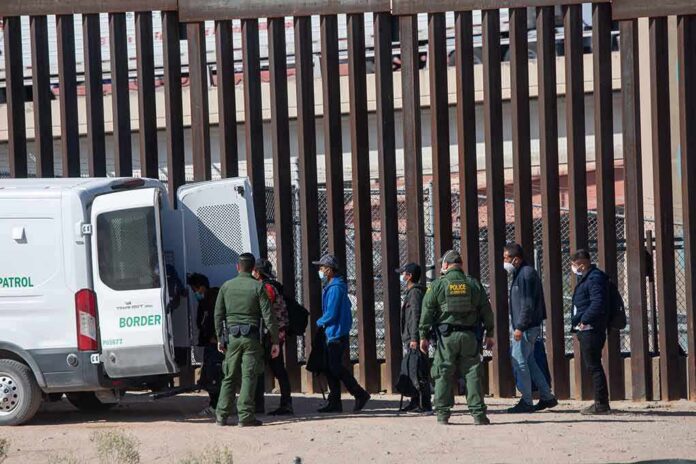
California’s new bid to cabin federal immigration enforcement inside its borders is not a stunt; it is the latest, most structured test of the line between a state’s police and taxing powers and the Constitution’s bar on states directing federal operations. The outcome will shape what tools federal agents may use on state soil, how private detention profits are taxed, and, ultimately, how far a state can go to force federal activity to conform to local safety and accountability norms.
At a Glance
- California enacted a temporary ban on electric-shock gloves for all officers operating in the state, with a DOJ safety study and a 2030 sunset.
- The state created a 25% gross-income tax on private corporations operating immigration detention facilities in California, beginning in 2028.
- New procedural hurdles slow approvals for converting or building immigration detention sites, emphasizing local process and transparency.
- The legal fight will center on preemption and intergovernmental immunity: states control their own officers and regulate in health and safety, but cannot regulate federal operations directly.
What California actually did: scope, structure, and mechanisms
California’s package combines three distinct regulatory levers. First, it bans the use of electric-shock gloves by law enforcement in the state—including federal immigration agents—effective next year and expiring January 1, 2030, while ordering the California Department of Justice to conduct a safety and efficacy study due in 2029. Press accounts consistently describe the measure as universal in coverage (local, state, and federal officers) with a defined sunset and study mandate; it does not sweep in conventional conducted-energy devices such as TASERs, signaling a tailored focus on a specific, contact-based technology rather than a categorical rejection of less-lethal tools.
Second, lawmakers imposed a first-in-the-nation 25% tax on the gross income of for-profit corporations operating immigration detention facilities under federal contract in the state, with proceeds earmarked for legal services and due-process support. The levy was narrowed from an earlier proposal—a shift that underscores a legislative strategy to survive preemption and Commerce Clause scrutiny by calibrating timing, rate, and base. As ultimately passed, it applies beginning July 1, 2028, at 25% of gross income, down from an earlier 50% proposal and later start date for administration, as reported by tax-focused coverage and advocacy materials describing the fund-designation rationale.
Third, the state added procedural friction to the siting and conversion of detention facilities. Municipalities must wait at least 180 days and conduct public hearings before approving plans to build or convert facilities for immigration detention—classic land-use process requirements that operate on local governments and private developers, not directly on federal agencies.
How we got here: the federalism pattern these laws plug into
This playbook is familiar. When Washington hardens immigration enforcement, politically opposed states respond by withdrawing cooperation, regulating private actors within their borders, and recasting public safety standards as neutral rules that incidentally constrain federal activity. The Supreme Court’s modern doctrine reflects a two-part equilibrium: immigration policy and its administration are overwhelmingly federal, and state rules that conflict are preempted; yet states retain authority over their own personnel and property and may enact generally applicable health, safety, and tax measures, even when those measures touch federal-adjacent activity—so long as they do not regulate the federal government directly or discriminate against it. Arizona v. United States captured that balance a decade ago, making clear federal primacy but not erasing state police powers at the border of ordinary governance.
California’s own recent history maps those contours. The state has survived challenges to sanctuary-style noncooperation by grounding them in anti-commandeering principles and state control of local resources. By contrast, when lawmakers drafted rules that singled out federal agents—mask bans or identification mandates—federal courts quickly enjoined them as violations of intergovernmental immunity or straightforward preemption. Those rulings are the living backdrop for today’s package and the reason the new measures feature study-and-sunset design, narrowed tax posture, and process-focused land-use controls rather than direct orders to federal officers.
Where the real legal fight lies: preemption and intergovernmental immunity
The state can plainly bind its own officers. The hard question is whether rules written to apply to “all officers operating in California” can lawfully reach federal agents in the field. Two doctrines do the work here. Preemption invalidates a state law that conflicts with federal statutes or stands as an obstacle to federal objectives. Intergovernmental immunity forbids states from directly regulating the federal government or discriminating against it or those with whom it deals. The Congressional Research Service’s syntheses are blunt on both points: when a state law targets federal operations or uniquely burdens federal contractors, it is on thin ice; when it sets neutral, generally applicable standards for all, it may stand—until it blocks federal functions in practice.
California’s best litigation posture is to characterize the shock-glove prohibition as a neutral, temporary safety standard applicable to every officer within its territory, backed by a commissioned study and expiring before 2030. That framing aligns with ordinary police-power regulation of dangerous equipment. Its vulnerability is not rhetorical but doctrinal: if a court deems the rule to “regulate the United States” in its operations or to impair federal discretion over agent equipment, it will fall. The tax, by contrast, proceeds through a classic state channel—taxing for-profit corporations that choose to operate in the state—yet opponents will argue it discriminatorily targets federal contracting, effectively penalizing a federal program by making it prohibitively expensive and earmarking revenues to adversarial litigation support. Whether the law is facially neutral or functionally discriminatory toward federal dealings with specific private partners will likely decide it.
Why the study-and-sunset architecture matters
The legislature’s insistence on a safety study and a sunset is not window dressing; it is the legal ballast for characterizing the shock-glove rule as an evidence-seeking, time-limited precaution rather than an ideological veto. A technology-specific ban, a defined end date, and a state DOJ research mandate give courts a narrower object to review. If the Department produces rigorous findings on injury patterns, escalation dynamics, or training adequacy, the record may justify continued restrictions on state and local officers even if federal coverage is pared back in litigation. If the study stalls or proves thin, the state’s case weakens accordingly.
The detention-facility tax: tailoring and the contractor problem
States tax businesses that operate within their borders every day; that is not controversial. What is novel here is singling out the for-profit immigration detention segment and setting a high gross-income levy that predictably changes federal contracting prices. Bloomberg Tax’s reporting confirms the Legislature walked back a more aggressive earlier design to the current 25% rate starting mid-2028—adjustments consistent with counsel aiming to improve survivability. The state-affiliated advocacy framing emphasizes due-process funding and a “first-in-the-nation” posture. The doctrine will ask different questions: is the class definition neutral in form but discriminatory in function; does the levy unduly burden federal procurement; does it target entities “with whom the United States deals” in a way barred by intergovernmental immunity? Those are litigable, not rhetorical, inquiries.
What to watch next: facts, not slogans, will decide
Two developments will matter more than press releases. First, the quality of the California DOJ’s safety study on shock gloves—design, incident data, medical review, training protocols—will determine whether the rule looks like a legitimate temporary safety regulation or a pretext. Second, courts will parse statutory text and procurement facts: how the tax class is defined, which facilities are captured, and whether the levy functions as discrimination against federal partners in practice. The state’s own announcement tacitly acknowledges the line it must walk—California “cannot dictate federal immigration policy,” but it can legislate on state property, resources, detention facilities, and law-enforcement practices within its police powers—so long as it stays within the bounds of federal supremacy.
The doctrine is settled enough to outline the path. States can refuse to assist. They can regulate their own officers and most private activity. They cannot direct federal agents or penalize federal programs by proxy. California’s new package is engineered to live on the permissible side of that divide. Whether it does so—particularly in its purported reach to federal officers and its targeted tax—will be answered in federal court, with Arizona v. United States and modern preemption analysis as the map.
Tapper: Mr. Hilton, just to clarify, would you direct California law enforcement to assist the Trump administration's mass deportations beyond dangerous criminals? Yes or no?
Hilton: It's about enforcing the law. I mean, the federal law is immigration law is obviously a federal… pic.twitter.com/NnTh5UJ1y5
— Acyn (@Acyn) October 1, 2026
Bottom line
The state is running a disciplined experiment in immigration federalism: a time-limited, study-backed safety ban; a calibrated tax on a narrow commercial niche; and process rules around land use. If the measures are truly general and evidence-driven, many elements should survive—at least as to state and local actors and private operators. Any attempt to bind federal agents in the field or to single out federal contractors for penalty will meet the hard edge of the Supremacy Clause. That is the line this package tests, by design.
Sources:
theguardian.com, gov.ca.gov, theepochtimes.com, sfist.com, latimes.com, news.bloombergtax.com, politico.com
© featurednews.com 2026. All rights reserved.