When gunfire erupts at a gun show, the paradox at the heart of American firearms culture and policing comes into stark relief: even in a venue defined by rules, familiarity, and concentration of armed professionals and enthusiasts, the decisive variable is still judgment under stress—and the law asks whether the officer’s split-second response was reasonable, not perfect.
At a Glance
- A Lexington County deputy working security at Columbia’s Jamil Temple shot and killed a patron after being shot during a gun and knife show.
- Authorities identified the deceased as 34-year-old Telvin Pierre Portee; he died at the scene.
- The deputy underwent surgery for a gunshot wound and was reported in stable condition after the exchange.
- The sheriff’s office said there was no ongoing public threat; the state investigative agency assumed the case under standard protocol.
What happened at the Jamil Temple
According to the Lexington County Sheriff’s Department, a man attending the South Carolina Arms Collectors Association event at the Jamil Temple in Columbia shot a deputy who was providing security. The deputy returned fire, fatally striking the shooter. The coroner identified the deceased as Telvin Pierre Portee, 34; he was pronounced dead at the scene. The deputy was transported for surgery and was later reported to be in stable condition, an outcome consistent with an armed confrontation rather than an unprovoked discharge by security personnel. Local officials said there was no continuing threat to the public following the incident, a standard signal that the immediate danger had been contained at the scene.
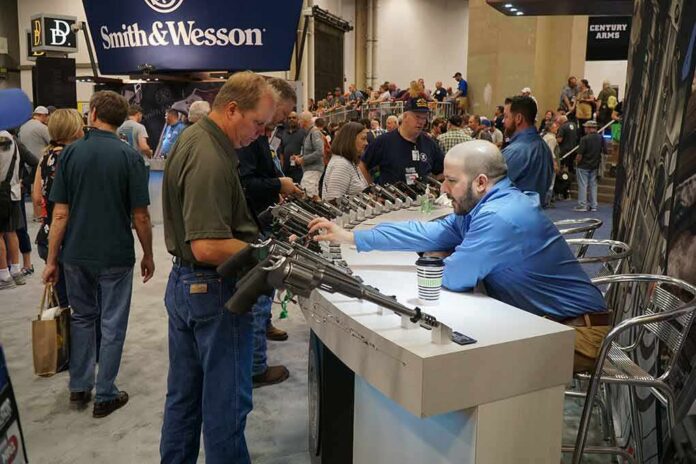
The specificity of place and event matters here. The Jamil Temple regularly hosts the South Carolina Arms Collectors Association’s gun and knife show; media and officials identified this weekend show as the setting. In that controlled environment—where exhibitors and attendees operate under longstanding safety norms and venue rules—any gunfire triggers layered responses: on-site law enforcement engagement, rapid medical triage, and a handoff to state investigators. That is what occurred in Columbia, with the South Carolina Law Enforcement Division (SLED) taking the lead on the investigative review at the sheriff’s request, as is routine in officer-involved shootings.
How use-of-force is judged: reasonableness in the moment
The legal frame is settled by two Supreme Court pillars. Graham v. Connor requires that an officer’s use of force be evaluated from the perspective of a reasonable officer on the scene, accounting for the severity of the suspected conduct, immediacy of threat, and resistance or flight—without 20/20 hindsight. Tennessee v. Garner addresses deadly force specifically, permitting it when an officer has probable cause to believe a suspect poses a significant threat of death or serious physical injury to the officer or others. When authorities report that a patron fired on a deputy and the deputy returned fire, the analytic path is straightforward: the inquiry centers on whether the deputy could reasonably perceive an imminent lethal threat and respond with deadly force under those circumstances.
In busy public venues, that reasonableness calculus compresses to seconds. A single muzzle flash, the direction of travel in a crowd, whether the assailant is still armed or reaching for a weapon—all drive decisions that can’t be paused for perfect information. Courts have repeatedly emphasized that policies cannot demand omniscience; they demand a defensible judgment grounded in the facts as they appeared in real time. In Columbia, the deputy’s gunshot wound and immediate medical treatment are objective facts consistent with a live lethal threat at close quarters.
The gun show setting: high familiarity, high stakes
Gun shows operate under a counterintuitive mix of normalization and strictness. Firearms are common on tables and in displays, but handling rules are enforced; vendors typically use chamber flags, zip-ties, and safety checks to prevent loaded guns on the floor. Off-duty or detail deputies often staff entries and walk the aisles, and promoters coordinate with local agencies ahead of time. That infrastructure reduces risk but does not eliminate it; if a patron presents a weapon and fires, the proximity of law enforcement compresses response time by design. That appears to have happened here: the armed assailant engaged a uniformed security presence, and the deputy’s return fire ended the threat within the venue.
Security at such events is not merely about deterrence; it is about immediate containment in a crowded environment with bystanders at short distances. The absence of reported additional injuries in this case underscores a particular competence: striking the aggressor without cascading harm in a dense setting—a nontrivial tactical challenge in a hall full of people and hard surfaces that can deflect rounds.
Investigation and the questions investigators answer
South Carolina practice places SLED in charge of officer-involved shooting inquiries; the agency conducts interviews, collects physical evidence, reviews any available surveillance, and delivers a case file to prosecutors. While initial public reports center on the core sequence—patron fires; deputy, already wounded, returns fire and kills him—the technical reconstruction will address distance, bullet trajectories, the number of rounds, the type and function of the weapons involved, and whether the aggressor remained capable of continuing the attack when the fatal shots were delivered. Those answers matter for completeness and, if needed, for courtroom clarity, but the legal analysis remains anchored in the threat the officer reasonably perceived as events unfolded.
One sentence of caution is appropriate at this early stage: final determinations about policy compliance or criminal liability, if any, await SLED’s review and any prosecutorial decision. That is procedure, not doubt about the basic narrative; multiple outlets cite the sheriff’s office and coroner for the core facts, and the deputy’s documented injury corroborates an exchange of gunfire at the scene.
South Carolina Gun Show Shooting Leaves Deputy Wounded, Shooter Dead dlvr.it/TWLVYQ #InTheNews #ColumbiaSouthCarolina #CrimeNews pic.twitter.com/QtX8pfpPmM
— SOS/CTS/HH (@SoapOperaSpy) November 16, 2026
How this episode fits the broader pattern
Officer-involved shootings sit inside a fragmented national data landscape. There is no single, exhaustive federal repository capturing each incident with standardized detail; analysts triangulate among court records, press accounts, agency releases, and research projects to draw trend lines. Even so, the governing standard is consistent nationwide: objective reasonableness at the moment force is used, not in retrospect after forensic parsing. That standard is intentionally resilient to variability in settings—from a roadside stop to a high-density event like a gun show—because the underlying question is invariant: did the officer face a significant threat of death or serious injury, and was the response proportionate to that threat?
The Columbia episode is a distilled instance of that doctrine. The setting was controlled, the threat was direct, and the outcome—an injured deputy and a deceased aggressor—tracks the legal framework’s premises. The public-safety objective is twofold: stop the immediate violence and prevent wider harm. By the sheriff’s account, that is what occurred; there was no continued public danger once the exchange ended and the venue was secured.
What to watch as the record is completed
As SLED completes its work, expect answers to technical questions that specialists care about: whether video inside the Jamil Temple captured the initial shots; the precise number of rounds fired by both parties; ballistic trajectories that map movement through the venue; and firearm provenance that may explain how the aggressor introduced a live weapon into the show environment. Those details will not change the threshold legal inquiry, but they will sharpen the factual record for agency after-action reviews and for the event promoters’ security planning going forward.
For the public, the durable takeaway is simpler. In a venue designed for orderly handling of firearms, a single actor’s violent decision can still convert seconds into life-or-death stakes. The system we have—armed on-site security, rapid medical care, independent state investigation, and a reasonableness standard that prioritizes imminent threat—exists for exactly this contingency. In Columbia, it was put to the test.
Sources:
nypost.com, us.cnn.com, apnews.com, mdjonline.com, coasttv.com, whatsnewpaper.com, hastingstribune.com, panhandle.newschannelnebraska.com, myrtlebeachonline.com
© featurednews.com 2026. All rights reserved.