Amid conflicting battlefield claims, Israel says it targeted Hamas’s top Gaza military chief, reviving hard questions about verification, civilian risk, and the fog of war.
Story Snapshot
- Israel says it aimed at Hamas’s Gaza military leader tied to October 7 planning, but kill status remains unconfirmed [1].
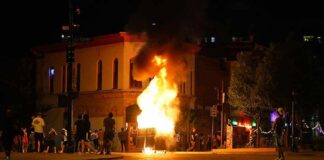
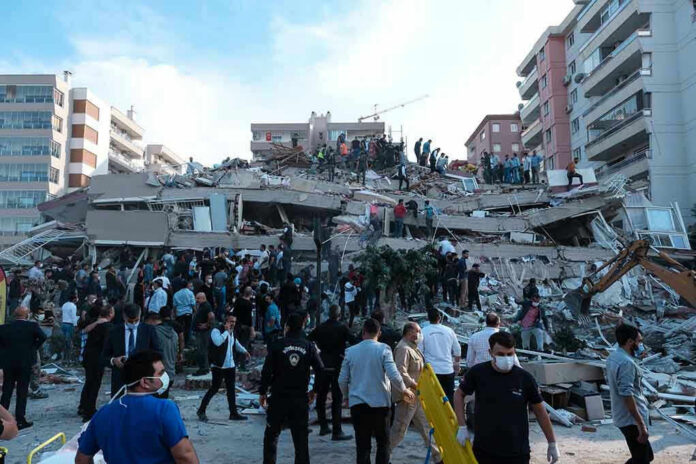
- Footage shows a residential building ablaze with multiple fatalities, underscoring civilian exposure in urban combat [1].
- Separate reporting shows Hamas sometimes confirms senior deaths by name, highlighting current uncertainty over identity here [2].
- Confusion over target names fuels information fog and competing narratives without primary documents [1][2].
What Israel Claimed About the Target and Purpose
Israeli officials stated the Gaza strike targeted Izz al-Din al-Haddad, described as the head of Hamas’s armed wing in Gaza and a key planner of the October 7, 2023 attacks, aligning the operation with a mission to remove a senior architect of mass terror against Israeli civilians [1]. That assertion, if accurate, fits Israel’s pattern of leadership decapitation strikes aimed at degrading command-and-control inside Hamas. Officials publicly framed the objective around neutralizing a high-value figure central to weapons and operational planning [1].
However, the same reporting noted it was not immediately known whether the intended target was killed, leaving the core question unresolved in available footage and broadcaster narration [1]. The lack of immediate confirmation is common in urban strikes where access is limited and identification is difficult. Without a body, forensics, or official post-strike documentation, a claim of success remains provisional, and responsible coverage must flag that gap clearly for readers seeking facts rather than spin [1].
On-the-Ground Effects and Civilian Exposure
Reports and video showed a residential building engulfed in flames, with accounts of multiple fatalities at the site, including at least seven deaths when an apartment and nearby vehicle were hit [1]. The scene illustrates the persistent tactical reality of fighting an entrenched terror group operating within dense civilian areas. Israel’s military argues such strikes pursue lawful targets embedded in civilian infrastructure; critics point to high human costs. Both points can be simultaneously true, which is why target identity and proportionality evidence matter [1].
For conservatives who insist on moral clarity after October 7, the question is not whether Hamas leaders are legitimate targets—they are—but whether the operational picture matches the public claims. Precision is the standard. Verification—through post-strike assessments, forensics, and declassified summaries—strengthens trust at home and abroad. Absent that, images of burning apartments risk overpowering the counterterror objective, fueling calls for foreign pressure that often translate into demands on Washington and, by extension, on the current administration’s regional posture [1].
Conflicting Names, Confirmation Lags, and the Propaganda Trap
A separate report on a different incident cited Hamas’s Gaza chief confirming that a senior figure, Raid Assad, was killed in an Israeli strike, with Israeli officials describing him as tied to October 7 and head of weapons for Hamas’s military wing [2]. That example shows Hamas sometimes provides specific, on-record acknowledgments that narrow uncertainty. In contrast, the present case remains clouded by inconsistent target naming across outlets and the absence of primary strike documents to resolve the discrepancy [1][2].
Gaza airstrike targeted Hamas military wing leader, Israel says https://t.co/NljYPVddFm
— Chicago Tribune (@chicagotribune) May 16, 2026
Wartime information flows often reward speed over certainty. Conflicting transliterations, compressed timelines, and curated video clips can make different strikes blur together, undermining public confidence. Conservatives value clear accountability: if Israel struck a senior architect of October 7, proof will bolster deterrence and counter hostile narratives; if not, transparency allows corrective learning. The remedy is disciplined disclosure—target packages, post-strike battle damage assessments, and, when feasible, forensic identifications that separate fact from fog [1][2].
Why This Matters for U.S. Policy and Security
American taxpayers and families want clarity because Middle East volatility affects energy prices, U.S. force protection, and diplomatic bandwidth. The Biden-era pattern of muddled red lines and media-led narratives conditioned Americans to doubt official claims and brace for mission creep abroad. In 2026, the United States under President Trump prioritizes decisive counterterror support without entangling ambiguity. That approach depends on allies providing verifiable facts that justify actions and allow Washington to defend partners while resisting pressure for counterproductive constraints.
Conservatives also see a larger test: do Western democracies still possess the will and rigor to confront terror movements embedded in civilian shields while upholding standards that distinguish us from them? That balance requires both lethal competence against lawful targets and rapid, credible verification when strikes occur. The alternative is ceding the narrative ground to propagandists who weaponize tragedy and uncertainty. Demanding evidence is not softness; it is how free societies maintain legitimacy while protecting their people.
What to Watch Next
Watch for three clarifiers: first, an Israeli post-strike assessment confirming whether Izz al-Din al-Haddad was present and killed; second, any Hamas communiqué naming the dead and acknowledging command disruptions; third, independent forensic or medical documentation from the strike site that aligns with either claim [1][2]. Each item narrows the uncertainty. Until then, the strike stands as a reminder that in this war, speed beats certainty—unless leaders insist on both.
Sources:
[1] YouTube – Israeli Strike Targeting Hamas Chief Leaves Building Engulfed in …
[2] YouTube – Hamas Confirms Senior Leader Killed in Israeli Strike as …