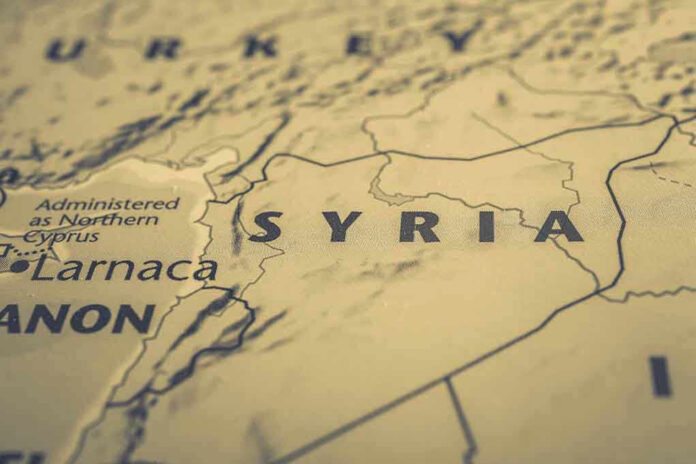
In a world where truth is often stranger than fiction, the Syrian regime’s alleged atrocities against the Druze minority echo a chilling chapter from a dystopian novel.
At a Glance
- Syrian regime accused of mass slaughter and rape against the Druze minority in Sweida.
- Violence follows the fall of Assad and the rise of a new transitional government.
- Over 200-300 Druze civilians reportedly killed in July 2025 massacre.
- Humanitarian crisis escalates as Sweida remains under siege, cut off from aid.
The Dire Situation in Sweida
The Druze community in Syria, long striving for autonomy and protection, now finds itself in the crosshairs of a brutal conflict. Following the collapse of the Assad regime and the rise of Ahmad al-Sharaa’s government, the Druze have faced increasing threats. The Suwayda Governorate, home to a significant Druze population, has become a battleground where government forces and tribal militias wage war against innocent civilians.
In July 2025, Sweida city witnessed a horrific massacre, with reports indicating that 200-300 Druze civilians, including women and children, were slaughtered by government forces and allied militias. The accounts of summary executions, artillery fire, and sniper attacks paint a grim picture of the lengths to which the regime is willing to go to consolidate power. Meanwhile, the city remains under siege, choking off any potential for humanitarian aid to reach those who need it most.
A Pattern of Persecution
This is not an isolated incident. The Druze have faced similar horrors throughout the Syrian civil war, with sectarian massacres targeting their communities time and again. The 2015 Qalb Loze massacre and the 2018 ISIS attack on Suwayda are grim reminders of their ongoing plight. Despite a ceasefire agreement in May 2025 that promised peace and integration of Druze into state institutions, violence has persisted, with government forces accused of violating the terms and committing further atrocities.
As the humanitarian situation in Sweida spirals out of control, shortages of electricity, water, and medical supplies add to the misery. The region is on the brink of an economic collapse, with the blockade exacerbating the already dire conditions faced by civilians. This crisis is a stark illustration of what happens when government overreach and mismanagement leave innocent people to pay the ultimate price.
Global Repercussions
The implications of this conflict extend far beyond Syria’s borders. The Druze community’s trust in the Syrian state is eroding, potentially leading to further fragmentation of the country along sectarian lines. This fragmentation could have a destabilizing effect on the broader region, especially given the cross-border ties between Syrian Druze and their counterparts in Israel.
Human rights organizations worldwide are condemning the violence as sectarian cleansing, calling for international investigations and accountability. Yet, the transitional government, led by Ahmad al-Sharaa, continues to deny targeting civilians, despite mounting evidence to the contrary. This denial, coupled with the regime’s brazen disregard for human life, underscores the urgent need for global intervention to prevent further atrocities.
Call to Action
The world cannot turn a blind eye to the suffering of the Druze community. International bodies, governments, and human rights organizations must act decisively to bring those responsible for these crimes to justice. The time for complacency is over; the time for meaningful action is now.
For the Druze and other persecuted minorities in Syria, this is a fight for survival. The global community must rally to their cause, ensuring that their voices are heard and their rights protected. Only then can we hope to prevent further bloodshed and build a future where all Syrians, regardless of their faith or ethnicity, can live in peace and dignity.