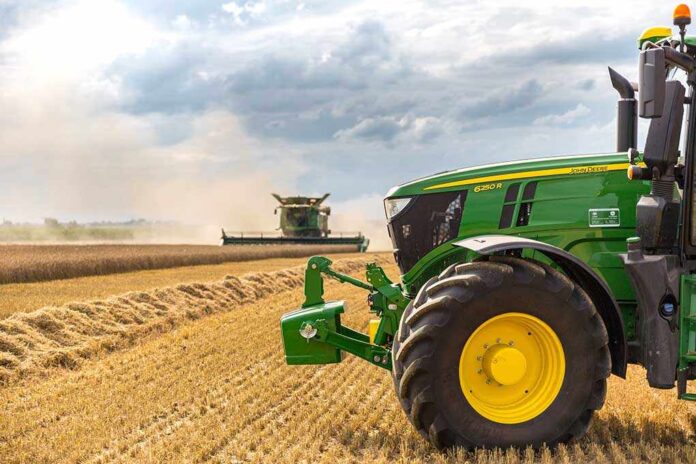
A historic $12 billion relief package promises to stabilize American farmers, mitigating damage from past policies.
Story Snapshot
- Trump administration introduces $12 billion in aid for farmers affected by previous trade policies.
- Up to $11 billion allocated to row crop farmers through the Farmer Bridge Assistance Program.
- Policy aims to counteract high input costs and trade deficits under the Biden administration.
- Expected payments to farmers by late February 2026.
Trump Administration’s $12 Billion Aid Package
On December 8, 2025, President Donald J. Trump announced a $12 billion bridge payment package designed to support U.S. farmers reeling from trade disruptions and high input costs, attributed to policies from the previous administration. This initiative primarily targets row crop farmers, with up to $11 billion channeled through the Farmer Bridge Assistance Program. The remaining $1 billion is set aside for specialty crops and sugar, with funds authorized under the Commodity Credit Corporation Charter Act.
The announcement marks a significant effort to stabilize the agricultural sector, which suffered under the Biden administration’s trade policies, resulting in a $50 billion trade deficit. Trump’s plan links these payments to the One Big Beautiful Bill Act (OBBBA), which aims to raise reference prices for key commodities by October 2026, offering long-term solutions alongside immediate financial relief.
Impact of Previous Policies
The Biden administration’s tenure saw record inflation in input costs and a shift from trade surplus to deficit, severely impacting American farmers. The loss of key markets, particularly with China, forced U.S. farmers to find alternative buyers for their crops, often at lower prices. The Trump administration’s return heralded renewed trade initiatives, though initial tariffs on countries like China and Canada necessitated immediate bridge aid to support farmers during the transition.
Senators John Boozman, Deb Fischer, and John Hoeven have voiced strong support for the aid package, emphasizing the need for enhanced market access and sustainable agricultural policies. Farm organizations, while welcoming the relief, stress the importance of addressing long-term challenges like E15 fuel access and Proposition 12 issues.
Future Prospects for American Farmers
As applications for the aid closed on December 19, 2025, farmers are set to be notified of their payment amounts by January 2026, with funds expected in their accounts by late February. This financial infusion aims to stabilize planting activities for 2026 against the backdrop of low crop prices and high operational costs.
While short-term relief is crucial, the Trump administration continues to push for broader trade deals and policy reforms to ensure the agricultural sector’s resilience. However, experts warn of the risks associated with aid dependency if global markets fail to recover promptly, underscoring the need for comprehensive farm bill updates and strategic international trade negotiations.
Sources:
Trump Administration Announces $12 Billion Bailout to Farmers Amid Tariff Hikes
USDA Announces Commodity Payment Rates for Farmer Bridge Assistance Program