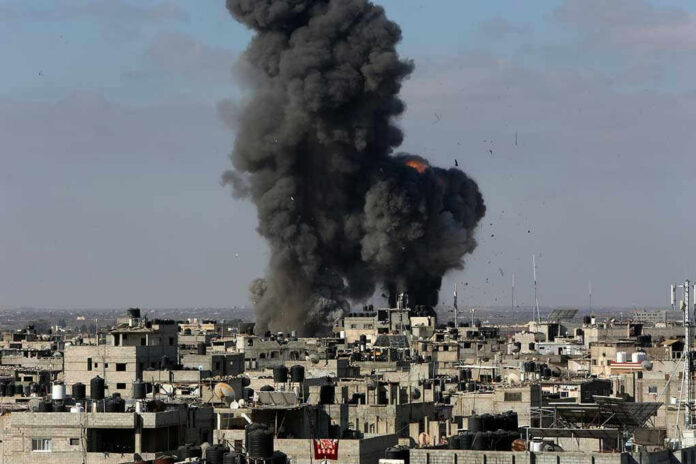
As rockets and missiles batter Israel’s north and cities beyond, reports of silent strikes without sirens underscore how Iran’s network of proxies is testing defenses and civilian resolve.
Story Snapshot
- A projectile reportedly struck Kiryat Shmona without warning sirens, damaging infrastructure amid ongoing cross-border fire [1].
- Israeli media and on-scene reports describe additional impacts and emergency responses in Jerusalem and other communities [3][5].
- Separate reports document large-scale injuries and civilian deaths from Iranian missile strikes in Arad and Beit Shemesh [4][6].
- Evidence gaps remain on specific intent and munition types for individual incidents, complicating attribution [1][3][5].
Silent Impact in Israel’s North Raises Readiness Questions
Local reporting states a projectile struck Kiryat Shmona without warning sirens, damaging infrastructure but causing no injuries, while residents sheltered from continuing fire spilling over the Lebanon border [1]. Israeli military channels reportedly linked the incident to a broader pattern of Hezbollah rocket barrages and drone launches from Lebanon, which have increased pressure on evacuated towns and remaining civilians [1]. Additional damage was reported in nearby northern communities, including Gesher Haziv and Metula, matching the same escalation rhythm along the frontier [1].
Israeli families depend on clear alerts to reach shelter in seconds, so a “no-siren” hit is not a small detail—it is the difference between near-miss and mass casualty. While the Israel Defense Forces investigates, the core fact remains: a hostile projectile penetrated to impact and damage infrastructure inside a civilian area [1]. Conservatives watching America’s own air and cyber defenses should take note: deterrence erodes when threats exploit seams in warning networks or saturate them with mixed rocket-and-drone attacks [1].
Jerusalem Damage and Emergency Response Confirm Urban Vulnerability
On-scene video reports from Jerusalem describe an Iranian strike that hit the Old City area, showing visible damage and a rapid emergency response footprint [3][5]. Reporters pointed to an apparent impact location and documented personnel working the site, reinforcing that urban centers remain squarely in the danger zone during wider barrages [3][5]. These visuals do not resolve munition type or intended target, but they establish physical impact and response conditions that align with an ongoing, active threat environment inside Israel’s core cities [3][5].
Separate coverage highlights the broader civilian toll from Iranian missile fire beyond the northern front. Anadolu Agency reported at least 88 injuries in the southern town of Arad following a missile attack near the Dead Sea, suggesting a mass-casualty event that overwhelmed local responders [4]. Amnesty International’s United States office stated that nine civilians were killed in Beit Shemesh and called for a war crimes investigation, underlining the legal stakes that follow lethal urban impacts even as technical attribution remains incomplete [6].
Attribution, Intent, and the Evidence We Do—and Do Not—Have
Hezbollah messaging in some channels frames launches as aimed at troops, vehicles, or border positions, and one northern strike in Kiryat Shmona reportedly caused infrastructure damage without injuries, which Side B cites to argue narrower military intent [1]. The available record here, however, lacks forensic confirmation of munition type, trajectory, or targeting directives for the specific Kiryat Shmona impact and other contested incidents, limiting confident conclusions about deliberate civilian targeting in those precise cases [1][3][5].
What is firmly established across these reports is a pattern of sustained attacks creating real civilian risk, confirmed damage to urban sites, and significant casualties in Arad and Beit Shemesh [3][4][5][6]. For readers concerned with American security and constitutional priorities, the lesson is clear: free societies must harden warning systems, preserve civil defense capacity, and confront state sponsors of terror that normalize rocket diplomacy. Precision matters in investigations, but prudence demands planning for worst-case salvos while facts are still being verified.
Policy Stakes for U.S. Readers and Allies
American leadership faces enduring choices: support allied missile defense integration, sanction state sponsors that arm proxy networks, and ensure domestic readiness against swarm-style attacks that mix drones, rockets, and ballistic systems. The documented injuries in Arad and the fatalities reported in Beit Shemesh argue for credible deterrence backed by resilient infrastructure and rapid-response capacity [4][6]. Congress should scrutinize air and missile defense funding, critical-grid hardening, and supply-chain security so warning gaps like the Kiryat Shmona “no-siren” strike are less likely to occur here or among allies [1].
Sources:
[1] YouTube – DIRECT HIT & BOOM! Israeli City Shaken As Arab Fighters’ …
[3] YouTube – BREAKING: Missile Strike in the Old City in Jerusalem
[4] Web – At least 88 injured following Iranian missile attack on …
[5] YouTube – Strike hits Jerusalem’s Old City
[6] Web – Israel: Iran’s Missile Strike That Killed Nine Civilians ‘Must …