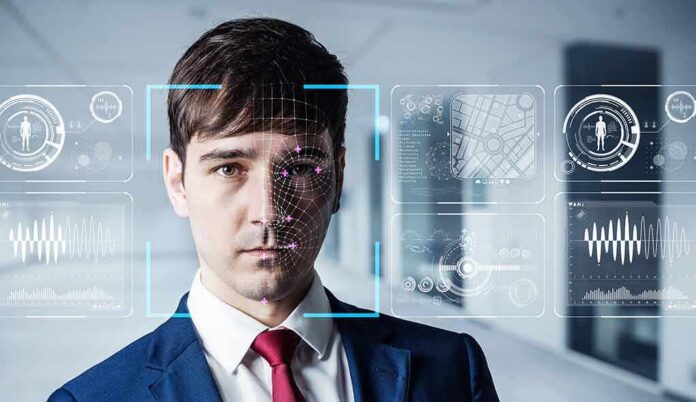
The scandal roiling South Korea’s examination system this month exposes a truth that every credentialing body on earth will eventually have to confront: generative AI has made remote, real-time cheating cheap, fast, and nearly invisible to the human eye — and the institutions built to stop it are still designed for an era of hidden notes and whispered answers.
Key Points
- A candidate who ranked first in South Korea’s certified tax accountant exam confessed, through his lawyer, to using a miniature camera, a smartphone, and generative AI to answer questions in both rounds of the test.
- The confession arrived as a written statement to the Seoul Metropolitan Police Agency, giving the case an official investigative footing rather than relying on rumor.
- The Human Resources Development Service of Korea (HRDK) apologized, moved to cancel the candidate’s qualification, and pursued a criminal complaint for obstruction of business.
- A government mock test reportedly found that radio-frequency detectors — the proposed fix — failed to catch AI-enabled glasses, raising doubts about whether the new security measures will actually work.
- Seoul has since announced sweeping inspection measures, including checks of glasses and other accessories, ahead of the national college entrance exam, prompting new anxiety among ordinary test-takers.
What Actually Happened
In a video posted to his attorney’s YouTube channel, a candidate identified as Han Won-seok stated plainly: “I cheated in both the first and second rounds of the tax account exam by using electronic devices and generative AI.” According to the account relayed by police and multiple outlets, the method involved photographing exam questions with a concealed miniature camera, transmitting the images to an AI system, and reading the generated answers on a smartphone. This was not an anonymous tip or a suspicion raised by a proctor. It was a written confession delivered through legal counsel directly to the Seoul Metropolitan Police Agency, which assigned investigators to the case.
What makes the case more than a curiosity is the candidate’s result: he reportedly placed first in both stages of the examination, missing only a single question out of roughly 160. A licensing exam that millions of households treat as a gateway to a respected, well-compensated profession — tax accountancy carries real civic weight in South Korea’s credentialing culture — had, allegedly, been topped by a test-taker using outside assistance nobody in the room detected. HRDK, the agency that administers the exam, apologized publicly, began proceedings to revoke the qualification, and either filed or prepared a criminal complaint alleging obstruction of official duties.
Why Conventional Proctoring Missed It
Exam security has historically assumed that cheating requires either a hidden physical crib sheet or a confederate whispering answers — threats a vigilant human proctor can plausibly catch by sight. The alleged method here defeats that assumption on two fronts at once. A camera small enough to escape a visual sweep can transmit a question in seconds; a generative AI model can return a correct answer faster than a human expert could reason through it. The chain — capture, transmit, generate, retrieve — compresses what used to be an elaborate, risky smuggling operation into something that fits in a shirt pocket. The technology didn’t invent cheating; it radically lowered its cost and its detection footprint, which is precisely why a single case has triggered national alarm rather than a quiet disciplinary footnote.
The Response — And Its Limits
South Korean authorities moved quickly once the confession became public, proposing extended retake bans, criminal liability, and new detection protocols ahead of the national college entrance exam, including inspections of glasses, shirt buttons, and other everyday items that could conceivably conceal a lens. The impulse is understandable: a credentialing system that cannot guarantee its own integrity has little value. But the record also contains a sobering data point that official framing tends to omit — a mock test using radio-frequency detectors, the very technology floated as a fix, reportedly failed to catch AI-enabled glasses at all. Independent reporting likewise cautions that even upgraded equipment and harsher penalties may not keep pace with increasingly miniaturized and discreet methods, since the hardware arms race favors whoever iterates faster, and consumer AI hardware is iterating very fast indeed.
There’s a second complication: the alleged method in this specific case wasn’t smart glasses at all, but a camera and smartphone — a detail that undercuts months of official focus on glasses as the primary threat vector and suggests regulators have been defending against the wrong silhouette. That mismatch between threat and countermeasure is the real institutional lesson here, more than any single candidate’s conduct.
HE GOT 159 OUT OF 160 QUESTIONS RIGHT. TURNS OUT AI TOOK THE TEST. 🤖
A 34-year-old South Korean man topped the country's national tax accountant exam with an astonishing 397.5 out of 400 points.
Then he admitted cheating.
He said he secretly photographed exam questions with a…
— Daniel C (@chowoohpolice) November 17, 2026
What This Means Going Forward
It is worth stating the obvious caveat once, plainly: this remains a confession under active police investigation, not a court judgment, and the full evidentiary record — device forensics, AI chat logs, timestamped network data — has not been publicly authenticated. That said, the core fact pattern is not seriously disputed by any named party; the confession is on record, the agency has acted on it, and no competing account has surfaced to contradict the basic sequence of events. The open questions are about effectiveness and proportionality of the response, not about whether something happened.
The broader pattern — four separate smart-glasses cheating incidents in Korean schools this year, plus cases tied to English-language testing and university exams — indicates this is a structural vulnerability, not a one-off. Expect every high-stakes credentialing body, in Korea and elsewhere, to face the same reckoning: visual proctoring alone cannot police a world where the crib sheet is an AI model and the crib itself is a lens the size of a shirt button. The institutions that adapt fastest will be the ones that stop chasing the last device and start redesigning the exam format itself.
Sources:
news.sbs.co.kr, bbc.com, dawn.com, en.sedaily.com, koreajoongangdaily.com, en.tempo.co
© featurednews.com 2026. All rights reserved.