Control on paper is not the same as barrels in a pipeline; the real significance of Washington’s push for a long-horizon stake in Venezuelan oil is leverage over a future recovery path rather than instant price relief at American gas stations.
At a Glance
- Multiple major outlets reported U.S.–Venezuela negotiations for a large, long-term stake in Venezuelan oil fields; the contemplated footprint is big but not the entire reserve base.
- President Trump framed the arrangement as majority U.S. control over 65 billion barrels, secured at no taxpayer cost, with promises of lower gasoline prices.
- Analysts broadly doubt near-term price impacts and stress that Venezuelan law and industry capacity constrain what “control” really means operationally.
- Even before any new deal, Venezuelan flows to U.S. refiners had been rising as sanctions policy loosened and project activity with U.S. firms resumed.
What a long-term U.S. stake actually confers: access rights, not magic barrels
Authoritative reporting from Reuters, Bloomberg, and Axios converged on a core point: U.S. officials and Venezuelan counterparts were working toward a long-duration arrangement that would give American interests significant access to a set of producing fields, not to Venezuela’s entire reserve ledger. The shape most frequently described resembles a lease or joint-venture structure, potentially spanning a century for some assets, under which a new private operating vehicle would hold development rights and market output. One U.S. account described an effective majority stake in such an entity and rights to lift oil “at cost” from the designated blocks, a device that, if real, could shift a meaningful stream of future Venezuelan production toward U.S.-linked offtake.
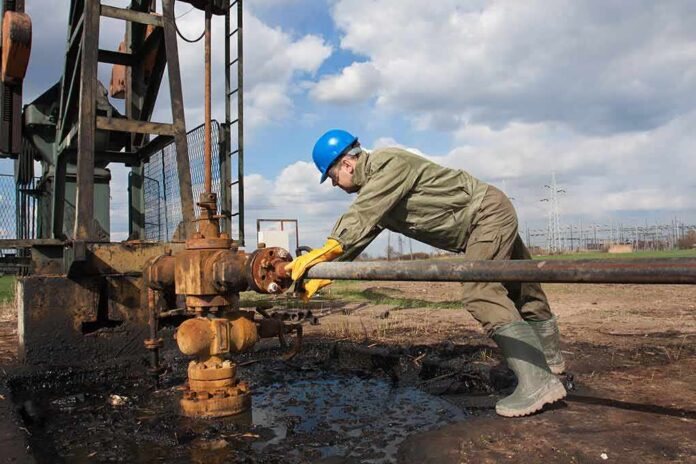
The ambition is strategic rather than instantaneous. Venezuelan reserves are vast on paper, but production capacity—aging upgraders, corroded gathering systems, constrained diluent supplies—takes years and billions of dollars to restore. U.S. leverage over which projects get financed, how offtake is committed, and where the barrels run to refinery gates is the immediate currency of a deal like this; the barrels themselves arrive as rigs, cash, and logistics do the slow work of turning asphaltic geology into reliable supply.
How we got here: from sanctions squeeze to selective reopening
Since 2019, U.S. sanctions throttled Venezuela’s state oil company PDVSA and drove exports to multidecade lows. Licenses carved out for select operators (notably Chevron) and subsequent easing steps under President Trump’s current term reopened narrow channels, restoring some flows and commercial signaling without lifting every restriction at once. By mid-2026, U.S. refiners were already lifting a large share of Venezuela’s exports—over 500,000 barrels per day at one point—demonstrating the tug of Gulf Coast coker demand for heavy sour crude compatible with Venezuelan slates. Parallel agreements with SLB and Hunt Oil underscored Caracas’s need for outside capital and know-how to climb back from institutional decay and underinvestment.
Seen through this lens, a far-reaching U.S. stake is a logical next rung: lock in the acreage and offtake while infrastructure is being rebuilt, channel Western service capacity into projects most likely to ramp, and tie recovered barrels to U.S.-centric trade routes. That is strategy by sequence—sanctions, licenses, field-level concessions—not a single, dramatic flip of a switch.
Competing claims: majority control, 65 billion barrels, and gasoline prices
President Trump asserted that the United States secured majority control over more than 65 billion barrels of proven Venezuelan reserves, at no cost to taxpayers, and that this would materially boost supply and lower U.S. gasoline prices. The reporting record around those specifics is mixed. While multiple outlets confirm advanced talks for a large stake across more than a dozen fields, they stop short of the 65 billion figure and describe a portion of reserves, not a claim over Venezuela’s full 300-billion-barrel endowment. Energy-market analysts, including Art Berman and voices aggregated by ABC News, have been blunt that any near-term pump-price effect is likely minimal; reserves in place do not equal immediate throughput, and logistics plus refinery runs, not slogans, set retail price curves.
Two technical points shape that skepticism. First, reserve “control” in Venezuela historically resides within state-controlled joint ventures and long-term operating agreements—structures that dictate how oil is lifted, not who “owns” the reserves in a sovereign sense. Second, translating control to supply requires capex, rigs, crews, spare parts, diluent, and export logistics that Venezuela’s system has lacked; the timeline to reverse those deficits is measured in years. Promises about gasoline prices, absent quantifiable volume schedules and refining constraints, are therefore predictions rather than deliverables.
Law, structure, and the limits of ownership language
Critics argue that Venezuelan law does not let foreign entities “own” the country’s subsurface reserves—a fair reading of decades of hydrocarbon sovereignty that persisted through nationalization and later joint-venture regimes. Functionally, what outside partners secure are exclusive rights to develop and lift oil under contract, with terms specifying cost recovery, profit splits, and offtake. If the reported framework confers 55% effective control of a private operator and a century-long lease on designated fields, the economic exposure can be large even if legal title to the reserves never leaves the republic. In other words, equity in the cash flow can be tantamount to “control” in common parlance, but it is not the same as geological ownership.
This distinction matters for two reasons. It bounds expectations about what Washington can guarantee—contracts can be rewritten, and sovereigns can change course—and it frames investor risk. Venezuela has a history of revisiting petroleum terms under stress. Any U.S.-aligned operator would price that risk into required returns, insurance, and the cadence of capital deployment.
What could change in the real economy: flows, differentials, and refinery utilization
The near-term channel through which a deal would matter is not reserve arithmetic but trade flows. If U.S.-aligned entities can lift more Venezuelan heavy sour at predictable quality and cadence, Gulf Coast refiners optimized for that slate could run closer to nameplate utilization, reduce opportunistic imports from farther afield, and potentially narrow certain crude quality differentials. That, in turn, can relieve spot pressure on compatible grades. But retail gasoline prices hinge on a web of factors—global crude benchmarks, refinery outages, seasonal specs, and distribution margins—so even meaningful changes in Venezuelan feeds are unlikely to register as dramatic price drops at the pump on their own.
On the supply side, the scaffolding is slowly returning. The resurgence of service activity and new contracts point to incremental capacity gains. Still, credible forecasts of Venezuela reaching 1.5 million barrels per day require sustained investment and policy stability, not headlines alone.
Fiscal claims and transparency: what we still don’t know
Two of the most sweeping political claims—that the arrangement comes at “no expense to the American taxpayer” and that it will substantially lower gas prices—remain assertions rather than audited facts in the public record. None of the major reports has published financing terms, indemnities, sanctions waivers, or offtake guarantees that would allow outside observers to test fiscal exposure or consumer price pass-through. The same opacity clouds the Venezuelan side: royalty rates, tax terms, and revenue splits are not disclosed in the open-source reporting to date, though prior coverage has flagged that recent U.S.–Venezuela oil agreements typically left headline values undisclosed early on.
That lack of documentation does not negate the talks; it does limit what can be responsibly concluded beyond the architecture of intent. Until contracts, annexes, and licensing letters are public, treat the strategic thrust—securing long-duration access to a portfolio of fields—as established by multiple outlets, and the most expansive numerical boasts as unverified headline framing.
TRUMP ANNOUNCES DEAL GIVING U.S. 65 BILLION BARRELS OF VENEZUELAN OIL
President Trump announced Friday night that the United States struck a deal with Venezuela that would give the U-S 65 billion barrels of the South American country's oil, more than doubling our strategic oil…
— Worldwide News Network (@WorldwideNNX) August 29, 2026
The long game: leverage over a recovery, not a shortcut to cheap fuel
Venezuela’s oil sector has cycled through nationalization, mismanagement, sanctions, and partial reopenings. The country still holds the world’s largest estimated reserves, yet its working system delivers a fraction of potential output because capital and credibility eroded over decades. In that world, who anchors the next investment cycle matters. The United States is trying to place itself—and its companies—at the fulcrum of any rebound, tying future heavy-sour flows to American refining and trade. That is a coherent energy-security play with geopolitical dividends if it endures; it is not a quick fix for gasoline prices, nor a transfer of sovereign geology to foreign ownership.
Sources:
redstate.com, reuters.com, local10.com, wsj.com, bloomberg.com, investing.com, reason.com, npr.org, newsmax.com, fdd.org, gao.gov, energy.gov, thepreamble.com
© featurednews.com 2026. All rights reserved.