When government enters the grocery business with a price mandate and public assets behind it, it doesn’t just change where people shop; it rewrites the competitive terms for every neighborhood merchant who keeps food on the shelf.
At a Glance
- A coalition representing immigrant- and minority-owned grocers has filed suit in New York County Supreme Court to block the city’s municipal-grocery plan.
- Plaintiffs allege the city-backed stores will benefit from subsidized real estate and public support that private competitors cannot access.
- The plan’s headline promise: a 30% discount on a core basket of items, which independent grocers say they cannot match on thin margins.
- The legal theories previewed include unfair competition, antitrust and predatory pricing, civil-rights claims, and failures in land-use and impact review.
What happened: a lawsuit squarely targeting a city-run grocery model
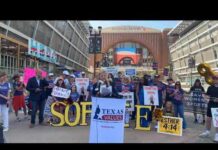
A business coalition led by immigrant- and minority-owned grocers has sued the city to stop a five-store municipal-grocery initiative, filing in New York County Supreme Court and arguing the program will tilt the market through public subsidies, below-market pricing, and preferential treatment embedded in city control of sites and financing. The Multicultural Business Coalition frames its members as precisely the operators most exposed to a state-backed entrant: bodegas and small supermarkets in working-class neighborhoods. Reporting on the filing identifies the case as a direct legal challenge to the program’s design and rollout, not a symbolic protest; the plaintiffs seek to enjoin the plan before stores open and pricing practices harden into consumer habit.
At the heart of the dispute is the plan’s signature promise: a roughly 30% discount on a defined basket of essentials, widely publicized by City Hall. Plaintiffs say the discount, paired with city-owned or city-controlled premises, construction funding, and tax advantages, would convert the stores into non-market actors—able to sell below the price floor that keeps a neighborhood grocer solvent. Independent owners interviewed in early coverage describe the projected impact in operational terms: customer migration on staples, margin compression on traffic-driving categories like produce and eggs, and a cascade into layoffs or closures if volume doesn’t offset price cuts. The complaint’s thrust is straightforward: you cannot ask small private stores to compete against their landlord, tax assessor, and regulator rolled into a subsidized rival.
How the program is structured to cut prices—and why competitors call it “unfair”
Municipal grocery proposals lean on levers private retailers cannot pull: free or nominal rent on city property, capital outlays booked to public budgets, and relief from property taxes or fees that otherwise flow through to shelf prices. Those inputs, if granted, produce structural cost advantages before a single case of tomatoes is ordered. New York’s plan adds a public commitment to a 30% price reduction on a core basket—communicated as a stable feature, not a short-lived promotion—which magnifies the pressure on nearby shops that use those same items to anchor traffic and cover fixed costs. In litigation and in public statements, the coalition characterizes this bundle as “unfair competition”: not merely sharp elbows, but a change in the rules of the game authored by the referee.
Legally, some plaintiffs preview antitrust and predatory pricing theories. U.S. doctrine requires more than low prices; it asks whether prices are below an appropriate measure of cost and whether the actor has a reasonable prospect of recoupment—standards developed to separate pro-consumer competition from exclusionary tactics. Government-operated or government-backed outlets complicate that analysis: subsidies and tax advantages make “cost” non-comparable to private rivals, and recoupment can be political rather than purely financial. That is why plaintiffs pair competition claims with administrative and land-use arguments—the charge that the city advanced a pricing-forward retail plan without conducting the required impact analysis on incumbent businesses.
How we got here: public-option retail meets bodega economics
Across the country, “public option” retail ideas have surfaced in food deserts and disinvested corridors where supermarkets exited and private capital won’t return at scale. Proponents cite affordability, corporate consolidation, and food insecurity; feasibility studies argue that public stores can be necessary and implementable when governments shoulder capital costs and accept lower or negative operating margins to stabilize access and prices. That model can work—in the narrow sense of keeping staples available at lower prices—precisely because it is not required to earn a private return on investment.
Neighborhood grocers, especially immigrant-run bodegas, live on thin gross margins and high operating volatility: shrink, perishables spoilage, unpredictable foot traffic, and rents reset by private landlords. Their business model relies on a mix of impulse items, prepared foods, and a basket of staples priced competitively enough to hold loyalty. Insert a state-backed store discounting that same staple basket by 30% and the arithmetic breaks. Owners do not need to lose every customer; a sustained diversion of core-basket trips can strand fixed costs and throttle cash flow even if specialty and convenience sales persist. That is the practical claim animating this lawsuit.
Where the dispute is headed: the questions courts and policymakers will actually weigh
Three issues will determine the outcome more than rhetoric about “socialism” or “big business.” First, the subsidy record: leases, tax treatment, capital budgets, and operator contracts will show whether the city’s stores enjoy material cost relief relative to private peers and on what terms. If city sites carry nominal rent and property-tax exemptions, the “structural advantage” claim becomes concrete rather than speculative. Second, the pricing mechanism: is the 30% discount tethered to a defined cost benchmark with compliance audits, or is it a political commitment that overrides market costs? The more rigid and durable the discount, the stronger the argument that private margins will be systematically undercut.
Third, process and impact review: plaintiffs argue the administration pushed ahead without a sufficient economic-impact or land-use analysis assessing displacement risk to existing retailers. Courts are more receptive to pausing programs where the record shows statutory review steps were skipped or perfunctory—especially when foreseeable competitive effects on protected classes or communities are alleged. Here, the coalition emphasizes its composition: predominantly immigrant- and minority-owned grocers who say the plan’s benefits are diffuse while the harm is concentrated on their businesses and employees.
Consumer benefit versus competitive harm: both are real, and they collide here
Cheaper groceries are an obvious political and social good; in high-cost cities, shaving 30% off eggs, milk, rice, and produce can meaningfully move a family budget. But competition law and sound policy ask about means as well as ends. If the city can permanently reset prices by absorbing costs private stores must pay, it can also—intentionally or not—erase the network of small retailers that have kept neighborhoods served when chains exited. The net effect might be lower prices at a handful of flagship sites and fewer corner stores, with longer queues and thinner redundancy when supply chains hiccup.
The right measure of success, then, is not whether a pilot opens and posts a low shelf tag; it is whether the city can lower consumer prices without using its fiscal and regulatory position to empty the block of independent competitors. That requires transparent subsidies, narrowly tailored site selection that fills gaps rather than shadows incumbents, and a pricing framework that avoids turning public stores into permanent loss leaders. Those are policy choices, not inevitabilities—and the litigation is an attempt to force that rigor before the market is remade.
Zoran Mamdani is facing a class-action lawsuit filed by a group of immigrant grocery store owners who claim that his plan to promote government-funded grocery stores in New York City would harm small businesses. pic.twitter.com/52Brxx4OFP
— Grace (@Grace4525u) August 24, 2026
What to watch next
Expect early skirmishes over disclosure: the coalition will seek leases, tax terms, and operator agreements; the city will defend its process and public-interest aims while stressing consumer savings. If a court orders the record opened and finds gaps in impact review, the program could face a redesign or delay. If, instead, the administration can demonstrate that sites target underserved areas with calibrated subsidies and compliance guardrails, the suit’s broad unfair-competition claim will be harder to sustain. Either way, this case will set practical guardrails for how far a city can go in retailing food with public muscle while private merchants are still on the block.
Sources:
facebook.com, nypost.com, dailymail.com, businessinsider.com, thehill.com, freshfruitportal.com, reddit.com, foxnews.com, foxbusiness.com, nyc.gov, ny1.com
© featurednews.com 2026. All rights reserved.