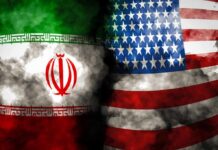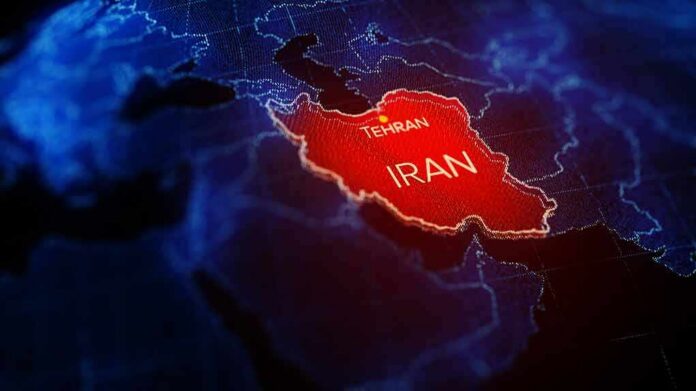
Financial isolation is a weapon of compellence, not symbolism—and with Operation Economic Outcast, Treasury is moving to sever every remaining artery that carries revenue to Tehran’s state and security apparatus, with the risk and reach of secondary sanctions as the lever.
At a Glance
- Treasury launched a coordinated sanctions drive to cut off Iran’s oil, shipping, finance, and technology lifelines, backed by broadened secondary sanctions risk for third-country entities.
- The campaign targets Iran’s “shadow fleet,” exchange houses, free zones, aviation and maritime registries, and front networks moving petroleum and weapons inputs.
- Officials frame the goal as driving oil exports toward zero and collapsing the regime’s ability to fund the IRGC and allied proxies.
- This is an intensification of a long-running maximum-pressure architecture; its effectiveness turns on third-party compliance and enforcement against workarounds.
What Treasury is doing and why the architecture matters
Operation Economic Outcast is not a single sanctions list update; it is a campaign architecture designed to outcast Iran from critical nodes of the global economy. The Department of the Treasury—principally through the Office of Foreign Assets Control (OFAC)—is sanctioning the people, companies, vessels, and financial intermediaries that enable Iranian oil sales, arms production inputs, and regime financing, while expanding the exposure of third-country firms to U.S. secondary sanctions if they transact with those nodes. Recent actions have designated dozens of brokers and ships that move Iranian petroleum and related products, a center of gravity in Tehran’s revenue model. The message is explicit: if you carry, insure, finance, register, or buy Iranian oil—or launder its proceeds—you are within reach of U.S. sanctions jurisdiction, even if you never touch a U.S. port or bank.
Treasury’s logic is straightforward coercive economics. Oil sales finance the Islamic Revolutionary Guard Corps and affiliated security organs; choke the sales and you constrict the regime’s ability to fund proxies, missile and drone production, and domestic repression. That is why the campaign pairs oil and shipping designations with actions against procurement networks and facilitators across jurisdictions. It also explains the emphasis on reducing Iranian exports toward zero—a line repeatedly drawn in official statements since early 2025 and reiterated as part of a renewed maximum-pressure push.
Mechanics: secondary sanctions, the dollar nexus, and the shadow fleet
Secondary sanctions are the fulcrum. Unlike primary sanctions, which bind U.S. persons, secondary sanctions threaten non-U.S. banks, insurers, shipowners, commodity traders, and technology vendors with loss of U.S. market access or designations if they materially support Iran’s sanctioned sectors. The power of that threat flows through the dollar system: most cross-border energy trade, ship insurance pooling, and correspondent banking still rely on dollar clearing. Even entities outside the United States must weigh whether an Iranian cargo, registry service, or line of credit is worth risking exclusion from the world’s deepest financial system.
Iran’s counter is the “shadow fleet”—aged tankers with opaque ownership, ship-to-ship transfers, falsified documentation, and reflagging practices engineered to obscure origin. OFAC’s recent rounds have mapped and designated slices of this fleet, its brokers, and logistical enablers. The approach is iterative: designate a tranche, watch for evasion patterns, then strike the facilitators who adapt. Press releases this year reflect that cat-and-mouse cycle, with successive actions against vessels, front companies, exchange houses, and procurement agents tied to ballistic and conventional weapons programs. The policy bet is cumulative friction: raise the cost and complexity of every workaround until volumes fall and counterparties self-select out.
How we got here: continuity and escalation in maximum pressure
Outcasting Iran from global finance is not new. When Washington reimposed nuclear-related secondary sanctions in 2018 after exiting the JCPOA, the goal was to force broader concessions by raising the economic price of defiance. That earlier phase demonstrated both the potency and the limits of extraterritorial sanctions: oil exports fell sharply, compliance widened, and Tehran returned to talks—but workarounds proliferated, humanitarian channels strained, and relations with allies were tested. Operation Economic Outcast is an escalation in the same idiom—more comprehensive target sets and a blunter warning to third-country facilitators—rather than a doctrinal invention.
What differentiates this round is its declared scope and tempo. Officials have pledged an “unprecedented” economic isolation plan, a cadence of designations to close “leakage,” and an explicit readiness to sanction large non-U.S. financial institutions and shipping firms if they continue servicing Iranian trade. The campaign’s credibility therefore hinges on two elements that always determine secondary sanctions outcomes: enforcement follow-through and allied alignment. Without both, evasion channels widen; with both, the chilling effect on commerce becomes decisive.
Where the real debate lies: efficacy, compliance, and unintended channels
Serious disagreement has long centered on whether secondary sanctions reliably change state behavior or primarily generate economic pain and diplomatic friction. Practitioners point to past episodes—bank de-risking in 2012, tanker insurance cutoffs, SWIFT restrictions—as proof that documented threats, paired with enforcement, can force choices that bite in Tehran. Academic and policy analyses counter that while secondary sanctions can throttle trade, they also catalyze workarounds, overcompliance that harms civilians, and durable resentment among targeted and third states; the line between coercion and counterproductive isolation is thin. Both can be true: sanctions can measurably depress revenues and still fall short of strategic aims if the target regime remains cohesive and finds new patrons.
Mechanically, overcompliance is the signature risk. When banks and logistics firms fear unpredictable enforcement, they withdraw beyond what the law requires, impeding licit trade and humanitarian channels—areas where exemptions on paper can fail in practice. European efforts to mitigate those effects during earlier Iran rounds struggled against the gravitational pull of the dollar system and compliance culture. For Operation Economic Outcast, success will depend on calibrating penalties, licensing, and guidance to maximize pressure on the regime’s revenue pipes while minimizing spillovers that erode support among partners the campaign needs to hold the line.
Treasury Secretary Scott Bessent just launched a full economic onslaught on Iran.
OPERATION ECONOMIC OUTCAST is live. The mission is simple and brutal: sever every financial lifeline the regime has anywhere in the world until it stands completely alone.
Bessent made it clear he… pic.twitter.com/S7LJwcNSjt
— Arkadalo® (@Arkadalo) August 24, 2026
Implications to watch: oil flows, insurance markets, and great-power receptors
Three indicators will reveal whether Outcast is biting as designed. First, observable oil flows: monitor declared and anomalous tanker movements, pricing differentials, and discounts on Iranian grades. Sustained declines, not transient dips, signal friction that evasion cannot readily offset—precisely what prior OFAC actions against fleets and brokers seek to induce. Second, insurance and classification: if premium surcharges for opaque cargoes rise and major clubs refuse coverage, fewer ships will take the risk, narrowing the shadow fleet’s maneuver space. Third, banking access: correspondent relationships for high-risk jurisdictions and exchange houses often serve as sluices for oil proceeds and procurement; meaningful attrition there is a leading indicator of isolation.
The bottom line
Operation Economic Outcast takes the most coercive instruments in Treasury’s kit—iterative designations, secondary sanctions, and dollar-system leverage—and applies them in a synchronized campaign to constrict Iran’s economic lifelines. The playbook is proven in its capacity to impose costs and complicate evasion; its strategic payoff will turn on enforcement stamina, coalition durability, and the ability to keep closing the loopholes that Iran’s networks, by design, will keep trying to open.
Sources:
nytimes.com, ofac.treasury.gov, home.treasury.gov, bloomberg.com, journals.sagepub.com, open.metu.edu.tr, academic.oup.com, jamesjtennant.com, hrw.org, sipri.org
© featurednews.com 2026. All rights reserved.