The myth of the lone commando makes for a sharp headline, but the real achievement in the first documented solo snatch linked to Delta Force was not swagger; it was disciplined tradecraft inside a system built to enable it — reconnaissance, cover, mobility, communications, and exfiltration synchronized so tightly that one operator could credibly execute end-to-end capture and deliver usable intelligence.
At a Glance
- Delta Force built its reputation on capturing or killing high-value targets; Afghanistan expanded that mission set and tempo dramatically.
- Team-centric raids like Objective Gecko define the early Afghanistan record; a solo snatch is the rare exception enabled by meticulous prep, not by improvisation.
- “Solo” never means unsupported; it means the last 50 meters were one person’s lane while surveillance, mobility, and command-and-control framed the win.
- The operational payoff is speed: a single collector can penetrate, capture, and move intelligence into exploitation cycles before the network adapts.
Delta Force in Afghanistan: What the public record actually supports
Delta Force — formally 1st Special Forces Operational Detachment–Delta — is a tier-one special missions unit designed for counterterrorism and the capture or killing of high-value targets. After 9/11, it deployed to Afghanistan and conducted a sustained campaign against senior al-Qaeda and Taliban figures, pairing direct action with special reconnaissance to feed a relentless find-fix-finish-exploit-analyze cycle. That record is not speculative; it’s the baseline. What tends to get lost in popular retellings is proportion: the unit’s Afghanistan work was overwhelmingly team-based, joint, and intelligence-led. The most visible early exemplar, Objective Gecko — a helicopter-borne strike aimed at Mullah Omar near Kandahar — involved a Delta squadron supported by Rangers and aviation crews, not a solitary gunman threading a needle alone.
Set against that backdrop, a first “successful solo snatch” attributed to a Delta operator stands out precisely because it breaks pattern, not because it contradicts the unit’s charter. It reflects an edge case for a formation that prizes speed, deception, and precision: when target proximity, terrain, and cover allow, one operator can collapse the risk signature at the objective while the enterprise still hums around him. The solo label, properly understood, is about the capture moment — not about planning, infiltration routing, or exfiltration support.
Mechanics of a one-person capture inside a team enterprise
Solo does not mean simple. For a single operator to locate, neutralize, and move a target while preserving intelligence value, several enablers must interlock. First, advance force operations establish the pattern of life — when the target moves, with whom, and on what routes; that reconnaissance work often includes technical collection and low-visibility human observation. Second, deception and local blending reduce standoff distance: dress, carriage, language fragments, and the plausible reason to be there. Third, capture tools are tailored to the environment — from soft-hand control and temporary restraints to quieting kits — because the goal is exploitation, not drama. Finally, mobility and communications are tuned for minimum latency: a vehicle staged one turn away, a handoff team under a low profile, an exfiltration corridor deconflicted with air or ground quick reaction forces that never need to show unless the window collapses. None of that is visible in a street-level anecdote; all of it makes the difference between a clean grab and a compromised fight.
Why risk it? Because a single collector reduces friction. Fewer signatures near the target (no stack of assaulters, no blocking positions) mean less chance of spooking neighbors, less radio chatter, and fewer ways for the objective to devolve into noise and damage. When the target is a courier, financier, or facilitator, velocity to interrogation and device exploitation matters. In the Afghanistan campaign, that tempo — the ability to ingest fresh data and throw it forward into the next night’s target deck — was decisive. It is the same logic behind the joint task force’s broader kill/capture machine, just compressed to the smallest viable unit of action.
How we got to “solo”: from air assaults to surgical adjacency
Early Afghanistan raids had to solve for distance and unfamiliar human terrain. The first wave — long-range air assaults and large-force hits like Objective Gecko — projected power, shocked the battlespace, and bought room for follow-on networks to grow. As capture/kill targeting matured, the task force shifted toward adjacency: living closer in the intelligence graph, building local access, and using deception to get inside the decision loops of small Taliban and al-Qaeda cells. Delta contributed operators to reconnaissance elements that scouted routes, caches, and meeting points, making later surgical entries viable without the visible footprint of a platoon-plus raid.
In that evolution, the concept of a one-person grab became thinkable under narrow conditions: a predictable target, permissive microterrain, and a built-in cover story that tolerated brief physical contact — a handshake, a document check, a staged bump. The operator’s craft sits on top of that foundation; it does not replace it. When it works, the capture can be bloodless, fast, and information-rich. When it doesn’t, the system flexes — surveillance burns down routes, the on-call element commits, and the “solo” moment becomes just the tip of a larger, still-coherent operation.
Separating archetype from outlier
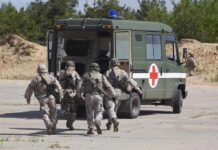
The weight of public documentation about Delta in Afghanistan still tilts toward joint, team-centric direct action. Objective Gecko remains the canonical early example: four MH-47E helicopters lifting a squadron deep into Taliban territory, with Rangers securing a nearby airstrip — a multidimensional strike package, not a clandestine pickpocketing. Encyclopedic treatments and reputable overviews of the unit emphasize counterterrorism, hostage rescue, and special reconnaissance against high-value targets, all of which imply integrated teams, aircrews, and intelligence nodes as a matter of course. That is the archetype.
An authenticated solo snatch belongs in a different bucket: the disciplined exploitation of a moment when a single collector — backstopped by a machine — can achieve a disproportionate effect. It does not rewrite the doctrine; it demonstrates its flexibility. And because the payoff is intelligence, not spectacle, these captures often surface only as a fleeting anecdote in a memoir or a line in a briefing, while the better-known large-scale raids — noisy by design — attract the historical ink. If you want to understand the unit’s competence, study the big operations; if you want to understand its mastery, pay attention to the quiet ones.
A single Delta Force mission to snatch Maduro is not a "one day war" it's a coup d'etat. https://t.co/zvkUU3sCjk
— Cave Newton (@CaveNewton) October 13, 2026
What it means for future special operations
The enduring lesson is not that lone wolves win wars; it is that well-governed special-missions units engineer options at multiple scales. They can swing a hammer when distance and defenses demand it, or pick a lock when intelligence and terrain allow. The first successful solo snatch illustrates how precision, deception, and speed compress risk for both operator and bystander — and how that compression can feed an exploitation cycle fast enough to outpace a cellular enemy’s adaptation. The public record anchors the team-first reality of Delta’s Afghanistan fights — especially in the opening months — while leaving room for rare, high-payoff exceptions when the geometry is right. This is what mature special operations look like: doctrine that holds shape under stress, and craft that disappears into its results.
Sources:
legalclarity.org, en.wikipedia.org, britannica.com
© featurednews.com 2026. All rights reserved.