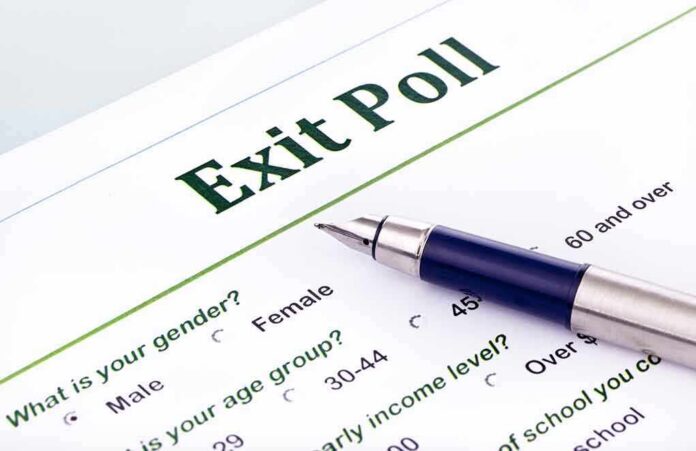
The single most reliable lesson from the Trump era isn’t that “polls are broken”—it’s that different elections create different polling problems. Presidential contests, especially with Trump on the ballot, have shown persistent partisan nonresponse that can understate Republicans; midterms, by contrast, have generally been less vulnerable to that imbalance when well-modeled likely voters are the ones who actually show up.
The Short Version
- Partisan nonresponse bias is real and has understated Republicans in recent presidential cycles; serious pollsters now weight by party or past vote to address it.
- Midterms are a different animal: the bias has been smaller and less consistent, and 2018/2022 polling was broadly accurate when compared with final outcomes.
- Turnout modeling, not raw preferences, drives much of the miss; measuring who will vote is harder than measuring what they think.
- Republicans can beat midterm polls, but only if hard-to-reach GOP-leaning voters also become hard-to-ignore voters; low enthusiasm cuts the other way.
What “partisan nonresponse” is — and why it matters more in presidential years
Polls never hear equally from everyone. In the last decade, Republicans—particularly Trump-aligned voters—have been less likely than Democrats to take surveys. That asymmetry, known as partisan nonresponse bias, can tilt samples blue unless pollsters correct for it by weighting on party identification or validated past vote. Pew Research Center has documented the pattern and shown that careful weighting raises the measured Republican share and improves alignment with election results in presidential cycles when the bias is strongest.
Mechanically, this is not arcane. If Republicans answer at lower rates, a poll that matches respondents to demographic targets alone (age, race, education) can still miss the political composition of the electorate. Adding political weights acknowledges that partisanship is itself a key correlate of response and vote choice. The complication is philosophical and statistical: weighting assumes Republicans who pick up the phone resemble Republicans who do not. If nonrespondents are systematically more MAGA-leaning or less institutionally trusting, even refined weights can leave residual bias. Competent pollsters account for this with multimode samples, voter-file matching, and consistency checks—but none of that is magic.
Midterms are not presidential elections — and the error profile differs
Here is where sweeping claims go to die. The strongest evidence says the nonresponse problem has been less serious in midterms such as 2018 and 2022 than in presidential years, and that well-designed polls have generally landed closer to outcomes in those midterms. That is not a defense of every survey; it is a distinction about the electorate being modeled. Midterms attract a more politically engaged voter—disproportionately the sort of person who answers surveys in the first place—which reduces the mismatch between respondents and voters. The Atlantic’s review hits the same point and notes that pollsters “nailed” 2022 compared with the presidential misses.
Put differently: the bias Republicans rightly worry about in presidential polling does not automatically port into a midterm. When the likely-voter universe is narrower, response and turnout are more tightly coupled. That still leaves room for error—especially in close races where one point is dispositive—but it argues against a presumption that midterm polling is systematically shorting Republicans year after year.
Turnout modeling, not preference measurement, is the core uncertainty
Good polling is usually quite competent at capturing preferences in a well-measured universe. The persistent headache is forecasting who counts. Likely-voter screens, vote-history matches, and intensity batteries aim to simulate the electorate; they are probabilistic by design and can fail if the people who say they will vote do not and the people who seem unlikely decide to. Methodologists and survey researchers have been explicit: recent “misses” often trace to turnout modeling, not to an inability to measure attitudes. That is why the same instrument can look accurate in one race and off in another—because the composition of voters, not their average preference, shifted underneath the model.
This is precisely where Republican hopes and hazards intersect. If low-propensity, Trump-leaning voters are underrepresented in samples and then actually surge to the polls, Republicans can outperform late polls. If those same voters stay home—historically more common in midterms—polls that looked skeptical of a GOP wave will look prescient in retrospect. Early-cycle reporting in multiple midterms has often found softer Republican enthusiasm than Democrats would prefer; when verified by turnout, that dampens any nonresponse tailwind.
Evidence for a GOP undercount exists — but it is conditional and uneven
Republican practitioners see the problem up close. One GOP strategist has argued that polling still struggles to model Republicans who do not answer surveys; a Republican pollster has described observing more Harris-than-Trump voters in respondent pools and then weighting to compensate. Those are not idle complaints; they align with the mechanism Pew identifies and with widely reported presidential-cycle misses. But they are also observational, not comprehensive audits of a given midterm environment. State-specific reviews—such as claims that most Senate polls in certain Midwestern states overstated Democrats—are suggestive but, without disclosed inclusion criteria and methods, not dispositive about a national midterm bias.
The professional fix—weighting by party or past vote—does help when the bias is present, according to Pew’s empirical tests. Still, it can introduce a separate argument: if you raise the Republican share with political weights and the bias truly is smaller in midterms, you risk overcorrecting. That circular fight can look like “pick your bias.” The sober answer is to prefer transparent designs that show unweighted and weighted compositions, mode mix, cooperation rates, and likely-voter criteria. Voters do not need to adjudicate the microstat; they need to understand what is being assumed.
So, can Republicans beat the midterm polls?
Yes—under specific, testable conditions. Republicans can outrun polls if three things align: first, residual partisan nonresponse remains after professional weighting; second, likely-voter models understate turnout among low-propensity, GOP-leaning registrants; third, late movement or undecided allocation breaks red. Those are all plausible, and some have occurred. But the countervailing midterm pattern—a more engaged electorate that surveys capture better, plus periods of muted GOP enthusiasm—has repeatedly constrained the size and direction of midterm error since 2016. In 2018 and 2022, that combination left little systematic Republican undercount to “correct” on Election Day.
The prudent posture, then, is not fatalism about polls or blind faith in them. Treat reputable midterm polling averages as estimating ranges, not point predictions; assume small, correlated errors are normal; and watch indicators tethered to turnout rather than vibes—ballot request and return patterns in states that publish them, early vote by party registration where legal, and high-quality late surveys with disclosed likely-voter methods. If Republicans are actually poised to defy the midterm polls, you will see convergence across these streams: narrowing public polls alongside validated signs that irregular GOP voters are becoming regulars this cycle. If those streams split—flat polls, soft GOP intensity—history suggests the midterm electorate will look more like the polls than the wish.
CAN WE REALLY TRUST THE 2026 MIDTERM POLLS?
Some races are swinging dramatically in a matter of weeks. Others show results that seem difficult to reconcile with the political environment in the same state.
Polls matter, but they are not Election Day. https://t.co/naTA9ldzim— David Schein (@DrDaveSaves) October 18, 2026
How to read the next batch of midterm polls like a pro
Focus on method and convergence. Prefer pollsters that disclose party and past-vote targets, show both unweighted and weighted partisan composition, and use mixed modes to reach phone-shy voters; prefer aggregates over one-offs; and mentally convert any single-number lead into a band the size of the typical midterm absolute error. Weight enthusiasm stories by whether they translate into validated turnout patterns rather than into crowd size or social media heat. And remember the structural asymmetry: presidential cycles with Trump have proven uniquely treacherous for survey researchers; midterms, while imperfect, have usually behaved closer to design. That is not a guarantee. It is a base rate.
Sources:
archive.is, politico.com, wyomingnews.com, pewresearch.org, usatoday.com, ca.news.yahoo.com
© featurednews.com 2026. All rights reserved.