Maritime power is not a binary switch; in chokepoints like Hormuz, the side that can raise risk and cost at will often wields more leverage than the side that can keep traffic technically moving.
The Short Version
- Obama’s “veto power” line describes coercive leverage, not sovereign control; Hormuz access sits on a continuum from normal passage to costly, delay-prone, high-risk transit.
- Attack activity spiked and U.S. naval escorts surged, while measured oil throughput dipped—evidence of meaningful Iranian coercive capacity short of closure.
- CENTCOM counters that the strait stayed open under coordinated U.S. and partner protection, with most ships transiting safely and main lanes free of mines.
- Both can be true: the United States preserved passage; Iran raised the price and uncertainty of using it—mechanisms that move markets even when ships still sail.
What “veto power” can mean at a maritime chokepoint
States rarely seize literal gatekeeper control over international straits; they shape behavior by altering risk, predictability, and cost. In Hormuz—the narrow artery through which roughly a fifth of global petroleum liquids moved in 2024—“veto power” can be exercised through intermittent attacks, credible threats, selective harassment, and the resulting insurance and routing responses that make some voyages uneconomic or politically untenable without military escort. In practice, a functioning veto looks less like a boom barrier and more like a dial: a capacity to escalate danger around select hulls or dates until counterparties change course. That leverage does not require closing the waterway; it requires the ability to impose loss or delay at times and places of one’s choosing, enough to force commercial and state actors to adapt on your terms.
Oil flows are particularly sensitive to this kind of friction. Tankers are large, slow, and predictable; war-risk premia, convoy delays, and routing detours magnify timeline uncertainty and tie up tonnage, which can ripple quickly through freight rates and futures. A state that can raise those frictions episodically has influence disproportionate to the number of missiles or drones it actually expends.
https://www.youtube.com/watch?v=lqXRh0a5CKg
The evidence on both sides: disruption versus access
On the disruption side, reporting during the period documented a statistically meaningful dip in measured oil throughput through Hormuz and a record tempo of attack reports. BBC, citing Kpler data, put flows at about 12.6 million barrels per day on October 13 versus roughly 15 million barrels per day in late September; it also described increased U.S. naval assistance—an 85% rise in the first ten days of October compared with August—and rerouting behavior near Oman. Those facts are consistent with a world in which Iran cannot shut the door but can periodically slam it on specific shippers, insurers, or days—enough to thin traffic and force armed accompaniment.
On the access side, the U.S. military’s picture is explicit: CENTCOM and Navy spokesmen said the strait remained open; primary routes were clear of Iranian mines; thousands of ships transited safely; and more than 95%—in one account, 97%—of vessels seeking passage did so without being hit by an Iranian projectile. Commanders also emphasized that coordinated protection with regional partners sustained commercial flow, and they framed Iranian attacks as largely unsuccessful in achieving closure. Taken together, the uniformed message asserts operational control of the corridor and the failure of any Iranian bid to blockade Hormuz.
Reconciling the narratives: how both are true
These accounts are not mutually exclusive. The United States can maintain navigational access while Iran raises the operational cost and strategic uncertainty of exercising that access. In security economics, this is the difference between capacity denial and margin destruction. Escorts, reroutes, and heightened alert postures preserve movement, but they consume scarce naval time, deplete interceptors and decoys, and slow average transit—costs borne by taxpayers and eventually by energy consumers. Meanwhile, even unsuccessful attacks change actuarial math: underwriters reassess strike probability and loss severity; charterers demand risk premia; some cargoes pause or divert. The measured decline in flows and the surge in escorts indicate that these mechanisms were active, regardless of whether Iran achieved a textbook “closure”.
That is the narrow sense in which “veto power” can map onto reality without implying sovereignty. When one actor can credibly threaten targeted pain at moments of its choosing, it acquires negative agenda control over what moves, when, and on what terms—especially if sustaining safe passage requires exceptional, ongoing military effort from the other side. CENTCOM’s statistics demonstrate that effort’s effectiveness; the throughput dip and risk adjustments demonstrate its necessity.
Mechanisms of leverage: from weapons to insurance
Iran’s maritime disruption toolkit is well understood: anti-ship missiles and drones from shore batteries, fast-attack craft for harassment and boarding, and mines seeded in constrained waters or approaches. The point is not omnipotence; it is selective risk injection. Every credible incident raises the baseline perceived hazard. From there, economics takes over. War-risk insurance is essentially the market’s real-time threat model; premiums and exclusions tighten when attack frequency rises, and arbitrage only offsets so much. Even when most ships pass safely—as CENTCOM stresses—fewer operators will lift the marginal barrel if risk-adjusted returns fall short of alternatives. The result is fewer sailings, convoy dependence, or delayed loadings, any of which can transiently compress observed flows like those BBC reported.
On the safeguarding side, U.S. and partner navies counter with layered defenses—air and missile defenses on Aegis destroyers, electronic warfare, helicopter and UAV overwatch, and close cooperation with Gulf states. The claims that main lanes were mine-free and that protection kept transit open should be taken at face value as a description of outcome; keeping them that way is resource-intensive by design.
Where the genuine disagreement lies
The substantive dispute is definitional, not factual. Obama’s phrase lacks an operational threshold—how much flow reduction, how many diversions, how much war-risk repricing converts influence into a “veto”? Without that, critics can caricature the claim as asserting physical control or blockade, which the U.S. military’s record of continued transit directly rebuts. Conversely, reading “veto” narrowly as the capacity to meaningfully alter the timing, cost, or security requirements of transit aligns with the documented attack surge, escort expansion, and short-run flow contraction.
A second, more technical disagreement concerns attribution. Throughput fell; escorts rose. How much of the observed slowdown is traceable to Iranian actions versus U.S. enforcement choices, operator self-caution, or market timing? The public record as assembled here does not cleanly decompose those effects, and econometric claims about price impacts exceed the evidence provided. What the evidence does support is that Iran raised the marginal cost of unescorted trade through Hormuz, and that the United States offset that leverage with scale and organization at nontrivial expense.
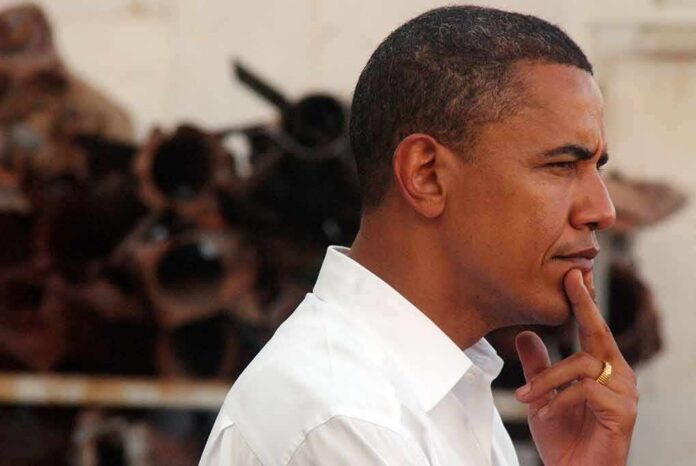
Former US President Barack Obama criticized Trump’s war on Iran, questioning Washington’s claims of victory and warning of mounting consequences.
Key Takeaways
Obama challenged Trump’s claims of military success against Iran, citing American casualties, depleted missile… pic.twitter.com/BR7eIA8cby
— The Palestine Chronicle (@PalestineChron) October 25, 2026
Why this matters going forward
Hormuz’s strategic lesson endures: control of a chokepoint is a dynamic equilibrium, not a static fact. The United States can keep the artery open when it chooses to bear the cost, and Iran can make that choice expensive, episodically reducing flows and confidence. For energy markets, that means sentiment and insurance can move faster than fundamentals; for naval planners, it means surge protection must be sustainable, not merely demonstrable. Defining success solely as “still open” ignores the gradient of strain—on munitions inventories, on ship schedules, on regional diplomacy—that accumulates beneath the headline.
Sources:
bbc.com, geo.tv, defence-industry.eu, bbc.co.uk, x.com, yahoo.com
© featurednews.com 2026. All rights reserved.