The core tension in modern U.S. campaign finance is not whether billionaires matter—they do—but how parties square anti-oligarchy rhetoric with a system that structurally depends on large donors and outside groups to compete.
At a Glance
- Democrats publicly criticize outsized donor influence even as billionaire-funded networks support Democratic candidates in primaries and generals.
- The Mandel-backed Majority Democrats and The Bench illustrate how wealthy patrons can shape candidate recruitment and intra-party contests.
- A post–Citizens United legal landscape makes this influence both lawful and scalable; top donors’ share of total spending has ballooned this decade.
- Allegations of hypocrisy miss the larger mechanism: money follows legal channels that reward scale, speed, and segmentation across the political map.
What the Warren dust-up actually shows
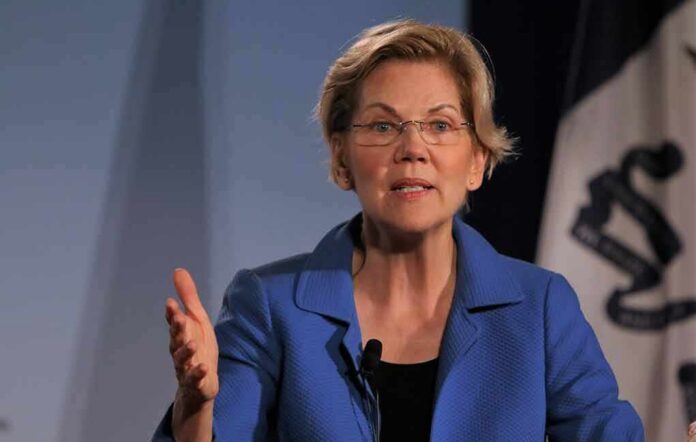
Elizabeth Warren’s brand has long centered on curbing plutocratic sway over policymaking. When pressed on Democratic reliance on billionaire money, her argument has not been that such money doesn’t distort politics, but that Democrats should resist it. That is a position, not a refutation of the underlying reality. The reality is that prominent Democratic-aligned billionaires and high-net-worth donors do fund Democratic candidates and committees—sometimes heavily. Michael Bloomberg’s large-scale giving to Democratic causes across cycles is one well-known example frequently invoked by critics to portray dissonance between message and means. The more instructive story, however, is how donor networks translate money into leverage inside a party’s candidate pipeline.
Consider the emergent network anchored by hedge fund investor Stephen Mandel and his wife, Susan. Reporting and federal records attribute millions in 2026-cycle support for Democrats to the Mandels, with their money running through newly built vehicles—Majority Democrats and The Bench—that intervene not just in general elections but in primaries and recruitment. This is a familiar modern pattern: donors don’t simply “back the party”; they fund parallel infrastructures capable of defining a slate and the terms of intraparty debate.
How billionaire-backed networks work in practice
The mechanism is organizational, not just monetary. Majority Democrats and The Bench have been described as sister organizations sharing staff and strategy, with a remit to promote profiles they deem “electable”—younger, moderate, business-friendly candidates—and to compete head-on with progressive incumbents or left-leaning challengers in primaries. The structure allows targeted, rapid deployment of funds into races where a relatively small media buy can frame a contest: test an electability message, amplify a résumé line that resonates with suburban swing voters, or paint a 30-year incumbent as out of step with a changing district. This approach does not rely on a single super PAC ad blitz; it stitches together candidate recruitment, issue framing, and outside support into a repeatable model.
Because the model is repeatable, it scales. One donor family can move eight figures through multiple legally distinct entities, coordinate narratives across them, and influence who even gets to a November ballot. CBS’s accounting captured the scope: the Mandels supplied the vast majority of early, disclosed funds behind the Majority Democrats effort, which then rippled through primaries across states. The legal architecture—independent expenditure committees, permissive coordination rules’ gray zones, and party committees freed from earlier constraints—makes this feasible.
The legal scaffolding that made scale possible
Two realities define the post–Citizens United era. First, the Supreme Court has narrowed the set of state interests that can justify limiting political spending; generalized concerns about “undue influence” have steadily lost traction as a basis for regulation. Second, parties and outside groups now operate with far fewer hard ceilings, including in coordinated or near-coordinated activity after successive rulings eroded older guardrails. The practical effect is to privilege donors who can write very large checks, quickly, into professionally managed vehicles that speak with one voice in a primary that might otherwise turn on retail politics.
This is not theoretical. The Washington Post documented the surge in billionaire political spending over the last decade, and the concentration among the very richest Americans. Independent research has linked the rise of megadonor activity to measurable shifts in legislative responsiveness toward higher-income preferences—subtle on a vote-by-vote basis, but significant at scale over time. None of this proves donors dictate particular policies race-by-race; it does show why the system reliably attracts large, strategic investments from people who can afford them.
Parsing the hypocrisy charge
Critics often argue that Democrats can’t both decry plutocracy and accept billionaire help. Set the rhetoric aside and audit the facts. CNBC’s cycle-level analysis found that top-donor dollars in 2026 skewed heavily Republican, yet identified Bloomberg and Reid Hoffman as channeling funds into targeted Democratic super PACs—often individual-race–focused rather than party-wide vehicles. That is, in substance, a choice of instrument: smaller-bore precision rather than national party bankrolls during a period when some Democratic megadonors were comparatively less active. Meanwhile, the Mandel network represents a different bet—rebuilding a factional cadre inside the party by shaping who runs and who survives the primary gauntlet.
Is that inconsistent with rhetoric from figures like Warren? Politically awkward, certainly. But the more accurate framing is systemic: as long as competitive races are fought on modern media terrain, the marginal value of a late, concentrated infusion of funds is too high to refuse. Candidates who personally reject certain contributions still benefit from nominally independent expenditures they neither solicit nor control. The hypocrisy line, in other words, is a moral critique operating atop a legal architecture that makes “purity” strategically costly.
Where reasonable disagreement actually lives
There are two serious debates worth having. One is empirical: do billionaire-backed networks measurably change who gets nominated and how those officials vote once in office? The Mandel experiments offer real-world cases to study across a few cycles—win rates, ideological shifts in caucuses, and donor-linked issue salience (for instance, technology and finance policy). The second is institutional: should the law continue to treat concerns about donor influence as insufficient to constrain money in politics? The Court’s trajectory says yes; reformers argue that the aggregate effect on representation—especially in primaries with low turnout and high elasticity—is reason enough to revisit the doctrine.
Until the law changes, both parties will attract billionaire patrons and purpose-built organizations. Sometimes those patrons will underwrite moderates against the left; sometimes they will bankroll ideological insurgents against establishment figures. The through-line is not left versus right but scale versus scarcity—those who can amplify at will will shape the field the rest of us vote on.
What to watch next
Three signposts will tell you whether this model is entrenching. First, follow recruitment: if donor-built benches consistently seed viable challengers, the network is functioning as a shadow party. Second, watch policy pipelines rather than roll-call tallies—committee agendas, draft bills, and regulatory comment letters are where donor priorities often appear first. Third, measure attrition: if progressive or populist incumbents face repeated, well-financed primary challenges with unified messaging, you’re seeing money reshape the party’s center of gravity, not merely its campaign budgets. None of this requires a smoking gun of quid pro quo; it requires only a system that rewards capitalized coordination more than it rewards diffuse preference.
Sources:
truthout.org, journaloftheplagueyears.substack.com, russellsage.org, washingtonpost.com, apnews.com
© featurednews.com 2026. All rights reserved.