The hard truth in the first hours after a school shooting is this: the physical event becomes clear quickly, but precise numbers and sequencing do not. In Bend, Oregon, those two realities ran on parallel tracks—police neutralized the threat within minutes at Silver Rail Elementary, while casualty counts and the identity of the person who killed the suspect remained unsettled.
The Short Version
- Police received the first 911 call at 12:59 p.m. about shots fired into a car near Silver Rail Elementary; within minutes, callers reported a shooter inside the school.
- Officers arrived by roughly 1:02 p.m., and the suspect was found shot and killed seconds later; it was not immediately confirmed whether law enforcement or a bystander fired the fatal round.
- Multiple victims, including children, were reported; at least two people were transported to St. Charles Bend by ambulance.
- The school locked down, law enforcement cleared classrooms, and students were reunited with families at Journey Church on South Highway 97.
What happened: a rapid sequence from first call to the suspect down
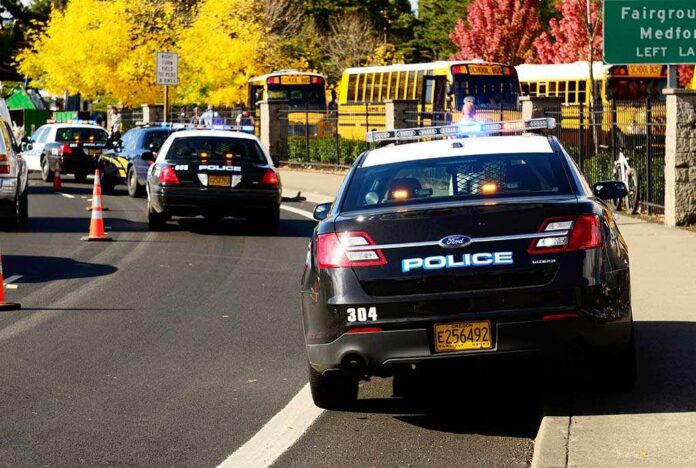
According to contemporaneous police accounts and corroborating coverage, the first 911 call reached Bend police at 12:59 p.m., reporting an unknown man firing into a car near Silver Rail Elementary School. Almost immediately, additional calls reported a shooter entering the school. Police were on scene within minutes—around 1:02 p.m.—and the suspect was found shot and killed seconds after officers arrived. At that early briefing, officials stated they did not yet know who delivered the fatal shot; it could have been police, a bystander, or another armed responder. The preliminary picture was consistent across wire and local outlets, which independently reported a swift law-enforcement response and a suspect down inside the school.
Victims included children. At least two injured people were transported by ambulance to St. Charles Bend, though their conditions were not disclosed in initial statements. Early briefings often keep clinical status and identities tightly controlled while notifications proceed and facts are confirmed; that pattern held here. Multiple outlets documented the ambulance transports and noted that the hospital had not publicly detailed patient conditions.
Inside the response: lockdown, clearance, and reunification
Silver Rail Elementary housed roughly 400–450 students and more than 40 staff on a typical day, which shaped the tactics. As the building went into lockdown, responding officers executed a room-by-room clearance to separate classrooms from potential danger and to identify anyone injured. The district and police activated a reunification protocol, moving students and staff by bus to a designated site—Journey Church at 61303 South Highway 97—so parents and guardians could check in and take children home once cleared. Nearby campuses briefly locked down as a precaution before being released. In mass-casualty doctrine, that choreography—secure, stabilize, and then reunify—is designed to contain risk and reduce chaos for families and first responders alike. Local reporting and official statements aligned on those core steps.
One detail drew immediate public interest because it bears on both tactics and civic narratives: who killed the suspect. Authorities said they did not yet know, and would not guess. That restraint is standard. Determining the source of a single fatal round in a fast-moving incident involves ballistic examination, matching projectile characteristics to a specific firearm, and reconciling that forensic record with dispatch logs, officer statements, and any available video. Those analyses take time, but they answer consequential questions about how the incident ended and whether bystander intervention played a role.
Why early numbers vary: the “first account” problem
Reports diverged on fatalities in the first news cycle—some cited multiple deaths, others referenced four or “at least five” based on unnamed officials or preliminary tallies. That variability is not unique to Bend; it reflects how casualty figures emerge in the opening hours of any complex incident. Counts change as patients are triaged, conditions evolve, and authorities reconcile on-scene assessments with hospital and medical-examiner confirmations. Wire services and local outlets that were careful to use qualifiers such as “at least” or “believed” were tracking a moving target responsibly. Definitive tolls typically harden only after medical examiner confirmations and next-of-kin notifications.
The United States has lived with this pattern for decades: initial law-enforcement briefings foreground speed and safety, while precise timelines and counts settle later through investigative records, after-action reviews, and medical determinations. Investigative journalism has documented the gap between rapid preliminary statements and the slower, methodical release of full timelines; there is no uniform national standard for these after-action products, which means public clarity can arrive unevenly across jurisdictions.
How these timelines get built: evidence, not conjecture
Reconstructing the three critical minutes at Silver Rail Elementary will depend on a layered evidentiary record. Dispatch audio and computer-aided dispatch (CAD) logs set the clock: when the first call came in, units dispatched, officers arrived, and the “suspect down” call was transmitted. Body-camera and dashboard video add visual confirmation of positions, movements, and gunfire, while school surveillance and nearby business cameras can capture the suspect’s entry and route. Ballistic forensics—projectile recovery, weapon examination, and wound-path analysis—distinguish which firearm fired the fatal shot. Medical examiner reports establish cause and time of death. When synchronized, these sources close most factual gaps while filtering out the noise that often accompanies eyewitness accounts in a crisis.
Agencies also audit the protective actions that shaped outcomes: lockdown speed and completeness; communication between school staff, district leaders, and dispatch; and the tempo of room-by-room clearance. Those operational reviews matter because they translate lessons into updated protocols—entry tactics, unified command procedures, triage staging, and family-reunification workflows—that can save lives in the next incident. The Bend response, with officers on scene within minutes and a suspect neutralized almost immediately, fits a best-practice arc for rapid interdiction.
🚨 UPDATE: The child and adult hospitalized after the Silver Rail Elementary School shooting in Bend, Oregon are in touch-and-go condition, per USA Today.
5 confirmed dead, including 3 children and an adult.
The 16-year-old shooter was killed by a bystander legally carrying a… https://t.co/SiGgB7D8Z1 pic.twitter.com/GrdiHEy4yn
— EzeNews (@EzeBets) October 16, 2026
What it means for communities and policy
For families, the only measure that matters in the moment is whether children and staff are safe. For communities, two additional questions follow: how to make the next first three minutes less lethal, and how to tighten the information environment so the public gets speed without sacrificing accuracy. The tactical side is concrete—access control, alarm integration tied to auto-dial protocols, frequent drills that emphasize decision-making under stress, and interoperable radio communications among city police, county deputies, and fire/EMS. The information side requires discipline: brief early, prioritize settled facts, avoid speculation about shooters’ identities and motives until verified, and update casualty figures only when medical authorities can stand behind them.
There is also a civic dimension to naming and notoriety. Researchers and practitioner communities have argued for years that news and official communications should avoid glorification and minimize attention to perpetrators’ biographies and manifestos, focusing instead on victims, community recovery, and the mechanics of prevention. While policy debates continue, that framing aims to serve both public understanding and public safety, keeping the emphasis on how systems worked, where they faltered, and what changes would produce fewer tragedies.
The bottom line
The Bend shooting at Silver Rail Elementary unfolded with devastating speed: a 12:59 p.m. report of shots into a car; minutes later, an armed intruder inside a school; by roughly 1:02 p.m., police on scene; and seconds after that, the suspect down. Multiple victims were reported, including children, with at least two transported by ambulance. The school locked down, officers cleared room by room, and families were reunited at Journey Church. Those are the durable facts of the first hours. The rest—the final fatality count, the ballistics that identify who ended the threat, and the precise minute-by-minute timeline—typically follow the evidence. That is not evasion; it is how truth in complex incidents is built.
Sources:
cbsnews.com, nbcrightnow.com, reuters.com, bloomberg.com
© featurednews.com 2026. All rights reserved.