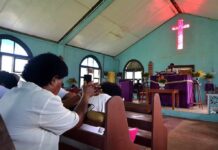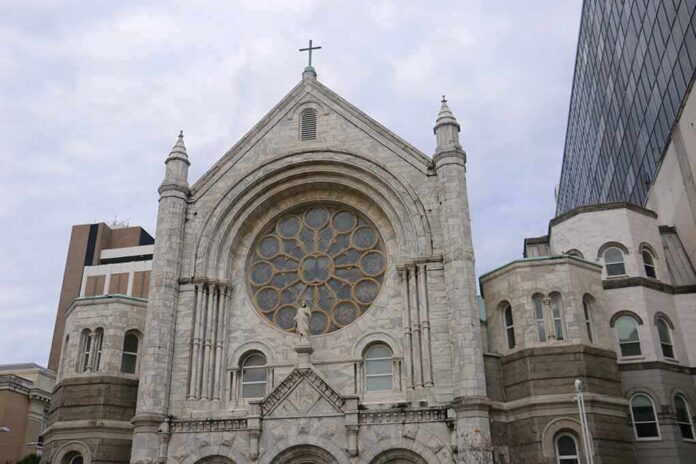
St. Paul’s refusal to bring state charges after a church service was stormed sends a chilling message about unequal justice and the vulnerability of religious worship to political intimidation.
Story Snapshot
- St. Paul City Attorney says evidence is insufficient for state charges, despite widely circulated video and eyewitness accounts [1][9].
- Federal case materials say the congregation ended worship and fled due to protesters’ conduct [6].
- A federal magistrate judge previously rejected certain arrest warrants for inadequate evidence, underscoring proof challenges [8].
- Church attorneys argue disruption can be criminal even without property damage [1].
State Prosecutors Decline Charges, Citing Insufficient Evidence
St. Paul City Attorney Irene Kao announced that her office would not file state charges against anti-immigration-enforcement protesters who disrupted a Cities Church service, saying current evidence does not meet Minnesota’s criminal charging standard [1][9]. Her statement emphasized evidentiary insufficiency under state statutes, a threshold that can be strict about identifying individual actors, proving intent, and linking specific conduct to defined offenses. Church attorneys countered that criminal liability does not require smashed windows or vandalism when worship is willfully interrupted [1].
Local declination has inflamed a familiar frustration among conservatives who see public order eroded while disruptive tactics face few consequences. Prosecutors often stress element-by-element proof, chain of custody, and credible identification, particularly when video is chaotic or masks obscure faces. Yet many worshipers, and viewers who watched the footage, view the scene as blatant coercion inside a sanctuary. The gap between “what people saw” and “what can be proven in court” has become a recurring fault line in protest cases [9].
Federal Case Frames the Disruption as Interference with Worship
The United States Attorney’s Office for the District of Minnesota describes the incident starkly, stating the congregation and pastor terminated worship and congregants fled the building because of defendants’ conduct [6]. That official case information highlights federal prosecutors’ theory: the protest crossed from expression into interference with religious exercise. The federal write-up underscores the seriousness of the disruption and documents concrete outcomes—service ended and people left—facts that go to the heart of public safety and freedom to worship without intimidation [6].
This contrast—strong federal framing paired with state inaction—reflects how different laws, forums, and evidence rules shape outcomes. A federal magistrate judge earlier rejected certain arrest warrants, saying prosecutors had not presented adequate evidence for those specific arrests, showing that even in federal court the government must meet rigorous standards person by person [8]. Those setbacks coexist with a broader federal narrative that the church service was unlawfully disrupted, reinforcing why many citizens expect at least some accountability when worship is halted [6][8].
Why the Evidentiary Gap Keeps Appearing
Minnesota’s decision mirrors a nationwide pattern: charge asymmetry between public perception and prosecutorial proof. Video clips can capture chaos but fail to establish which individual crossed which statutory line, or whether required intent can be proved beyond a reasonable doubt. Local prosecutors may worry about trial viability, witness readiness, or identification challenges, leading to declinations that infuriate residents who believe core community norms—especially respect for houses of worship—were violated in plain sight [9].
Another woke judge in the highly corrupt state of MN working diligently to ruin America.
Dozens of anti-ICE protesters won't face state charges for storming Minnesota church service, prosecutor sayshttps://t.co/jIrJ6ClQUM
— Fred Ernsting (@FredErnsting) June 4, 2026
Church advocates insist the law must deter invasions of sacred space, arguing that targeting Christians mid-service undermines religious liberty regardless of whether glass breaks or walls are defaced [1]. That position tracks long-standing conservative values: equal protection for believers, consistent public order, and skepticism of a double standard that excuses disruptions aligned with fashionable causes. The federal case page lends weight to those concerns by documenting a service ended under pressure, a result most Americans recognize as intolerable inside any house of worship [6].
What To Watch Next
Federal prosecutors appear committed to the interference-with-worship theory, while city authorities maintain that their available evidence fails under Minnesota statutes [6][9]. Future developments will likely hinge on whether investigators can strengthen identifications, secure clearer footage, or locate witnesses willing to testify with specificity about individual actions. Meanwhile, the controversy spotlights a core constitutional value: citizens must be free to worship without fear, and governments must enforce laws evenly—inside churches, synagogues, mosques, and every public square [6][9].
Sources:
[1] Web – Minnesota Gonna Minnesota: Prosecutors Say No Evidence Against Church …
[6] Web – Minnesota Attorney General’s Office
[8] YouTube – Anti-ICE protesters at St. Paul church will not face state charges
[9] Web – Appeals court rejects DOJ’s emergency bid to arrest Don Lemon …
© featurednews.com 2026. All rights reserved.