When a party builds a made-for-television convention in the middle of a midterm cycle and puts a sitting president on stage both nights, it isn’t just adding programming; it is concentrating attention, money, and message discipline at the single chokepoint that most constrains midterms: turnout.
The Short Version
- President Trump is slated to appear on both nights of the Republican National Committee’s midterm convention in Dallas, delivering opening-night remarks and returning for the finale.
- The RNC positioned the two-night event as a rally-style showcase to energize core voters and spotlight competitive down-ballot races.
- Vice President JD Vance is also scheduled as a headliner, splitting marquee moments across the program’s two evenings.
- The strategy fits a durable midterm reality: enthusiasm and mobilization, not persuasion, drive outcomes when overall participation is lower than in presidential years.
What’s actually happening in Dallas
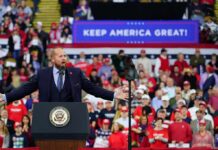
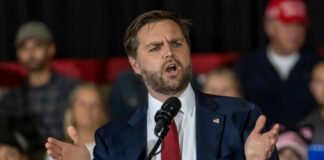
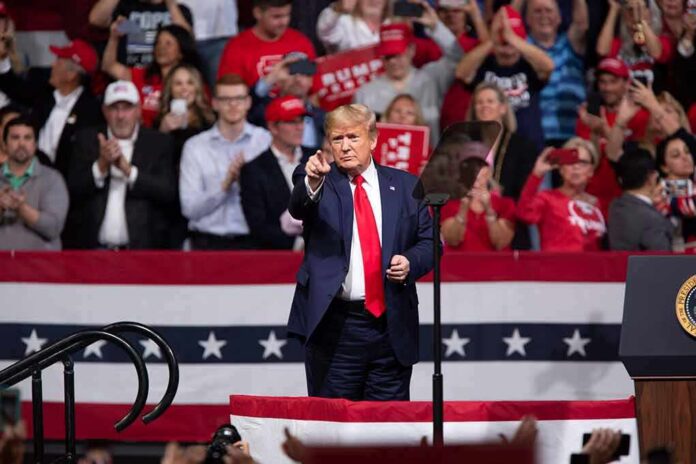
The Republican National Committee announced a two-night midterm convention in Dallas and put President Trump at the center of it: he opens with a keynote on night one and returns for closing remarks on night two. Multiple outlets match the committee’s schedule and the President’s own public comments, which framed the gathering as a rally-style production aimed at boosting GOP candidates in competitive contests. Vice President JD Vance is slated to headline the alternate night, giving the party two distinct marquee moments and extending the programming arc across both evenings.
Trump himself underscored the format’s intent with a promise to appear both nights and to “hang around” the second evening, telegraphing a hybrid of formal address and campaign rally trappings. The RNC’s framing is blunt: concentrate attention, deliver discipline, and send viewers back to their home states with a call to volunteer, give, and vote. For an event the GOP freely labels its first midterm convention, the mechanics are straightforward—pack a professional arena, program relentless surrogates, and ensure the President’s presence caps each night’s news cycle.
Why a midterm convention now: mechanism and logic
Midterms reward campaigns that can convert intensity into participation. Historically, the share of eligible voters who turn out in midterms trails presidential-year engagement by wide margins; even the modern high-water marks in 2018 and 2022 remained below typical presidential turnout. That structural gap makes mobilization tactics—events that create social pressure and clear calls to action—more valuable than broad persuasion plays. The Dallas model borrows the optics of a national convention but repurposes them for field metrics: volunteer sign-ups, small-dollar fundraising spikes, and county-level organizing that can be measured within days, not weeks.
Putting Trump on stage both nights is the accelerant. Whether one admires or dislikes his style, the effect is consistent: his appearances dominate coverage, reorder the speaking hierarchy, and give local candidates a large, primed audience. Layering Vance as a separate keynote gives the production a second center of gravity; it widens the aperture to younger and movement-conservative cohorts without diluting the President’s closing authority. Strategically, that split-night choreography hedges against a single news cycle washing out the program’s most important lines of argument.
How this format evolved
Parties have long used convention-style spectacles to engineer momentum. What’s distinct here is timing and singularity of voice. Democrats toyed with off-cycle gatherings decades ago; Republicans formally codified one now, with the sitting president as both the opener and the closer. The move reflects two realities: first, the media environment rewards tentpole events with clear protagonists; second, modern midterms are nationalized, even when the ballots are not. The Dallas convention is a structural acknowledgment that House and Senate control hinges less on converting swing voters en masse than on maximizing turnout among loyalists clustered in the decisive districts and states the RNC is tracking hour by hour.
Institutionally, the RNC’s involvement means message, logistics, and legal compliance live under one roof. That matters in a midterm, when decentralized candidate operations often vary in quality. The committee can enforce discipline on content, brand, and scheduling; it can also steer donor attention to lagging but winnable races. In practice, that yields tighter program segments, consistent policy themes, and a closing cadence that ties local stakes to national control of committees, judges, and regulatory agendas.
Where the real leverage lies: enthusiasm and conversion
The Dallas production is designed to move three needles that correlate with midterm success. First, volunteer density—more door knocks and phone contacts in the final sixty days yield measurable turnout lifts among low-propensity voters. Second, small-dollar fundraising—broad but shallow donations finance digital and mail programs that keep sporadic voters engaged. Third, earned-media share—owning the nightly narrative keeps core voters attentive and frames late-breaking issues on the party’s terms. Academic and practitioner analyses of recent midterms converge on the same point: when overall turnout is lower, intensity differentials matter more, and parties that scale mobilization can outperform structural headwinds.
None of this guarantees a wave; it clarifies the wager. A two-night convention anchored by a sitting president’s appearances is a resource-intensive bet that the marginal voter in a handful of districts can be found, motivated, and converted at a higher rate when the party’s brand, leadership, and grassroots machinery operate in sync. The RNC’s schedule—and Trump’s decision to speak both nights—aligns completely with that logic.
🚨 NOW: President Trump has boarded Air Force One in New Jersey, en route to DC
This week will be JAM PACKED, with President Trump giving a speech on BOTH NIGHTS of the RNC Midterm Convention in Dallas
REPUBLICANS MUST SWEEP! 🇺🇸 pic.twitter.com/f19nmbpBvu
— John F Kennedy Jr (@JohnKenneddjqs) September 9, 2026
What to watch as the program unfolds
Judge the event by operational markers more than applause lines. Do battleground state parties report surges in volunteer commitments tied to QR codes and text shortcodes flashed during speeches? Do the committees push targeted giving links that mirror the speaking order of candidates in toss-up races? Does Vance’s night focus on generational and economic messaging distinct from Trump’s, widening the audience without fragmenting it? And, crucially, do local campaigns in Senate and House battlegrounds receive next-day amplification—earned media hits, digital cutdowns, and surrogate bookings—that extend the convention’s half-life beyond Dallas?
On television, it will look like a pageant. Underneath, it is supposed to function like a turnout machine. That is the point of putting the president on stage twice: compress the party’s attention span into 48 hours, drive action while attention is at its peak, and then push the energy down the funnel to the races that decide control. As midterm strategy, it is coherent. The results, as ever, will be tallied precinct by precinct.
Sources:
thegatewaypundit.com, trumpwhitehouse.archives.gov, thehill.com, usatoday.com, cbsnews.com, dallasnews.com, apnews.com, ground.news
© featurednews.com 2026. All rights reserved.